Exclusive: ‘জাহাজত আক্ৰমণ বন্ধ কৰাৰ দায়িত্ব ইৰানৰ’—Network18ক Blockbuster Interviewত হৰমুজ প্ৰণালীৰ ৰহস্য উন্মোচন কৰিলে মাৰ্কো ৰুবিঅ’ই!

Lights, Camera, Hormuz: Marco Rubio’s Real-Life Thriller Has No Intermission
From the desk of Rupaliparda
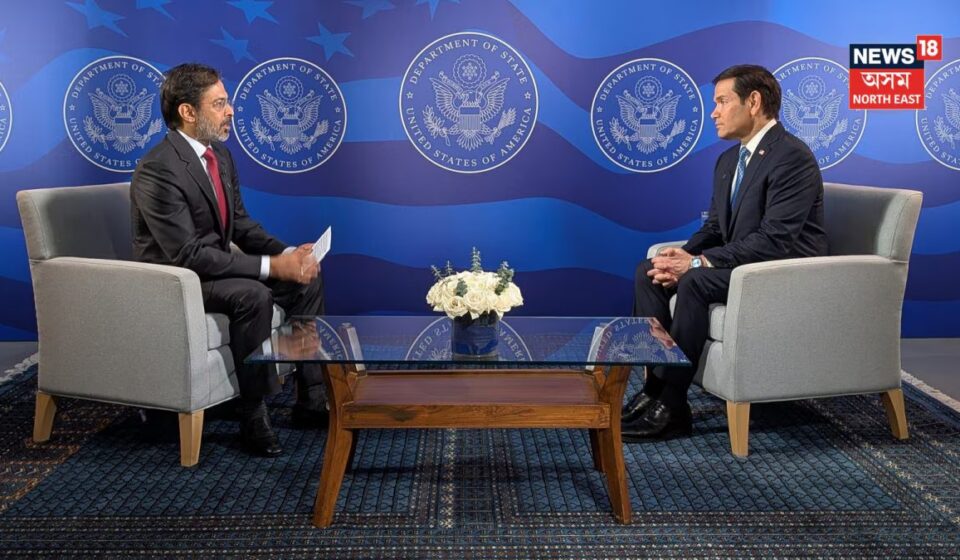
Honestly, if a scriptwriter pitched this plot at any studio in Guwahati or Mumbai, they’d be shown the door — too far-fetched, too explosive. Yet this week’s most gripping performance came not from any soundstage but from Washington, where, on Tuesday, US Secretary of State Marco Rubio sat down for a special interview with Rahul Joshi, Editor-in-Chief of the Network18 Group, and delivered dialogue sharper than anything playing in theatres right now.
The setting could not be more cinematic: the Strait of Hormuz, the narrow ribbon of water through which the world’s oil glides like a blockbuster’s lifeblood. The conflict: attacks on commercial ships that, in Rubio’s telling, belong to another century. “A country has openly announced that it is targeting commercial ships, attempting to kill sailors who have nothing to do with any war, and seeking to sink them,” he said. Then came the line that made historians everywhere sit up: Iran, he charged, has revived the U-boat tactics of Nazi Germany — tactics, he noted, unseen since the Second World War. His call to action? That the international community stand united and condemn it.
But every thriller needs a ledger of sins, and Rubio opened his without hesitation. Every dollar Iran earns, he alleged, does not go toward improving its people’s lives; it bankrolls the sponsorship of terrorism and the manufacture of missiles and drones aimed at commercial vessels. His verdict was unambiguous: stopping the attacks is Iran’s responsibility — even as America keeps its “extraordinary economic pressure” clamped on Tehran.
And those nightly action sequences? Heart-poundingly real, and largely successful — if you believe the man holding the microphone. Traffic through Hormuz — ships, oil, energy — stands, Rubio claimed, at 80 to 100 percent of pre-conflict levels, while American defences destroy “most” of the drones and missiles launched at ships every night. But here, the drama stops being entertainment. Some projectiles slip through. Ships are damaged. Lives are lost. And many of those lives are Indian — sailors from our own soil working those perilous waters, the same waters on which India depends for its oil. That is not a plot twist. That is a wound.
So does the story end with a treaty and a bow? Hardly. With President Donald Trump hinting that the war could end after the midterms, Rubio was asked the obvious question — and poured cold water on any deal with Tehran. “A deal with Iran’s regime is difficult,” he said flatly. “Unfortunately, they do not know how to make a deal.” In his framing, it is the radical clerics — the hardliners driven by ideology, not all Shia leaders, he was careful to clarify — who hold the pen. And ideology, as every storyteller knows, rarely negotiates.
So the curtain refuses to fall. Washington will keep shepherding ships safely through Hormuz while squeezing Tehran economically; the burden of ending the attacks, Rubio insists, rests squarely with Iran. And the rest of us watch this real-life thriller with bated breath, hoping for a peaceful final act — because unlike the movies, this one offers no retakes.