Beyond the Budget Gatekeeper: AI and India’s Content Export Era

The Gate Was Never Talent. It Was Capital.
For fifteen years, Indian viewers have walked out of screenings of Avatar carrying the same uncomfortable question: why aren’t we making films like this? I’ve heard it in boardrooms, at student hackathons, and in policy corridors. The honest answer was never about talent or imagination. It was about the gate – and that gate was capital.
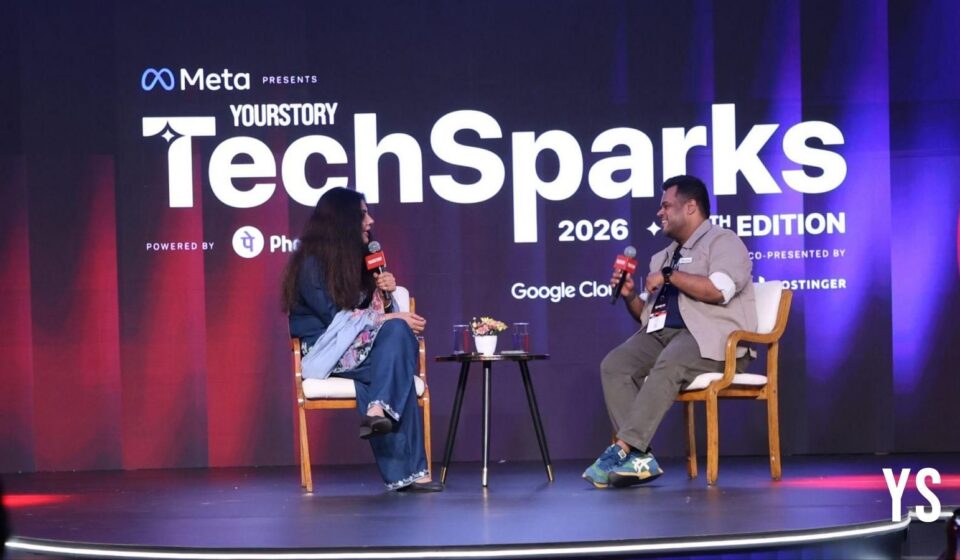
So when I read that Saurabh Pandey of Eloelo demonstrated an AI video creation tool at YourStory’s TechSparks – with roughly 15,000 videos generated organically in its first eight days – I didn’t see a product moment. I saw the gate cracking.
Content Is Having Its Cloud Moment
As an architect, what interests me is not the tool but the inversion it represents. Storytelling has historically been a capex business: studios, crews, sets, logistics. Pandey’s core observation – that production devours 50-60% of revenue in this category – is really a unit-economics statement. Generative pipelines convert that capex into opex: GPU cycles, inference calls, orchestration code. When the marginal cost of a scene approaches the marginal cost of an API call, the entire P&L of creativity gets rewritten. This is the same structural shift cloud computing delivered to enterprises a decade ago – and media is simply the next vertical to absorb it.
The Bottleneck Doesn’t Die. It Migrates.
Be clear-eyed, though: the constraint doesn’t disappear; it relocates. From chequebooks to curation. From studio gatekeepers to recommendation algorithms – and eventually to whoever owns taste and IP. Three hard problems remain on the R&D frontier:
- Consistency. Identity persistence across generated scenes – faces, styles, narrative continuity – is still the unsolved engineering challenge in generative video. Demo-quality is trivial; series-quality demands MLOps discipline: character bibles as versioned configuration, style guardrails, human-in-the-loop review.
- Rented land. Algorithmic distribution gives an Indian creator global reach, but it is not owned ground. If two or three platforms eventually hold 70-75% of the market – the consolidation pattern Pandey rightly predicts from food delivery to quick commerce – supply-side players must treat distribution as a channel, never a foundation.
- Governance. When a Mahabharata-scale epic is machine-generated, provenance, copyright, cultural authenticity and disclosure become architectural requirements, not afterthoughts. Tooling without a policy stack is a liability.
Skip the Platform. Build the Studio.
Pandey’s advice to founders – don’t race to build the platform, build lean AI studios that feed it – mirrors every platform economy I’ve studied. Distribution consolidates; supply professionalizes and fragments. The winners were rarely the tenth delivery app; they were the indispensable suppliers behind it. And his counsel to creators wary of AI – use it as a brainstorming partner, ship more – is the same velocity-first mantra I repeat to every student I mentor at STPI: in a world of near-zero production cost, iteration speed is strategy.
India’s Rails Moment for Stories
There is a deeper parallel here to our Digital Public Infrastructure journey. UPI and ONDC worked because we built rails and unleashed a million builders. Content is approaching its own rails moment – and unlike a payment transaction, a story carries the fingerprint of where it was made. A writer in Guwahati or Shillong now commands the same production budget as one in Andheri. Our vernacular depth and storytelling traditions stop being a localization cost and become an export differentiator. South Korea built a $15 billion content economy with 52 million people. The arithmetic for 1.4 billion is not subtle.
What I’d Tell Builders:
- Re-architect creative businesses around opex compute, not capex infrastructure.
- The scarce skill is shifting from funding to taste, editorial judgment, and pipeline orchestration.
- Own your IP. Design for export from version one – the algorithm doesn’t care where you were born.
- Bake governance and disclosure into the pipeline before regulators force you to.
The question Avatar planted was never really about us. It was about the gate. The gate is falling now – and what walks through it may not come from a studio at all, but from a five-person team with GPU credits and a story the world hasn’t heard yet.
About the Author: Sanjeev Sarma is the Founder Director and Chief Software Architect at Webx Technologies. With a core focus on Generative AI integration, Cloud-Native Scalability, and Enterprise Software Architecture, he has spent over two decades driving digital transformation across Northeast India and beyond. Beyond his corporate leadership, Sanjeev is deeply invested in shaping the future of the IT industry. He serves as an Industry Expert on the Board of Studies for Assam Don Bosco University’s School of Technology, advises state technology committees, and actively mentors emerging tech startups at STPI. He brings a unique, dual perspective of high-level enterprise execution and future-ready academic curriculum development.