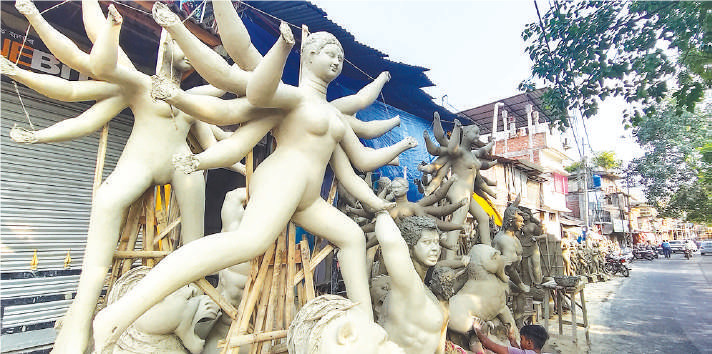

Durga Puja in Assam is far more than a religious observance — it has grown into a season of economic activity that sustains tens of thousands of livelihoods, energises local businesses and showcases the state’s creative talent. Rooted in the patronage of the Koch and Ahom rulers and celebrated across diverse communities, the weeklong festival now blends centuries-old tradition with modernity, driving a vibrant festival economy across Assam.
Reports note that Durga Puja in the state employs around 50,000 artisans, alongside temporary jobs in vending, security and hospitality. Community-led estimates suggest the Sharodiya Puja supports livelihoods across idol-making, pandal construction, decor, lighting, food, retail and transport.
Spending patterns vary widely. Large pandals in Guwahati can cost between Rs 25 lakh and Rs 50 lakh, while community Pujas are typically organised on budgets of Rs 5-10 lakh. Spending on mandaps has crossed the Rs 20-lakh mark in many parts of Guwahati, with competition among committees over decoration and facilities pushing budgets higher. A decorated Durga idol costs Rs 20,000 to Rs 50,000 depending on size, materials and ornamentation — costs that, combined across districts, translate into hundreds of crores of rupees in economic activity.
The festival’s foremost benefit is seasonal employment. For Kumars (clay-idol makers), bamboo labourers, carpenters, painters, electricians and decorators, the Puja season accounts for a sizable share of annual earnings. Dhakis (drummers), dancers, theatre groups, lighting technicians and event managers find work in cultural and pandal programmes, while vendors of food, flowers and incense, along with auto-rickshaw, taxi and bus operators, cash in on the surge in customers and pandal-hopping.
Retail benefits are equally significant. At Fancy Bazar in Guwahati, the heart of Puja shopping, shopkeepers say the season drives a large share of annual sales of ethnic wear, jewellery and household items — though competition from online portals is eating into profits. Demand for local crafts such as the japi and gamosa boosts thousands of village artisans. Hotel occupancy in Guwahati and other cities is rising as Assamese people living elsewhere and tourists visit for the festivities, while local brands, banks and FMCG companies sponsor pandals, with advertising packages in India ranging from half a lakh to several lakhs — a sector smaller than Kolkata’s but growing.
Challenges persist. Rising costs of clay, bamboo, fabrics, paints and labour have squeezed artisans’ margins, prompting calls for government intervention. Young people are increasingly reluctant to take up idol-making due to its instability and strenuous nature, while environmental concerns over idol materials, power consumption and waste disposal are mounting.
Analysts suggest strategic support could amplify the festival’s value: skill development courses for artisans, low-interest loans for Puja committees, better lighting and sanitation, pandal trails, heritage walks and digital promotion to position Guwahati as a festive tourist destination. Promoting Assamese handicrafts through Puja-themed markets and online platforms could sustain artisan incomes year-round.
With systematic investment in skills, sustainability and tourism, Assam’s Durga Puja economy could become a genuine engine of inclusive growth — keeping traditional crafts alive while powering local consumption and employment.
Original Source: https://assamtribune.com/opinion/durga-puja-fuels-assams-creative-economy-supports-thousands-of-livelihoods-1620641
Category: Opinion
Tags:
Publish Date: 2026-10-19 10:23:00