Uniting Hearts for Hope: Saving Assam’s Endangered Golden Langurs through Innovative Community Efforts

Shrinking Habitat Threatens Golden Langur Survival: Urgent Conservation Measures Underway
The golden langur, an endangered arboreal primate native to the Indo-Bhutan border, is facing a dire future due to rapid habitat loss. Mostly found in Assam’s Kokrajhar and Bongaigaon districts and six districts in Bhutan, these primates are struggling as their forest habitat is increasingly fragmented by deforestation, infrastructure development, and human encroachment. The fragmentation forces these canopy dwellers to descend to the ground, exposing them to road accidents, predators, and electrocution from power lines.
Dr. Jihosuo Biswas of the Primate Research Centre in Northeast India underscores the severity of the issue, noting that over half of the golden langur’s habitat has been lost in India. Roads and settlements now isolate forest patches, leading to higher physiological stress and increased parasitic infections among the langurs.
One alarming effect of this habitat fragmentation is the rise in road accidents involving golden langurs. Dr. Biswas’s team has documented numerous fatalities and injuries along State Highway 14, where 71% of langurs cross at ground level, often with tragic results.
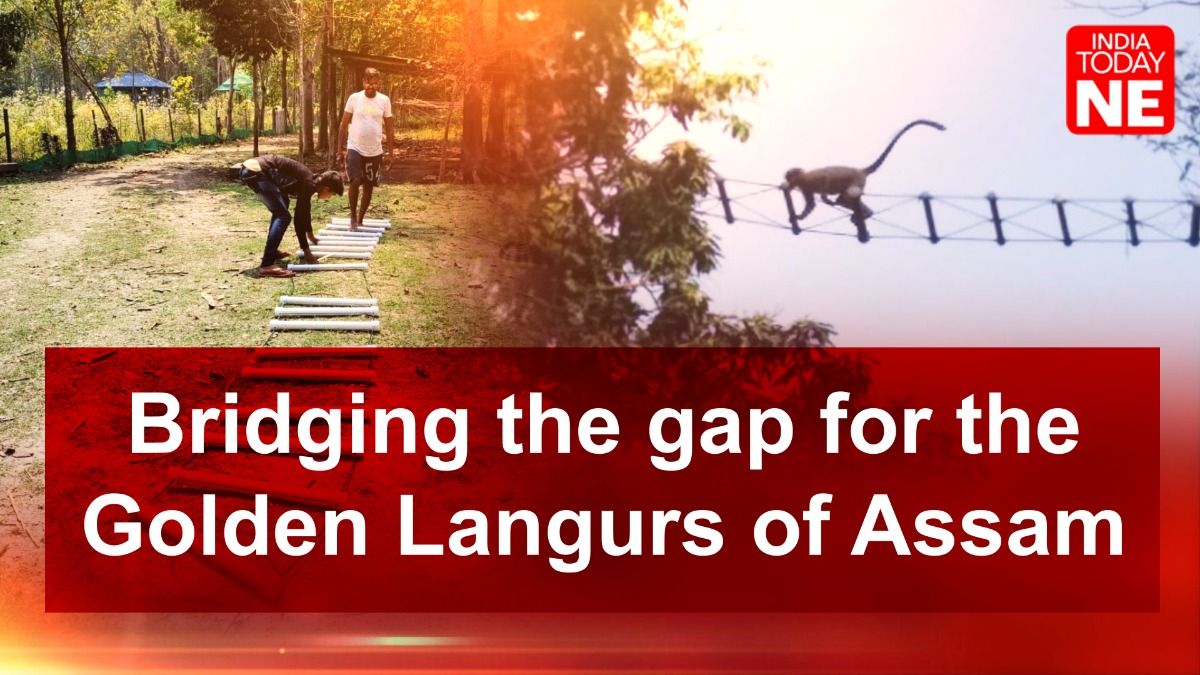
To combat these threats, conservationists have implemented innovative solutions like artificial canopy bridges (ACBs). These structures reconnect fragmented forests, providing safe passage for the langurs. The first ACBs, made from durable HDPE pipes, were installed in heavily affected areas. Camera traps have shown promising results, with more langurs gradually using these bridges.
Additionally, ladder bridges were constructed in Kokrajhar to aid dry-season crossings. Initially hesitant, the langurs adapted to these structures over six months, showing improved safety in road crossings by early 2024.
Engaging local communities is also crucial. Conservationists are educating villagers and encouraging them to plant trees, thereby restoring natural corridors and fostering population exchange among isolated langur groups. The collective efforts of conservationists, local communities, and innovative strategies like ACBs provide hope for the survival of the golden langur. However, ongoing dedication and collaboration are essential to secure their future.
Original Story https://www.indiatodayne.in/assam/video/saving-assams-golden-langurs-through-innovation-and-community-efforts-1091570-2024-09-12?utm_source=rssfeed
Category :
Tags: