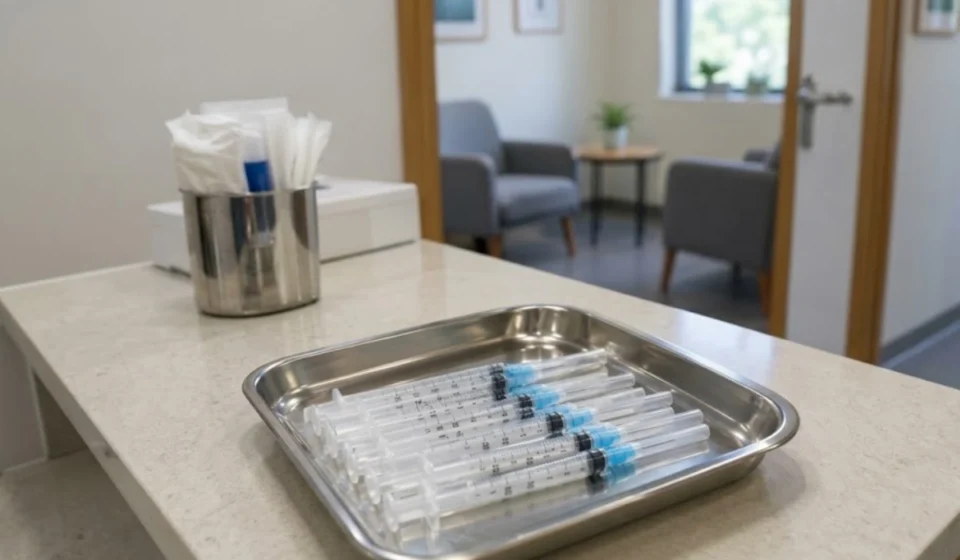

Assam’s battle against HIV is entering a disturbing new phase as injecting drug use emerges as a major driver of new infections, even as the state maintains its aggressive narcotics crackdown. National AIDS Control Organisation (NACO) estimates show a sharp rise in the HIV burden in the state, with 33,148 people living with HIV and an adult prevalence of 0.13 per cent, below the national average of 0.20 per cent, but reflecting a substantial absolute increase.
More troubling is the changing pattern of transmission. Injecting drug use, once a relatively small share of new detections, now accounts for about 60–65 per cent of new infections in 2023–25, up from roughly 8.5 per cent in 2020–21. While heterosexual contact remains the most commonly reported mode overall, the rising contribution of injecting drug use points to a transmission network that can spread quickly through shared needles and syringes.
This shift matters for Assam, which serves as the Northeast’s geographic gateway. Guwahati is a major transport and commercial hub, with population movement and drug trafficking routes that can propel a health crisis beyond initial injectors. The largest concentrations of HIV cases are reported in urban and transit centres like Kamrup Metropolitan (Guwahati), Cachar, Nagaon and Dibrugarh, underscoring the need for vigilant surveillance and targeted prevention in these areas. Even as the absolute number rises, the adult prevalence remains around 0.13 per cent, below the national level, with NACO placing the state’s PLHIV at 33,148 (about 32,533 adults and 615 children).
Across the Northeast, patterns diverge. Arunachal Pradesh shows a large share of infections linked to injecting drug use, with about 2,630 people living with HIV. Nagaland and Manipur, once driven by injection transmission, now report a larger role for heterosexual transmission. Mizoram, however, has the highest regional prevalence at about 2.73 per cent, while Tripura rose to roughly 0.37 per cent and Sikkim to about 0.11 per cent. These contrasts illustrate that the Northeast does not share a single HIV trajectory.
Awareness and treatment gains are evident. The proportion of people who know their HIV status rose from about 52 per cent in 2022–23 to roughly 91 per cent in 2025–26, a critical step toward timely ART initiation. Antiretroviral therapy (ART) remains free through the public system and helps suppress HIV replication and restore immune function.
But preventing new infections remains the central challenge, especially among populations exposed to injecting drug use. Enforcement alone cannot address addiction or ensure sustained ART uptake. Experts stress the need for harm-reduction services-needle-syringe programs, opioid substitution therapy, HIV testing and counselling, and linkages to treatment. Dr S. I. Ahmed notes ongoing socio-economic disparities, drug abuse, and limited healthcare access as barriers, while Birendra Kumar Barman warns that drug use is spreading among youth and workers, describing a “big racket” and asking, “Who can protect them?”
The scale of enforcement is undeniable: since 2021, drugs worth over Rs 3,200 crore have been seized and tens of thousands of people arrested. In 2025, authorities recovered heroin, ganja, psychotropic tablets, cough syrup, opium and morphine in substantial quantities, signaling Assam’s continued prominence as a narcotics market and transit route. The paradox is clear: more seizures and arrests do not automatically curb transmission. To avert a broader HIV crisis, Assam must couple its drug-control efforts with a robust health response-ensuring fewer people start injecting, reducing needle sharing, diagnosing infections early, and keeping those on ART virally suppressed. The needle, in this sense, has become a warning about the next public-health challenge the state cannot ignore.
Original Source: https://www.guwahatiplus.com/assam/assams-drug-war-fails-to-stop-the-hiv-surge
Category: Assam
Tags:
Publish Date: 2026-09-17 15:54:00