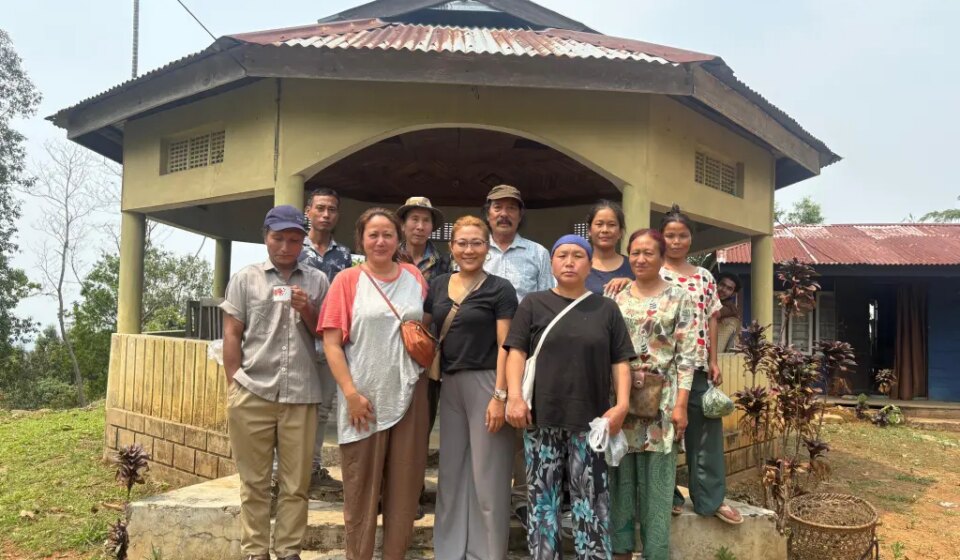

When COVID-19 lockdowns stranded award-winning journalist Manno Wangnao in her hometown of Tizit, Mon district, in 2020, she turned a crisis into a community project: over the next few years she helped villagers register with the Tea Board of India, open direct factory accounts, secure government machinery and link growers to schemes — steps that have shifted bargaining power toward hundreds of small tea farmers in eastern Nagaland. (eastmojo.com)
Tea has been grown in Tizit since the early 1990s, yet most families remained impoverished because they were cut off from market information, formal support and fair pricing. Winter prices sometimes fell to as little as ₹5 per kg and even in peak season rarely exceeded ₹17–18 per kg, while middlemen took commissions and farmers lacked clarity about factory payments. (eastmojo.com)
Wangnao’s first move was to visit the Tea Board’s zonal office in Jorhat to learn what support existed. Officials told her the missing link was registration: without Tea Board recognition growers could not access subsidies, machinery, training or technical assistance. She then helped farmers gather documents, open bank accounts and obtain village No Objection Certificates, guiding applications through a slow, paperwork-heavy process handled by the Jorhat office. Around 1,300 farmers were registered before she stepped back, and community members began helping one another with applications. (eastmojo.com)
A second breakthrough was introducing direct factory accounts so growers could deliver leaves themselves and receive payment straight from factories. Once farmers began seeing daily factory rates, they stopped accepting whatever local traders offered. The COVID-19 disruption in Assam briefly boosted demand for Nagaland tea, lifting prices to about ₹50 per kg and enabling households to repay debt, upgrade homes and improve education and livelihoods. (eastmojo.com)
Government support followed: nine farmer groups received agricultural machinery valued at roughly ₹56 lakh — including harvesters, grass cutters and motorised sprayers — with about 180 farmers directly benefiting and many more gaining through shared resources. Farmers report concrete improvements: timely wage payments, debt clearance and new income for women, who have in some cases gained financial independence. (eastmojo.com)
Wangnao is now pushing for healthier, sustainable cultivation. She warns against indiscriminate use of herbicides and pesticides, especially glyphosate-based weed killers, and promotes organic practices and value addition such as green tea processing. She has launched Wangnao Green Tea and was selected by the Tea Board to represent Nagaland at a marketing event in Delhi; her longer-term aim is a small organic CTC unit in Tizit to process chemical-free tea sourced from local growers. (eastmojo.com)
For Wangnao, the goal was never personal gain but empowerment: teaching farmers how the system works so communities can claim their share of the value chain, improve incomes and protect health and environment. (eastmojo.com)
Original Source: https://eastmojo.com/news/2026/08/18/how-a-journalist-helped-tea-farmers-rewrite-their-future-in-eastern-nagaland/
Category: Nagaland,National News,News,Northeast News,Premium ,Top News
Tags:
Publish Date: 2026-08-18 14:49:00