Architecting AI Infrastructure for Net-Zero: Avoiding Off-Grid Fossil Traps

We applaud corporate net‑zero pledges – they set expectations – but we rarely interrogate the engineering and economic incentives that drive companies to choose quick fixes over clean design. The recent reporting about a major hyperscaler planning off‑grid, gas‑fired generation to power an enormous new data center is a case study in how shortcut engineering can turn credibility into a long‑term liability.
What the headlines actually signal
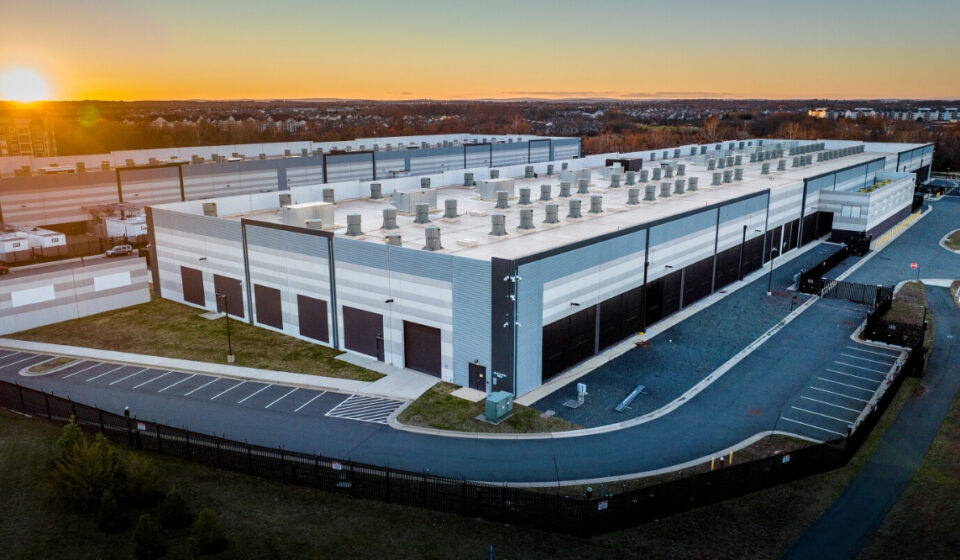
Recent coverage describes a planned, off‑grid data center complex designed with on‑site natural‑gas turbines sized to meet very large, immediate compute demand rather than waiting for lower‑carbon generation. That decision is not just about local electricity prices or permitting timelines; it reflects a set of architectural trade‑offs that every CTO and enterprise architect should be parsing today.
Why this matters to enterprise architects and CTOs
-
Workload demand vs. energy strategy: Large generative AI workloads change the calculus. When compute demand is highly predictable, colocating compute where fossil fuel is available now may seem sensible. But designing infrastructure around the availability of cheap, carbon‑intensive fuel is a form of technical debt – one that manifests as regulatory, reputational and transition risk. I advise teams to treat energy as a first‑class design constraint: not an afterthought to be solved with a permit.
-
Hidden trade‑offs: On‑site simple‑cycle turbines can be installed quickly, but they are far less efficient per MWh than combined‑cycle plants or renewables plus storage. The short lead time of a fossil solution buys time at the cost of ongoing emissions. From an architecture standpoint this is analogous to choosing quick‑to‑deploy microservices without foreseeing operational complexity: short‑term wins become long‑term costs.
-
Operational and reputational resilience: Enterprises that anchor compute strategy to local fossil resources expose themselves to changing policy and activism. ESG metrics are not PR window dressing – they influence procurement, customer trust, and access to capital. Architects should quantify “carbon risk” similarly to latency or cost risk.
-
Design alternatives that scale: There are practical ways to square performance demands with decarbonization:
- Carbon‑aware workload placement and scheduling: route or defer non‑urgent training jobs to regions with lower marginal emissions, or schedule heavy jobs to hours with surplus renewable generation.
- Hybrid power architectures: combine grid renewables, PPAs, on‑site solar and batteries for short duration peak response, keeping fossil peakers as rare failover rather than baseline supply.
- Improve compute efficiency: invest in model optimization, pruning, mixed‑precision, and more aggressive multi‑tenant GPU utilization – software levers that reduce energy per result.
- Modular, staged deployment: start with lower‑emission options now and design the plant for future retrofit (e.g., capacity for heat‑recovery, combined‑cycle conversion, or hydrogen readiness).
A note for India and regional decision‑makers
The global debate is relevant here. India is seeing rapid data‑center growth alongside ambitious renewable targets. The lesson for Indian enterprises and policy makers is simple: incentivize grid‑connected renewables, enforce emissions transparency for data‑center projects, and encourage designs that enable future fuel‑switches. For startups and state bodies in the Northeast, this is an opportunity to propose green campuses – combining renewable energy, battery buffering, and local waste‑heat reuse – that deliver both performance and sustainability.
Practical takeaways for leaders
- Treat energy source and emissions as non‑functional requirements in system design.
- Build “green SLAs”: commit to emissions targets for workloads and bake them into vendor contracts.
- Invest in telemetry that tracks compute emissions at workload granularity; use it for placement and chargeback.
- Prefer modular power designs that allow progressive decarbonization rather than lock‑in.
- Engage with regulators and local communities early; permit timelines can be sped up for projects that demonstrate credible transition plans.
Closing thought
Engineering decisions made to accelerate deployment should not mortgage the climate or corporate reputation. The right architectural lens sees energy not as a utility checkbox, but as a strategic axis – one that will define winners and losers in the era of compute‑intensive AI.
About the Author: Sanjeev Sarma is the Founder Director and Chief Software Architect at Webx Technologies. With a core focus on Generative AI integration, Cloud‑Native Scalability, and Enterprise Software Architecture, he has spent over two decades driving digital transformation across Northeast India and beyond. Beyond his corporate leadership, Sanjeev is deeply invested in shaping the future of the IT industry. He serves as an Industry Expert on the Board of Studies for Assam Don Bosco University’s School of Technology, advises state technology committees, and actively mentors emerging tech startups at STPI. He brings a unique, dual perspective of high-level enterprise execution and future-ready academic curriculum development.