Architecting AI-First, Software-Defined EV Platforms for Emerging Markets

We often obsess about range, peak power and badge prestige – but the harder engineering problem is hiding complexity so the customer simply experiences “it works.” A recent industry move that foregrounds AI-first, software-defined vehicles underscores a deeper shift: cars are becoming distributed software platforms that must be designed for product longevity, regulatory portability, and service operability – not just headline specs.
The signal
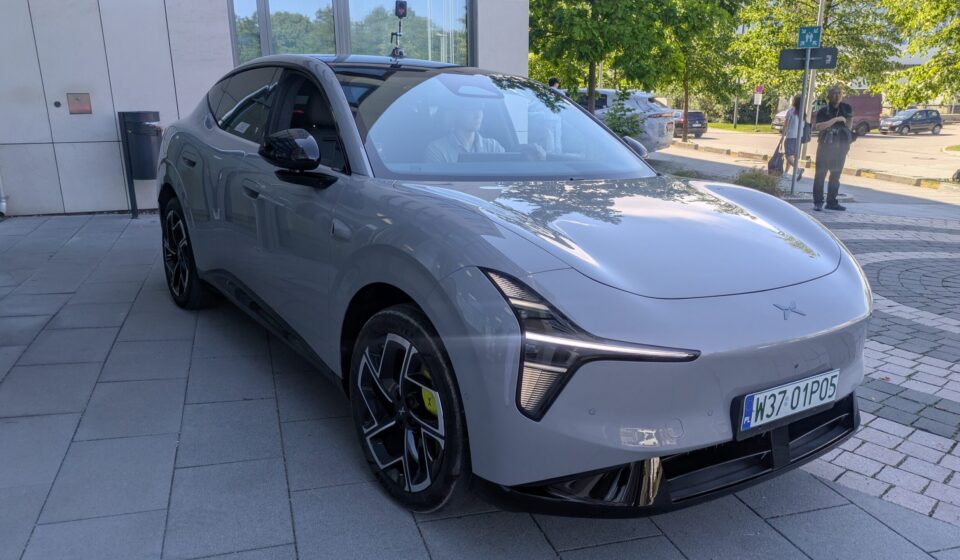
A global OEM’s planned market entry with two “smart EV” models highlights three things: vehicles conceived as software platforms, advanced driver assistance and AI as core differentiators, and a distribution strategy that favours a direct subsidiary model over traditional third‑party importers. Those choices illuminate strategic trade-offs every architecture and product team must confront.
What this means for enterprise and mobility architecture
-
Vehicles as long‑lived, cloud‑connected platforms. Treat each car like a node in a distributed system: local edge compute for latency‑sensitive controls, secure telematics for fleet observability, and cloud services for analytics, maps, and AI model orchestration. That split (edge vs. cloud) should be an explicit architectural decision, because it defines test strategy, failure modes, and the economics of OTA updates.
-
Execution beats feature lists. Advanced driver assistance and on‑board AI are only as valuable as their reliability across varied roads and climates. Investing in simulation (digital twins), scenario coverage, and continuous validation pipelines is now as critical as hardware selection. Enterprises must budget for ongoing model validation, retraining, and gated rollouts – not one‑time launches.
-
Third‑party SDKs and supply‑chain lock‑in create long‑term tech debt. Integrating large vendor SDKs (e.g., maps/navigation/AI services) accelerates time‑to‑market but embeds external data contracts, release cadences and privacy obligations into the product. Architectural guardrails – adapter layers, strict API contracts, and the ability to swap providers – reduce future migration costs.
-
Data governance and regulatory portability. Connected cars produce telemetry, sensor streams and personal data. For companies planning multi‑jurisdictional launches, design data flows with regional residency, consent management and telemetry minimization in mind. This is not just compliance; it’s an operational dependency that affects vendor choices, cloud regions and incident response plans.
-
After‑sales is product engineering. A “global” vehicle still needs local parts, trained technicians, and predictable SLAs. The choice to operate through a local subsidiary implies a heavier responsibility for service networks and spare‑parts logistics – which are as strategic as the software stacks. For CTOs, that means instrumenting diagnostics, remote repair capability and predictive maintenance from day one.
Relevance to India (conditional)
For markets with uneven charging coverage and diverse road conditions, hybrid strategies – such as range‑extenders or multi‑powertrain variants – are pragmatic bridges to adoption. In India, orchestration between OEMs, charging‑infrastructure providers and local service partners will determine whether an intelligent EV becomes a practical family car or an aspirational niche product.
Actionable takeaways for leaders
- Design for replaceability: isolate third‑party SDKs behind adapter layers to avoid vendor lock‑in.
- Invest in edge compute and secure boot chains: safety and availability depend on trusted local decision loops.
- Treat OTA and validation as product lines: CI/CD for vehicles requires staging, canarying and rollback mechanisms.
- Build local service and parts strategy alongside software launch plans – software without support ruins user trust.
- Embed data governance into architecture: map telemetry flows, residency requirements and consent by design.
Closing thought
The next decade won’t be won by the company with the shiniest sensor stack; it will be won by the teams that can engineer dependable, upgradeable, and locally operable software platforms around vehicles – the ones that make all the complexity disappear for the person behind the wheel.
About the Author: Sanjeev Sarma is the Founder Director and Chief Software Architect at Webx Technologies. With a core focus on Generative AI integration, Cloud-Native Scalability, and Enterprise Software Architecture, he has spent over two decades driving digital transformation across Northeast India and beyond. Beyond his corporate leadership, Sanjeev is deeply invested in shaping the future of the IT industry. He serves as an Industry Expert on the Board of Studies for Assam Don Bosco University’s School of Technology, advises state technology committees, and actively mentors emerging tech startups at STPI. He brings a unique, dual perspective of high-level enterprise execution and future-ready academic curriculum development.