Architecting Resilience: Auto Industry Platforms for the EV Disruption

When technology ceases to be a feature and becomes the product, entire industries get reorganised – and what looks like a market “bloodbath” is often the cleaner that reveals the new architecture of value.
Context
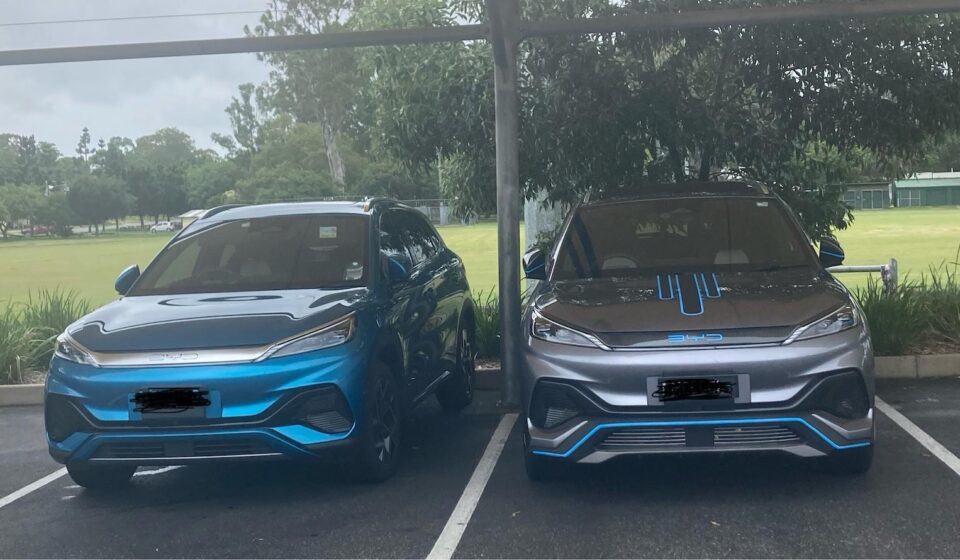
A recent CleanTechnica piece outlined a dramatic market shift in Australia: rapid penetration of plug‑in vehicles, strong uptake of value‑priced, tech‑rich Chinese EVs, and an accelerating decline in market share for several established brands. The story is less about cars per se and more about how software, supply chains, channel models and energy economics are rewriting the rules of an industry.
Analysis – what enterprise architects should read into this
There are three technical and strategic dynamics at work here that matter to any organisation undergoing digital transformation.
-
Product → Platform transition
Vehicles are becoming software‑defined platforms: batteries, powertrains, telematics and OTA updates form an integrated stack. That stack creates entirely new revenue and dependency chains – from connected services to charging ecosystems and data monetisation. For enterprise architects, the lesson is clear: treat your product as a platform with APIs, not as a monolithic delivery. Modularity, API-first design and clear service boundaries reduce vendor lock‑in and accelerate feature velocity. -
New entrants win on systems, not components
Disruptors enter with different trade-offs: tighter vertical integration, aggressive cost engineering, and an appetite for continuous software updates. This is analogous to cloud‑native entrants in enterprise software who ship small, frequent changes and lean on telemetry to iterate. Legacy players suffer when organisational structures and procurement models are optimised for selling hardware and long‑cycle upgrades rather than ongoing digital experiences. The tech response: embrace CI/CD, observability and product teams that own outcomes, not just releases. -
Infrastructure and data become strategic moats
The EV case highlights energy and logistics as part of the product experience – charging availability, battery lifecycle, and energy costs shape customer choice. Similarly, firms that control or effectively integrate core infrastructure (data lakes, identity, payments, telemetry) create much stronger defensibility. But with that comes responsibility: data governance, sovereignty and compliance move front and centre. Enterprises must adopt privacy‑by‑design and clear data contracts with partners.
Trade‑offs and architectural debt
Speed vs. stability: rapid rollouts win market share but increase operational risk. Monolithic legacy systems may appear stable but are brittle to fast market pivots. The right approach is a staged decoupling: strangler patterns, bounded contexts and layered migration plans that allow experimentation without breaking core operations.
Localization – what India (and Northeast India) should note
India’s EV and renewable push creates analogous opportunities. The intersection of local manufacturing incentives, state grid variability and strong mobile penetration means platform plays (charging networks, fleet telematics, battery swapping, second‑life battery markets) can scale rapidly if designed with local constraints in mind. For the Northeast, lower vehicle density and terrain-specific needs suggest customised fleet and micro‑mobility solutions – an area where frugal engineering and public‑private collaboration can deliver outsized impact.
Actionable takeaways for CTOs, CEOs and founders
- Reframe products as platforms: invest in API governance, modular services and developer experience.
- Prioritise data contracts and privacy-by-design early; data is a moat only if sustainably governed.
- Adopt incremental modernization (strangler pattern) to reduce business risk while enabling innovation.
- Build partnerships across the value chain (infrastructure, financing, service networks) rather than relying on single‑channel distribution.
- Run scenario simulations combining supply‑chain, regulatory and price shocks – plan for multiple transition paths.
Closing thought
Markets don’t fail because technology changes; they fail because organisations mistake old success patterns for immutable laws. The architectural imperative today is to design for option‑rich futures – not to defend yesterday’s certainty.
About the Author: Sanjeev Sarma is the Founder Director and Chief Software Architect at Webx Technologies. With a core focus on Generative AI integration, Cloud-Native Scalability, and Enterprise Software Architecture, he has spent over two decades driving digital transformation across Northeast India and beyond. Beyond his corporate leadership, Sanjeev is deeply invested in shaping the future of the IT industry. He serves as an Industry Expert on the Board of Studies for Assam Don Bosco University’s School of Technology, advises state technology committees, and actively mentors emerging tech startups at STPI. He brings a unique, dual perspective of high-level enterprise execution and future-ready academic curriculum development.