Architecting a European Full‑Stack Space Transport Ecosystem

The Strategic Shift Behind Europe’s Push into Full‑Stack Space Systems
We tend to view space startups through two lenses: boutique payload services or software-defined mission ops. A different, and riskier, trajectory is emerging – firms attempting to rebuild vertically: engines, capsules, launch systems and the ground infrastructure to operate them. That’s the story worth unpacking, because it has direct lessons for how large organisations and governments build capability in capital‑intensive domains.
Context
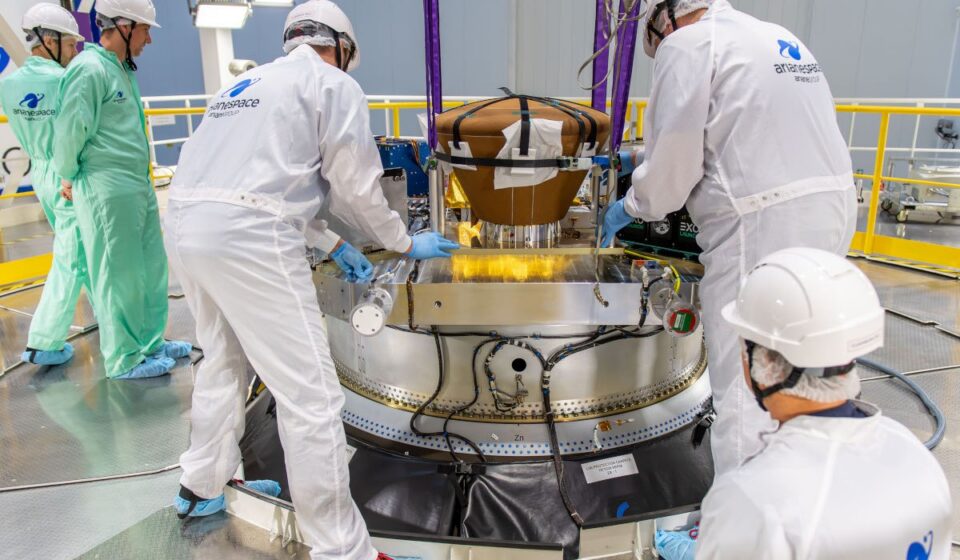
I recently read reports about a European company pursuing a full‑stack space transportation strategy – reusable crew capsules, staged‑combustion engines and a funding round aimed at closing a late‑stage capital gap. The headline is funding and valuation, but the bigger signal is a strategic bet on vertical integration, test infrastructure and international partnerships to de‑risk an otherwise long, expensive path to operational maturity.
Why this matters to architects and founders
-
Full‑stack is an architectural choice, not inevitable. Vertical integration compresses feedback loops between design, manufacturing and operations – which can accelerate performance gains in physical systems the way microservices accelerate software delivery. But it also concentrates technical and financial risk. For enterprise architects, the analogue is clear: choose where you accept single‑vendor control for speed versus where you keep modularity for resilience. Neither is universally right; both must be matched to an organisation’s risk budget and time horizon.
-
Reusability changes the economics – if and only if the operational cadence exists. Reusable capsules and engines promise lower per‑mission cost, but only when manufacturing, refurbishment and launch cadence scale. That requires end‑to‑end process engineering: supply chains, inspection regimes, facilities and a trained workforce. For large organisations adopting new platforms (AI, edge compute, robotics), this is a reminder that product innovation must be paired with operational systems thinking – tooling, workflows, acceptance criteria and long‑term maintenance strategies.
-
Strategic co‑location and partnerships are deliberate levers. Moving labs close to major testing partners or space centres is not PR; it is an operational decision to speed validation cycles, access expertise and signal credibility to institutional customers. In enterprise terms, think of it as strategic data gravity: where your tests, people and compute live will bias where partners and talent agglomerate.
-
Funding gaps shape technical choices. The push to raise large late‑stage capital is both a market signal and a constraint: when funding is uncertain, teams tend to prioritise milestones that unlock the next tranche, sometimes at the expense of long‑term maintainability. CTOs and boards need explicit investment roadmaps that balance milestone-driven fundraising with guardrails for technical debt.
Practical takeaways for CTOs and policy makers
- Design for maintainability from day one. Whether it’s a rocket engine or an enterprise AI pipeline, add inspection, telemetry and automated regression checks into the product lifecycle early – they become exponentially more expensive to retrofit later.
- Map the supply network as part of the architecture. Critical components and test facilities create single points of failure; diversify suppliers and create serviceable interfaces.
- Align funding milestones with systems milestones. Funders should insist on deliverables that prove operational repeatability, not just one‑off demos.
- Use partnerships strategically. Locate labs, centres or joint programmes where they reduce validation time and tap pools of specialised talent.
A note for India and the Northeast
There’s a natural parallel for India’s innovation policy: high‑capex sectors benefit from public‑private scaffolding – shared test facilities, incubators tied to national labs, and targeted late‑stage funds that keep companies rooted domestically. For Northeast India specifically, the opportunity is to align local academic and engineering talent with national testbeds and industry consortia so that regional ecosystems can capture upstream value rather than only supply low‑value components.
Closing thought
When technology moves from prototype to industrialised product, the dominant battleground is rarely the headline feature – it’s the institutional muscle built around repeatability: financing, facilities, talent and rigorous systems engineering. Observing Europe’s push into vertically integrated space capability is a useful case study in what it takes to convert audacious engineering into sustainable industry.
About the Author: Sanjeev Sarma is the Founder Director and Chief Software Architect at Webx Technologies. With a core focus on Generative AI integration, Cloud-Native Scalability, and Enterprise Software Architecture, he has spent over two decades driving digital transformation across Northeast India and beyond. Beyond his corporate leadership, Sanjeev is deeply invested in shaping the future of the IT industry. He serves as an Industry Expert on the Board of Studies for Assam Don Bosco University’s School of Technology, advises state technology committees, and actively mentors emerging tech startups at STPI. He brings a unique, dual perspective of high-level enterprise execution and future-ready academic curriculum development.