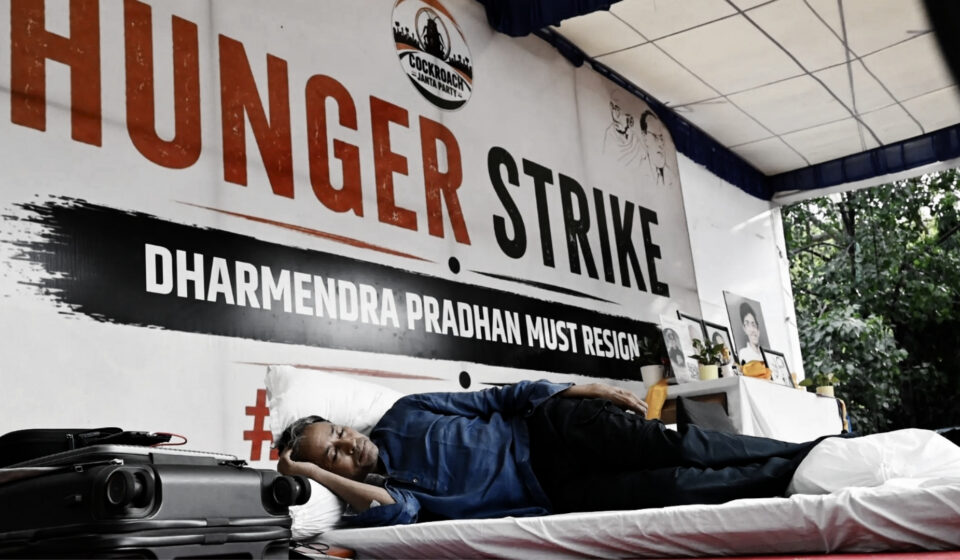

Sonam Wangchuk lies on a mat under a tent at Jantar Mantar in New Delhi, 19 days into a hunger strike that has cost him more than nine kilograms and prompted doctors to warn of possible organ damage. He began a sit-in on 28 June to stand with students protesting alleged exam paper leaks and is asking supporters not to plead with him to stop but to join a peaceful march to Parliament on 20 July, turning his personal sacrifice into a public demand for accountability.
Wangchuk’s protest carries weight because of who he is: an engineer from Ladakh known for building ice stupas to tackle water shortages, for reimagining village education through SECMOL, and for inspiring the cinematic character Phunsukh Wangdu in 3 Idiots. He is not a professional agitator but a builder and reformer choosing, at real risk to his health, to stop building until officials answer for the crisis that has upended students’ futures.
The fast has drawn an unusually wide range of supporters. Actors such as Shabana Azmi, Naseeruddin Shah and Swara Bhasker; filmmakers and musicians including Anurag Kashyap and Vishal Dadlani; journalists like Ravish Kumar and Barkha Dutt; writer Arundhati Roy; and opposition leaders from Arvind Kejriwal to Akhilesh Yadav and Uddhav Thackeray have all spoken up. Akhilesh Yadav urged Wangchuk to end the fast, saying his life “embodies a commitment to humanity and the environment that is as profound as his commitment to democracy.”
At the same time, several prominent figures associated with the film that popularised his story-Aamir Khan, R. Madhavan, Sharman Joshi and Rajkumar Hirani-as well as megastars Amitabh Bachchan and Shah Rukh Khan, have so far remained publicly silent. That silence has been noticed and, critics say, signals the professional and political costs of speaking on a live national issue.
Wangchuk’s hunger strike is a last-resort signal that ordinary channels of accountability have failed. He is asking the government to answer for exam leaks that affected real students and to allow ministerial responsibility to be examined rather than assumed away. Reasonable objections exist: some argue a minister’s resignation is a blunt response to what may be systemic failure; others warn that hunger strikes can overshadow the slow work of institutional reform or make a movement dependent on one person’s survival. Government defenders note there has been no formal adjudication blaming the ministry.
Wangchuk’s call for a peaceful march on 20 July is an attempt to redirect concern into civic action. The question his fast poses to ministers, movie stars and the wider public is stark: should it ever take this much — a man close to death — for a democracy to be heard?
Original Source: https://eastmojo.com/opinion/2026/07/16/the-man-who-wouldnt-wait-what-sonam-wangchuks-fast-is-really-asking-of-us/
Category: Free Digest,National,National News,News,Opinion,Recent Top News,Sonam Wangchuk
Tags:
Publish Date: 2026-07-16 16:32:00