Talent-First Ownership: Building Advantage in Tech and Sports

We often fetishize the latest stack, model, or acquisition headline. But every so often a story reminds us that the single largest lever for long-term technical success is not a tool – it’s people, and how you organize around them.
Why talent still beats tech
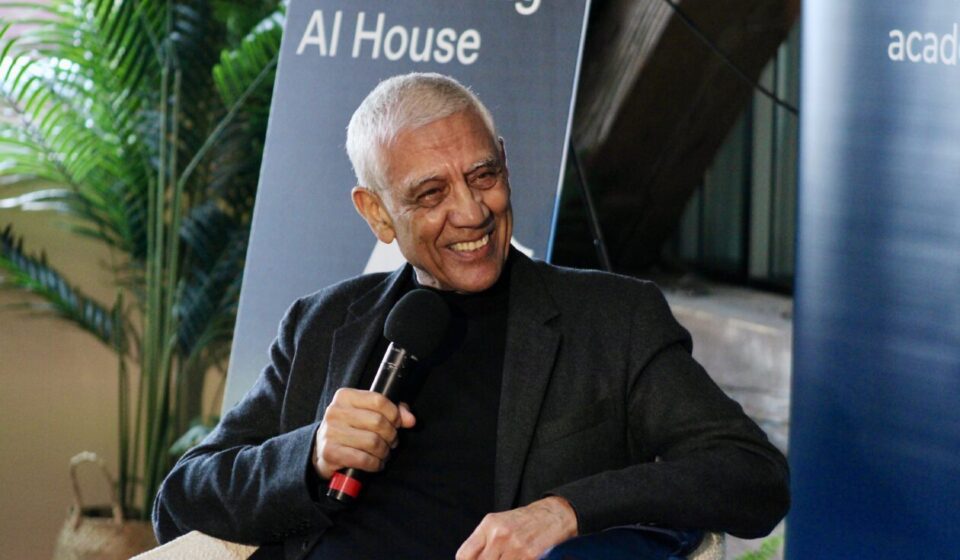
I recently read a profile about Vinod Khosla’s led purchase of the Seattle Seahawks and, more importantly, the investment philosophy that informs it: hire exceptional people, give them autonomy, and back them decisively. That approach – combined with a quantitative, relentlessly honest mindset and a tolerance for unpopularity when necessary – is a useful lens for how organisations should think about architecture, AI adoption, and change under new ownership.
From sports ownership to enterprise architecture: three pragmatic implications
-
Put learning rate above legacy credentials
Khosla’s emphasis on “rate of learning” over prior experience is directly relevant to recruiting engineering and AI teams. For CTOs this means adjusting hiring signals: favour curiosity, rapid feedback cycles, and evidence of deliberate practice over long lists of prior titles. Architecturally, this translates to designing systems that accelerate learning – feature flags, canary releases, easy telemetry, and cheap experimentation environments – so your high-learning teams can iterate safely. -
Autonomy with crisp interfaces – not abdication
“Backing the people you pick” is not the same as hands-off neglect. In technical organisations, the equivalent is giving product and platform teams autonomy while codifying boundaries via APIs, SLAs, and clear observability. When ownership or strategy shifts, immutable contracts (contracts for people: multi-year leadership commitments; for systems: interface contracts and backward compatibility guarantees) reduce churn and preserve velocity. The Seahawks example – where key leadership remains under contract – is a reminder that maintaining continuity matters more than theatrical intervention. -
Data & analytics: powerful but prudently used
A “quantitative lens” yields advantages – whether in football or product – but over-optimization for a narrow metric causes harm. Teams must build analytics that are multi-dimensional, include leading and lagging indicators, and are resistant to Goodhart’s Law. For enterprises adopting generative AI: instrument model outputs, cost, latency, and downstream human-in-the-loop metrics; avoid single-score incentives that encourage gaming.
Risk, reputation and stakeholder engineering
The profile also highlights controversies tied to personal decisions that have public consequences. For enterprises, that’s the equivalent of technical debt and governance failures becoming PR crises. New owners or leadership should treat community and stakeholder engagement as part of architecture: policies, escalation paths, transparency portals, and a playbook for ethical trade-offs. Tech leaders must build for resilience – not just fault tolerance, but reputational resilience: explainable decisions, audit trails, and consistent communications.
Actionable guidance for CTOs and founders
- Hire for learning velocity: design interview loops that surface problem-solving under uncertainty, not just polished CVs.
- Ship guardrails before granting autonomy: observability, rollback, and feature flagging are non-negotiable.
- Define immutable contracts: make leadership commitments and system interfaces explicit to reduce friction during ownership or strategy changes.
- Measure broadly: combine quantitative analytics with qualitative feedback to avoid metric myopia.
- Prepare reputational runbooks: map technical failure modes to stakeholder communications and remediation steps.
Closing thought
Technology choices matter, but they are amplifiers of human intent. Build organisations and architectures that magnify learning, protect autonomy with discipline, and treat the broader community as an essential part of the system.
About the Author: Sanjeev Sarma is the Founder Director and Chief Software Architect at Webx Technologies. With a core focus on Generative AI integration, Cloud-Native Scalability, and Enterprise Software Architecture, he has spent over two decades driving digital transformation across Northeast India and beyond. Beyond his corporate leadership, Sanjeev is deeply invested in shaping the future of the IT industry. He serves as an Industry Expert on the Board of Studies for Assam Don Bosco University’s School of Technology, advises state technology committees, and actively mentors emerging tech startups at STPI. He brings a unique, dual perspective of high-level enterprise execution and future-ready academic curriculum development.