Operationalizing Autonomous Home Robotics: Infrastructure, Safety, and UX

We celebrate “autonomy” in headlines – robots, models, and smart services – but the real engineering work often lives in the mundane: power cords, firmware updates, and the logistics of where the device actually sits. A recent hands‑on review of a consumer robotic pool cleaner and its automated rinse/charging station illustrates that gap clearly: the robot’s on‑device AI and modes are impressive, but deployment friction-site requirements, pairing fragility after OTA updates, and simple things like drainage and weight handling-determine whether the system will succeed in the field.
A compact signal
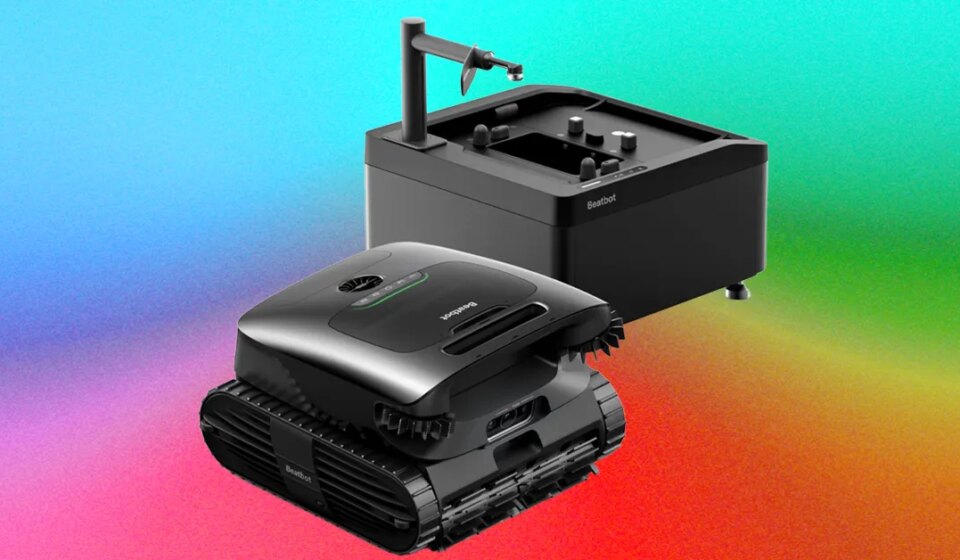
A reviewer tested a modern pool robot plus a companion cleaning station and found strong cleaning performance on the pool floor, camera‑assisted debris search modes, and flexible app controls. Yet the real pain points were physical: the station needs power, water and drainage; firmware updates temporarily broke device pairing; and retrieving a heavy device across a yard remains a human task.
What this means for enterprise architects
The lesson is not about pools. It’s about system boundaries. When a product combines embedded robotics, edge AI, companion cloud services and physical infrastructure, your architecture must treat the “installation environment” as a first‑class system requirement.
- Operational prerequisites are architecture: Requirements like a nearby electrical outlet, water connection, level surface, and drainage are equivalent to an external API contract. If you ignore them, customers will. For enterprise deployments (smart factories, municipal robots, field sensors), plan site surveys, pre‑installation checklists, and installation automation tools as part of the product lifecycle.
- OTA and orchestration need choreography: The reviewer’s pairing break after firmware updates is a predictable failure mode. Enterprises must adopt staged OTA rollouts, atomic upgrades, clear rollback paths, and in‑device state checkpoints so peripheral pairings aren’t lost by default. Treat firmware and companion app compatibility as cross‑team SLAs.
- Edge‑first, cloud‑assisted: Camera‑based “quick AI” modes are useful, but relying entirely on cloud inference increases latency, bandwidth costs, and privacy risk. Push inference to the device where possible, with cloud used for model retraining and aggregated analytics. This reduces dependency on continuous connectivity and preserves responsiveness.
- Human‑in‑the‑loop design: Autonomous systems will still require occasional human handling (retrieval, placement, maintenance). Design for ergonomics, safe manual override, and low‑friction maintenance-think modular batteries, tool‑less access, and simple alignment guides for docking. The worst UX is a sophisticated device broken by a banal manual step.
- Observability and lifecycle economics: Telemetry must include not just performance metrics, but health, environmental context, and human‑interaction events. For enterprises, confidence comes from predictable maintenance cycles and spare‑parts availability; factor those costs into architecture and go‑to‑market plans.
A brief note for Indian deployments
These lessons apply strongly in India’s varied infrastructure landscape. In many regions (including Northeast India), intermittent power, constrained network bandwidth, and variable site layouts are common. Design for intermittent connectivity (local fallbacks, queued telemetry), support 2.4 GHz Wi‑Fi and offline pairing flows, and provide minimal onsite requirements so adoption is not limited to high‑infrastructure pockets. Frugal engineering-robust defaults, graceful degradation, and simple mechanical aids-matters.
Takeaways for CTOs and founders
- Treat physical installation requirements as part of the product API.
- Implement staged OTA processes and compatibility contracts between device firmware and companion apps.
- Prefer edge inference for latency, cost and privacy, with cloud for model lifecycle management.
- Design for human serviceability-modularity reduces long‑term support cost.
- Build observability beyond uptime: include health, site context and human interventions.
Closing thought
Autonomy is not just a function of smarter models – it’s the product of systems engineering that joins AI, hardware, networks and people into a resilient, maintainable whole.
About the Author: Sanjeev Sarma is the Founder Director and Chief Software Architect at Webx Technologies. With a core focus on Generative AI integration, Cloud-Native Scalability, and Enterprise Software Architecture, he has spent over two decades driving digital transformation across Northeast India and beyond. Beyond his corporate leadership, Sanjeev is deeply invested in shaping the future of the IT industry. He serves as an Industry Expert on the Board of Studies for Assam Don Bosco University’s School of Technology, advises state technology committees, and actively mentors emerging tech startups at STPI. He brings a unique, dual perspective of high-level enterprise execution and future-ready academic curriculum development.