Architecting OEM-Integrated Platforms for EV Market Entry

Strategic platform plays are quietly reshaping how electric vehicles globalize – and the Leapmotor–Stellantis story is a useful case study for enterprise architects, CTOs and founders to parse.
A short signal
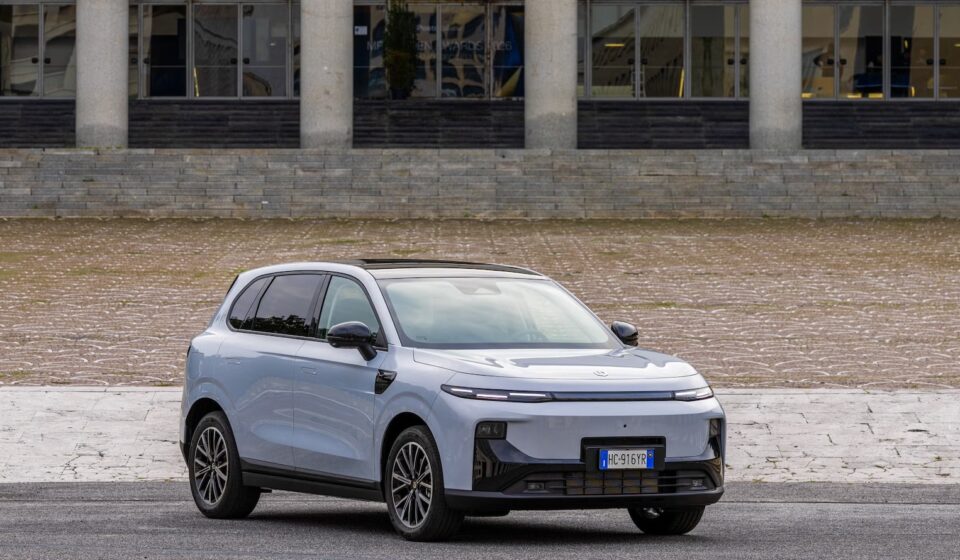
Leapmotor’s B10 EREV SUV has been launched in Mexico with Stellantis’ help: an 18.8 kWh battery aided by a 1.5 L range‑extending engine, validation work done at Stellantis’ Mexican engineering centre, and Stellantis owning a 51% stake in the company. On the surface this is product news; the strategic implications run much deeper.
What this move actually signals for architecture and strategy
-
Market entry is becoming an integration problem, not just a go‑to‑market problem.
Global automotive entrants no longer need to build dealer networks, homologation teams, or service back‑ends from scratch. They can plug into incumbent OEMs’ distribution, regulatory know‑how and engineering resources. For enterprises this means partnerships will increasingly be implemented as technical integration projects: multi‑tenant back‑ends, secure APIs for telematics and OTA updates, and harmonised data models across brands. CTOs must plan for an integration layer that enforces identity, consent, and telemetry standards while allowing differing product lifecycles. -
Ownership structures change the levers of speed vs. control.
A 51% stake by an established OEM is a powerful lever: it accelerates market access and quality validation, but it also concentrates control over brand positioning, aftersales policies, and data flows. Architects should design systems that preserve agility for the newcomer (feature flags, microservices, containerised pipelines) while accommodating governance demands from the majority partner (auditability, hardened CI/CD, stringent security posture). Expect contractual clauses to demand technical capabilities – e.g., auditable OTA pipelines and cryptographically secure telematics. -
Local adaptation – engineering, regulation and climate – isn’t optional.
The B10’s year of testing at a local engineering centre underscores a lesson for product and platform teams: global products must be localised for roads, climate, emissions rules and consumer expectations. This isn’t only mechanical tuning – it includes software configurations (thermal management algorithms, regional charging behaviour models), data retention policies, and localized UX. Architectures must therefore be configurable at deployment time without code forks. -
EREV as a transitional architecture – and what it means for infrastructure.
Range‑extender designs (small battery + ICE generator) reflect a pragmatic, transitional architecture balancing cost, range anxiety and charging availability. For policymakers and infrastructure planners this implies a hybrid fleet for years to come – charging networks and fuel supply chains will co‑exist. For enterprise designers of mobility platforms, that means supporting heterogeneous vehicle telematics, fuel/charge reconciliation, and billing models under a unified commerce & mobility ledger.
A concise Bharat / India lesson (practical, not forced)
Indian EV startups and state planners can draw three clear lessons: (a) pursue strategic alliances with established OEMs to accelerate homologation and distribution, (b) invest early in configurable software and telematics platforms that tolerate multiple powertrain architectures, and (c) treat local validation as a feature – not a checkbox – by building engineering capabilities that mirror the partner’s test and adaptation workflows.
Actionable takeaways for technical leaders
- Treat partner integrations as first‑class architecture concerns: design secure, versioned APIs, feature flags, and multi‑tenant telemetry ingestion.
- Build auditable OTA and CI/CD pipelines from day one to satisfy partners and regulators.
- Model for heterogeneity: your data schemas, analytics and service layer must handle BEV, PHEV, EREV and ICE as coexisting entities.
- Prioritise data governance: telematics crosses borders – guarantee consent, local data residency and encryption to reduce regulatory risk.
- Use local engineering centres early to de‑risk product launches – software parameterisation saves costly hardware rework.
Closing thought
We should stop thinking of EV launches purely as product introductions and start seeing them as distributed systems: multi‑stakeholder, multi‑jurisdictional, and software‑defined. Winning in this space will be less about solitary product engineering and more about orchestrating secure, adaptable integration at scale.
About the Author: Sanjeev Sarma is the Founder Director and Chief Software Architect at Webx Technologies. With a core focus on Generative AI integration, Cloud-Native Scalability, and Enterprise Software Architecture, he has spent over two decades driving digital transformation across Northeast India and beyond. Beyond his corporate leadership, Sanjeev is deeply invested in shaping the future of the IT industry. He serves as an Industry Expert on the Board of Studies for Assam Don Bosco University’s School of Technology, advises state technology committees, and actively mentors emerging tech startups at STPI. He brings a unique, dual perspective of high-level enterprise execution and future-ready academic curriculum development.