Showcase to Scale: Strategic Returns from Competitive Pitch Platforms

We glorify the demo day-then blame the demo when things go sideways. That’s the contrarian I’ve seen too often: visibility is valuable, but it’s not a substitute for product readiness, architectural discipline, or repeatable go-to-market execution.
Context
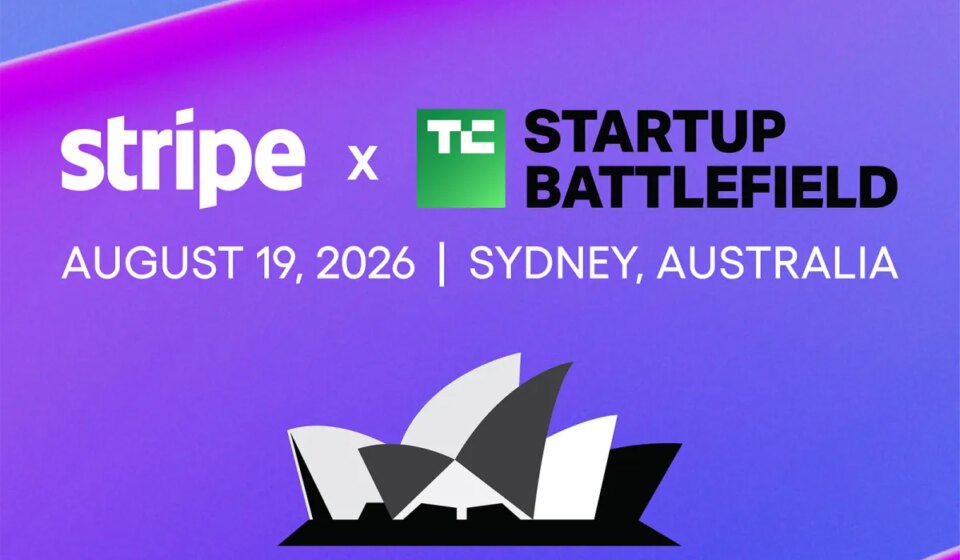
A recent call for applications extended its deadline to July 20, 2026, for an Australia-based startup pitch program whose winners will pitch on August 19, 2026, and whose grand prize includes automatic entry into a later-stage global stage in October 2026. This is the kind of opportunity that promises investor access, media attention, and fast-track routes to global audiences.
Analysis – what this really means for founders and technical leaders
Opportunities like this concentrate value – but they also accelerate scrutiny. What investors and large partners are really buying at these events isn’t the pitch deck; it’s a predictable signal that the startup can scale without breaking. From the vantage of an enterprise architect, three strategic implications matter:
- Architecture must be pitch-ready, not just working.
- Demo stability is table stakes. Design for reproducible demos: infrastructure-as-code (IaC) templates, isolated demo environments, automated rollout/rollback, and synthetic load tests so the product behaves the same on stage as in development.
- Observability is a confidence-builder. Instrumentation (traces, metrics, logs) lets you answer hard questions in real time – “Why did latency spike?” or “Where did the payment fail?” – without guesswork.
- Traction signals must be defensible and measurable.
- Investors at these events look for verifiable KPIs: ARR/MRR trends, CAC payback, retention cohorts, LTV, and pipeline conversion. Ensure your analytics and billing systems can produce audit-ready reports on short notice.
- If your traction depends on a single partner or region, be explicit about risk and mitigation plans. Transparency beats spin.
- Scaling trade-offs are strategic, not technical.
- Speed vs. Stability: chasing rapid feature velocity without regression controls creates technical debt that will be fatal under external scrutiny. Use feature flags, canary releases, and blue/green deploys to balance speed with reliability.
- Cost vs. Growth: credits (for example, payment-fee credits) reduce immediate burn but don’t validate unit economics. Build models that show path-to-profitability beyond promotional credits.
Preparing for a global stage – practical checklist for CTOs and founders
- Production-ready demo environment (IaC + one-click deploy).
- End-to-end smoke tests and a short runbook for the demo.
- Audit-ready metrics dashboard: top-line KPIs, cohort retention, funnel conversion.
- Data governance checklist: where is customer data stored, who can access it, and how do you comply with cross-border regulations?
- Payment and compliance plan if you’re expanding internationally (refund flows, PCI considerations, local tax registration).
- Talent and hiring roadmap showing how you’ll scale engineering and ops in 6–12 months.
A note for founders from Northeast India and other underrepresented ecosystems
These platforms are gateways – not endpoints. For teams from Northeast India, India-wide, or similar ecosystems, the structural advantage is often deep domain insight and frugal engineering. Translate that into international readiness by documenting architecture, demonstrating reproducible traction, and articulating how local constraints shaped scalable solutions. Mentorship and proof-of-concept pilots with local DPI or government partners can serve as compelling evidence of product-market fit and execution capability.
Takeaways
- Visibility accelerates opportunity, but architecture and metrics sustain it.
- Treat a pitch application as a systems audit: product, data, infra, and business model must all be defensible.
- Use demo credits and prizes to buy runway and validation – not to mask poor unit economics.
- For regional founders, convert local advantages into global narratives: repeatable outcomes, not anecdotes.
Closing thought
A pitch stage can open a door – but only the teams who have built repeatable systems, measurable traction, and resilient architecture can walk through it and stay in the room.
About the Author: Sanjeev Sarma is the Founder Director and Chief Software Architect at Webx Technologies. With a core focus on Generative AI integration, Cloud-Native Scalability, and Enterprise Software Architecture, he has spent over two decades driving digital transformation across Northeast India and beyond. Beyond his corporate leadership, Sanjeev is deeply invested in shaping the future of the IT industry. He serves as an Industry Expert on the Board of Studies for Assam Don Bosco University’s School of Technology, advises state technology committees, and actively mentors emerging tech startups at STPI. He brings a unique, dual perspective of high-level enterprise execution and future-ready academic curriculum development.

