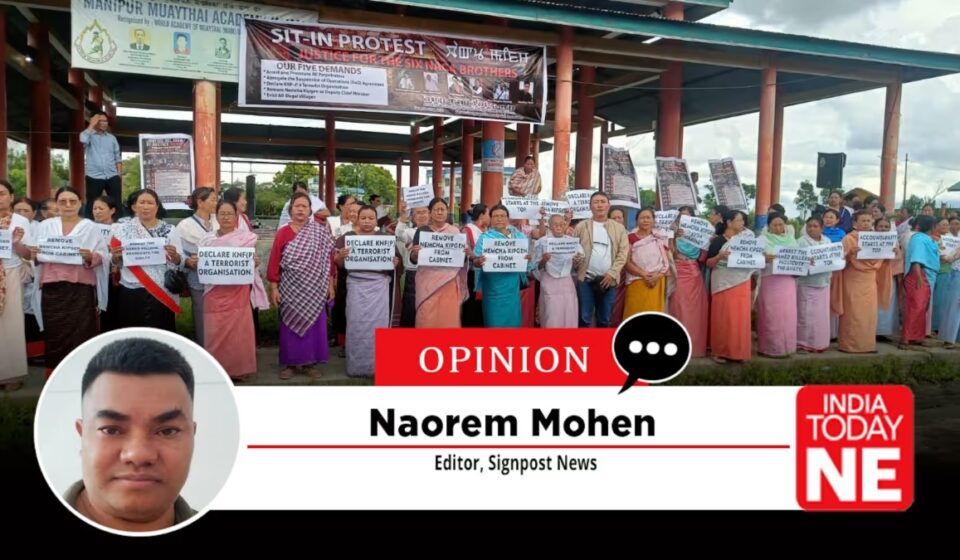

An advocacy report by Resurgent Manipur has described the abduction, prolonged captivity and killing of six Liangmai Naga civilians between 13 May and 10 June 2026 as a severe test of the rule of law in the state. The 94‑page report, titled Justice for the Six Liangmai Nagas and published in June 2026, says twenty Liangmai civilians were taken from Leilon Vaiphei on 13 May; women and a child were later released, while six adult men remained captive and were found dead on 10 June. The victims are identified as Pr. Kenpibou, Rev. Manu, Phenrongwibou Thiumai, Dilip Thiumai, Kaliwangbou Abonmai and Ch. Phenrilung, and the report records they were civilians, not members of any armed organisation. The incident is reported to have occurred near the Leimakhong military installation, a detail community representatives have cited in questioning the security response.
The report frames these deaths not as isolated crimes but as symptoms of deeper failures: contested land claims, settlement expansion, forest disputes, weak monitoring of armed groups, and what it calls institutional hesitation. It notes that narratives often outpace evidence in conflict settings and stresses that civilian deaths must be treated as failures of governance and protection rather than absorbed into propaganda. The chronology-twenty‑seven days between abduction and recovery of the bodies in a sensitive zone-raises institutional questions about search operations, coordination between agencies, negotiation efforts and why the captives were not retrieved alive.
Resurgent Manipur is careful to state the report does not replace formal investigations. It acknowledges reliance in places on witness accounts, community documentation and public statements that could not always be independently verified, and it says final legal responsibility must be determined by competent authorities. At the same time the report argues caution should not be an excuse for inaction and finds sufficient grounds to demand an independent, comprehensive probe into the abduction, deaths, alleged roles of individuals or groups, the adequacy of the security response, and the broader enabling conditions.
The report centres Konsakhul in the wider context, describing it as a legally recognised Liangmai village and citing a Land Lease Agreement of 19 October 1920 between Konsakhul and Leilon Vaiphei that it says had a 100‑year term, which the Konsakhul Village Authority interprets as expiring in 2020. Resurgent Manipur urges that historical land documents, customary claims, forest notifications and administrative records be lawfully examined to prevent disputes from becoming causes of violence.
It also highlights concerns about the Suspension of Operations (SoO) framework, reporting allegations that some armed groups operating under SoO have acted in ways that undermine its purpose and public confidence. The report’s demands include an independent investigation, review of institutional response and the SoO framework, legal review of land and settlement claims, meaningful support for victims’ families, and long‑term institutional reforms.
The authors argue that justice for the six Liangmai Nagas is a test of Manipur’s ability to protect civilians across communities and that timely, transparent action is essential to restore public trust and prevent further tragedy.
Original Source: https://www.indiatodayne.in/opinion/story/justice-for-six-liangmai-nagas-is-a-test-of-manipurs-rule-of-law-1417069-2026-07-01?utm_source=rssfeed
Category:
Tags:
Publish Date: 2026-07-01 14:57:00