Architecting Vertical AI for Enterprise Tender Automation

We obsess about model size, latency and benchmark scores – and yet the quiet engineering work of turning a general LLM into a domain-grade automation platform is the far harder problem. The industry celebrates “better models”; enterprises pay the bill for pipeline, governance and integration.
Context
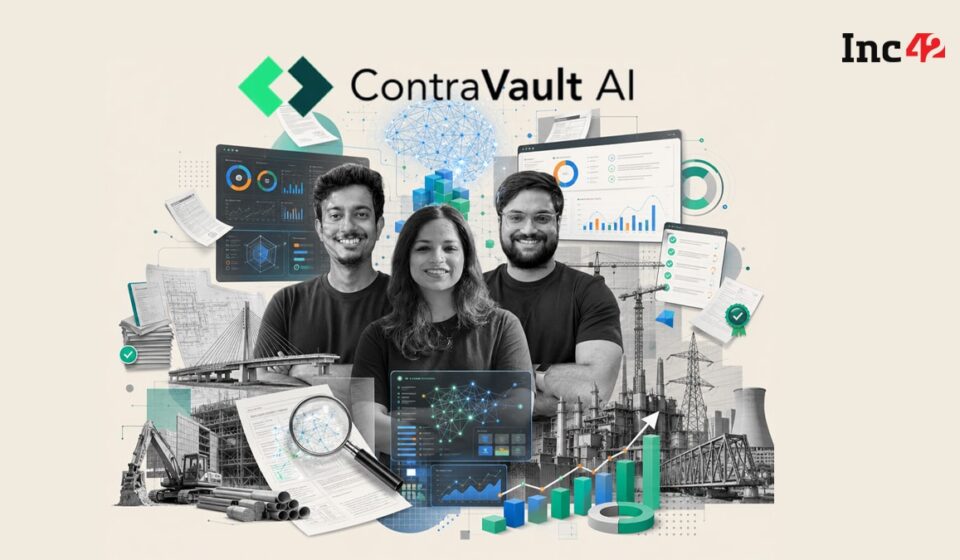
I recently came across a funding announcement about a startup that applies generative AI to the tender-to-bid lifecycle. Reported to have raised a pre-Series A round and to be automating tender discovery, bid qualification and even clause negotiation, the company highlights a useful trend: verticalised AI solutions that embed deep domain knowledge into end-to-end operational workflows.
What this means for enterprise architecture
Vertical AI is not just about better prompts or a fine-tuned model. It requires a rethink of the entire enterprise stack – from data ingestion to human-in-the-loop controls to regulatory audit trails.
-
Data contracts and ingestion: Tender ecosystems pull from public portals, private RFP feeds, legacy ERPs and vendor documents. Architectures must treat each source as a streaming data contract with strong validation, provenance metadata and schema evolution plans. Without this, model outputs will be brittle and compliance gaps will emerge during audits.
-
Knowledge representation beyond embeddings: For procurement and engineering drawings, raw embedding search is helpful but insufficient. A hybrid approach – combining retrieval-augmented generation (RAG) with structured knowledge graphs, ontologies for contract clauses, and deterministic rule engines for eligibility checks – reduces hallucination and produces audit-friendly decisions.
-
MLOps and model governance: Automating Go/No-Go recommendations or clause edits changes legal exposure. Model versioning, explainability layers, and decision logging (immutable audit trails tied to inputs and model versions) must be first-class features. Enterprises will increasingly require “reproducible opinions” from AI – i.e., the ability to recreate why a bid was qualified at a given time.
-
Integration and operational scalability: Real value appears when AI outputs feed existing procurement workflows – ERP approvals, sign-off chains, contract lifecycle management. Event-driven microservices, idempotent APIs and backpressure-aware pipelines ensure the AI layer scales without breaking downstream systems. Also consider multi-tenancy trade-offs: a shared model with tenant-specific adapters versus per-customer fine-tunes.
-
Security, privacy and procurement law: Public procurement often involves sensitive pricing strategies and compliance with procurement statutes. Architects must plan for data residency, fine-grained access controls, and cryptographically verifiable logs for audits – especially when bidding on government contracts.
-
The engineering-drawings moat: Moving from text to structured engineering drawing automation is a non-trivial leap – it demands spatial reasoning, CAD-aware parsers and deterministic extraction of BOMs and quantities. When done right, this is the kind of capability that creates defensible differentiation because it blends ML with heavy domain engineering.
Why this matters for markets like India (and the regions I work with)
India’s infrastructure market is vast and tender-driven. I’ve seen – through advisory work and interactions with local SMEs – how a 60% reduction in manual tender processing time can translate into real competitive advantage for regional contractors. Solutions that respect local e-procurement formats, support regional languages, and provide low-friction integrations with commonly used ERPs will unlock participation from smaller players and democratise access to projects beyond large conglomerates.
Practical takeaways for CTOs and founders
- Treat domain data as product: design data contracts, provenance, and schema monitoring from day one.
- Combine RAG with structured knowledge graphs and rule engines to reduce hallucinations and produce auditable outputs.
- Build decision-logging and explainability into the core product; legal teams will demand it long before marketing does.
- Prioritise integration patterns (event-driven, idempotent APIs) over standalone dashboards – enterprises value fit over splashy features.
- Invest in CAD/engineering parsing early if you aim for infrastructure markets – it’s a high-cost, high-moat capability.
Closing thought
The next wave of enterprise AI won’t be won by the best general model – it will be won by teams that engineer the full stack: data, representations, governance and deterministic integrations that enterprises can trust.
About the Author: Sanjeev Sarma is the Founder Director and Chief Software Architect at Webx Technologies. With a core focus on Generative AI integration, Cloud-Native Scalability, and Enterprise Software Architecture, he has spent over two decades driving digital transformation across Northeast India and beyond. Beyond his corporate leadership, Sanjeev is deeply invested in shaping the future of the IT industry. He serves as an Industry Expert on the Board of Studies for Assam Don Bosco University’s School of Technology, advises state technology committees, and actively mentors emerging tech startups at STPI. He brings a unique, dual perspective of high-level enterprise execution and future-ready academic curriculum development.