Architecting India-First Bio-AI Platforms for Preventive Medicine

We assume world-class medicine must be imported – cheaper, faster, safer. That assumption is beginning to crack. What I find far more consequential than any single research breakthrough is the shift in architecture behind Indian life‑sciences: from imported stacks and one-off pilots to a growing, India‑first R&D and delivery ecosystem that couples genomics, AI and frugal engineering.
Why this matters now
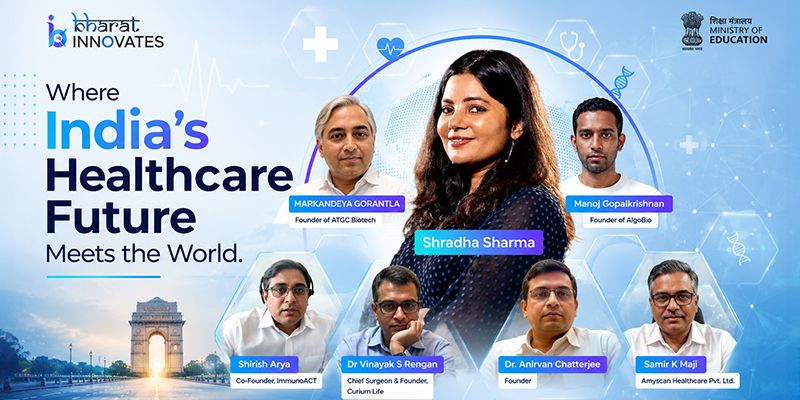
I recently read a YourStory roundtable summary (covering startups headed to the Bharat Innovates showcase in Nice, France, June 14–16, 2026) that highlights a useful signal: Indian teams are building end‑to‑end capabilities – diagnostics, therapeutics, AI‑assisted surgery and bio‑manufacturing – rather than assembling components from Western toolchains and markets. That change reframes the problem from “how do we adapt foreign solutions?” to “how do we design systems for an Indian disease landscape and delivery environment?”
What this means for enterprise and research architecture
Three architectural implications matter to CTOs, health researchers and founders:
-
Data sovereignty and representative datasets are now strategic assets.
Genomics and clinical AI are only as generalisable as the data that trains them. India’s population genetics and disease epidemiology differ in important ways from Western cohorts; designing models on non‑representative data will produce brittle, biased outcomes. The architecture answer is not a single monolithic data lake, but a federated data fabric: standard schemas, strong consent and audit trails, privacy‑preserving computation (homomorphic encryption, secure multi‑party computation, differential privacy) and auditable provenance. This lets hospitals and regional labs contribute value without ceding control. -
AI/ML pipelines must be clinical‑grade, not research toyboxes.
Speed vs. stability reappears as a design trade‑off. Research prototypes must be translated into reproducible CI/CD for models: versioned datasets, clear evaluation on clinically relevant metrics, post‑deployment performance monitoring and human-in-the-loop governance. For surgical AI or diagnostic classifiers, this means establishing rollback policies, explainability layers for clinicians, and end‑to‑end testing across edge devices and low‑bandwidth networks. -
Convergence of wet lab and software demands hybrid infrastructure.
This is not purely a cloud problem. Wet‑lab workflows require secure, low‑latency compute near lab instruments (edge compute), deterministic lab automation, and integration with RIMS/LIMS systems. Simultaneously, bio‑manufacturing scale‑up needs supply‑chain visibility and regulatory traceability built into the platform – immutable logs, signed releases, and compliance pipelines that mirror software release practices.
How to operationalise at scale (practical moves)
- Start with modular, standards‑first APIs for clinical data and genomic formats so components (diagnostics, analytics, EHRs) can interoperate.
- Invest in federated learning and secure aggregation to build models without centralising sensitive patient data.
- Treat regulatory compliance as continuous delivery: embedding validation, audit reports and change control in the release cycle.
- Design for constrained environments: lightweight models, on-device inference, and opportunistic sync for rural hospitals.
The India lens (a practical bridge)
These architectural choices align with Digital Public Infrastructure (DPI) principles. In my work with STPI and state committees, I’ve argued that DPI for healthcare must prioritise low‑friction consent flows, regional language interfaces, and connectivity‑resilient clients – not just APIs and identity. For the Northeast and other low‑resource regions, the same principles (frugal edge, federated data, auditable consent) make cutting‑edge diagnostics usable at the last mile.
Takeaways for leaders
- Treat local data as foundational IP; build federated, privacy‑preserving fabrics rather than monoliths.
- Operationalise ML for medicine: CI/CD, monitoring, explainability and clinician oversight.
- Align wet‑lab automation with software release engineering to shorten the path from discovery to reliable product.
- Invest in modular bio‑manufacturing and regulatory automation to reduce time-to-market and cost.
Closing thought
If India can architect its health stack from the ground up – combining representative data, disciplined ML engineering and pragmatic edge design – the result won’t just be home‑grown products; it will be a new blueprint for delivering equitable, scalable medicine worldwide.
About the Author: Sanjeev Sarma is the Founder Director and Chief Software Architect at Webx Technologies. With a core focus on Generative AI integration, Cloud-Native Scalability, and Enterprise Software Architecture, he has spent over two decades driving digital transformation across Northeast India and beyond. Beyond his corporate leadership, Sanjeev is deeply invested in shaping the future of the IT industry. He serves as an Industry Expert on the Board of Studies for Assam Don Bosco University’s School of Technology, advises state technology committees, and actively mentors emerging tech startups at STPI. He brings a unique, dual perspective of high-level enterprise execution and future-ready academic curriculum development.