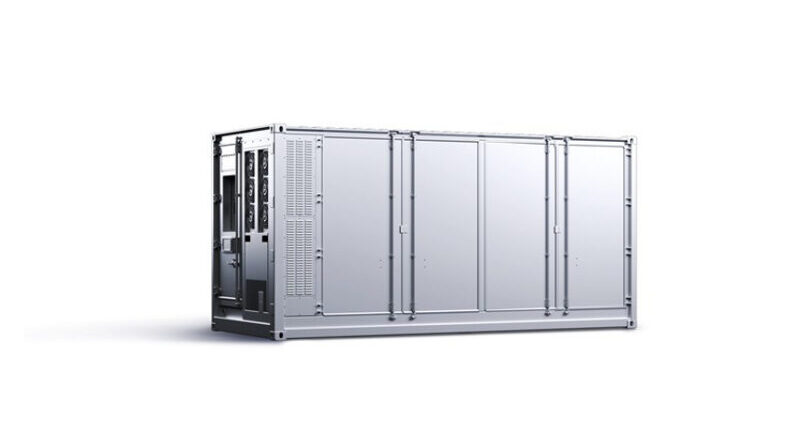
Beyond EVs: Architecting Systems for a Battery-First Grid

Strategic Zoom-Out: Batteries moving from niche to infrastructure
Ten years ago, batteries were talked about mainly as the enabler of electric vehicles. Today they are fast becoming a foundational layer of the power system – not just a product line for automakers but a strategic infrastructure for grids, data centers, factories and cities. A recent report noting that CATL expects stationary energy storage to represent roughly half of its battery sales by 2030 is a useful signal of that larger structural shift.
The signal
Reporting highlighted a clear trend: battery makers that were built for the EV boom are pivoting hard into stationary storage as wind and solar penetration grows. The core dynamic is simple – variable renewables need local, dispatchable capacity, and batteries are the fastest-to-deploy, most flexible answer.
Why this matters for architects and leaders
-
Reframing batteries as infrastructure, not commodity components
When storage becomes a line item in grid planning, it changes procurement, financing and lifecycle models. Enterprise architects should stop treating backup power or UPS as isolated projects and start designing energy as a persistent, shared infrastructure service – akin to networking or data storage. This requires new APIs (for energy scheduling and telemetry), stronger SLAs, and integration between energy management and application orchestration layers. -
Different use‑cases require different technical stacks
Stationary storage isn’t simply EV packs put in a box. Chemistry choices (LFP vs NMC vs flow batteries), thermal management, safety systems, and control software differ based on whether the system supports fast frequency response, multi-hour firming, or long-duration seasonal shifting. CTOs and product architects must evaluate trade-offs: power density vs cycle life, capital cost vs total cost of ownership, and speed of ramp vs degradation. -
Supply‑chain, circularity and geopolitical risk become enterprise concerns
Leading manufacturers are vertically integrating (mining, recycling) to manage raw‑material risk. For enterprises that will own or contract large storage fleets – utilities, telcos, cloud providers, logistics companies – this means procurement decisions now carry long‑term exposure to mining, recycling, and regulatory landscapes. Designing for circularity (end‑of‑life recovery, standardised modules, second‑life reuse) is no longer just good ethics; it’s risk management. -
Software and control become the differentiator
As battery hardware commoditizes, software – for predictive degradation modelling, demand response integration, market bidding and safety – will be the competitive moat. Enterprise architects should invest in interoperable, standards‑based energy control planes that can plug into grid operators, DERMS (Distributed Energy Resource Management Systems) and cloud orchestration tools.
India and regional opportunity (a practical bridge)
For India – and for regions such as the Northeast where hydropower, seasonal rainfall patterns and growing solar deployments coexist – the rise of stationary storage is an opportunity. Pairing batteries with existing hydro reservoirs, designing microgrids for industrial clusters, and creating domestic recycling and cell‑assembly capacity can keep value local and reduce import dependence. As someone engaged with industry bodies and startups, I see clear scope for public–private pilots that bundle storage with demand‑side management, electric mobility fleets and industrial power reliability.
Concrete takeaways for leaders
- Treat energy storage as an infrastructure service: design APIs, SLAs and telemetry from day one.
- Choose battery chemistries and architectures aligned to the intended grid role (short‑duration vs long‑duration).
- Build circularity and end‑of‑life plans into procurement – standardise modules to reduce integration and recycling costs.
- Invest in software: predictive maintenance, market participation and safety controls will unlock value.
- Engage early with regulators and utilities: market rules and interconnection standards will shape technical feasibility and ROI.
Closing thought
We are moving from an era where electricity generation was the headline to one where storage and orchestration decide system value. For architects and founders, that shift is both a risk and a vast playground for innovation.
About the Author: Sanjeev Sarma is the Founder Director and Chief Software Architect at Webx Technologies. With a core focus on Generative AI integration, Cloud-Native Scalability, and Enterprise Software Architecture, he has spent over two decades driving digital transformation across Northeast India and beyond. Beyond his corporate leadership, Sanjeev is deeply invested in shaping the future of the IT industry. He serves as an Industry Expert on the Board of Studies for Assam Don Bosco University’s School of Technology, advises state technology committees, and actively mentors emerging tech startups at STPI. He brings a unique, dual perspective of high-level enterprise execution and future-ready academic curriculum development.