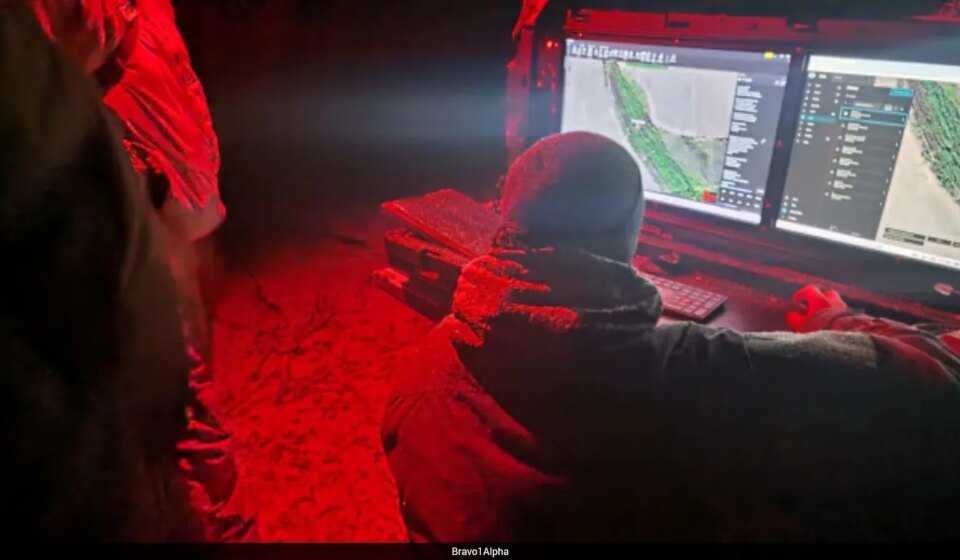

A new package of real‑time satellite imagery, artificial intelligence and 3D simulation is allowing Ukrainian forces to identify targets and map attack‑drone flight paths within hours-what once took weeks of analysis and planning, the Wall Street Journal reported. The system sends near‑real‑time high‑definition images to a soldier’s device, flags unusual activity with AI, and generates routes for strike drones, sharply shortening the sensor‑to‑shooter cycle.
One example cited by the report described a Ukrainian unit that could not observe a suspected meeting site with a reconnaissance drone because of tree cover; satellite sensors delivered to the team’s gadgets revealed the metal frames of armoured vehicles, after which an attack drone was dispatched to strike the building.
According to the reporting, rapid delivery of imagery and automated target analysis has reduced the time needed to locate and strike Russian assets by almost 90 percent. A Ukrainian fighter quoted in the piece said collecting and centrally reviewing human‑source information typically takes at least two days-by which time data can become stale.
Proponents say the approach also conserves money and lives by reducing dependence on costly surveillance drones that can be shot down. The satellites, previously used to monitor illegal fishing and update mapping services, are now being applied to support mid‑range strikes against air defences, warehouses and military hubs-targets whose removal can limit threats to frontline personnel.
The effort is a trans‑Atlantic collaboration between Colorado‑based Vantor, Dutch geospatial firm Bravo1Alpha, U.S. company Persistent Systems and Ukrainian defence firm Burevii. The Washington Post reported that the arrangement is especially useful for surveying large areas and for operations when winter conditions-fog, snow-complicate ground surveillance.
Vantor’s chief transformation officer, a former Navy SEAL, told reporters the company’s 10 satellites survey about seven million square kilometres a day and revisit each point some 12–15 times; coordinate accuracy is said to be within roughly five metres, precise enough to plan a drone’s flight route.
Analysts caution, however, that the system falters under sustained thick cloud cover, which can make tracking moving targets during much of the winter nearly impossible.
Original Source: https://www.ndtv.com/world-news/how-ukraines-satellite-intelligence-move-is-saving-money-time-lives-11596792#publisher=newsstand
Category:
Tags:
Publish Date: 2026-06-05 19:44:00