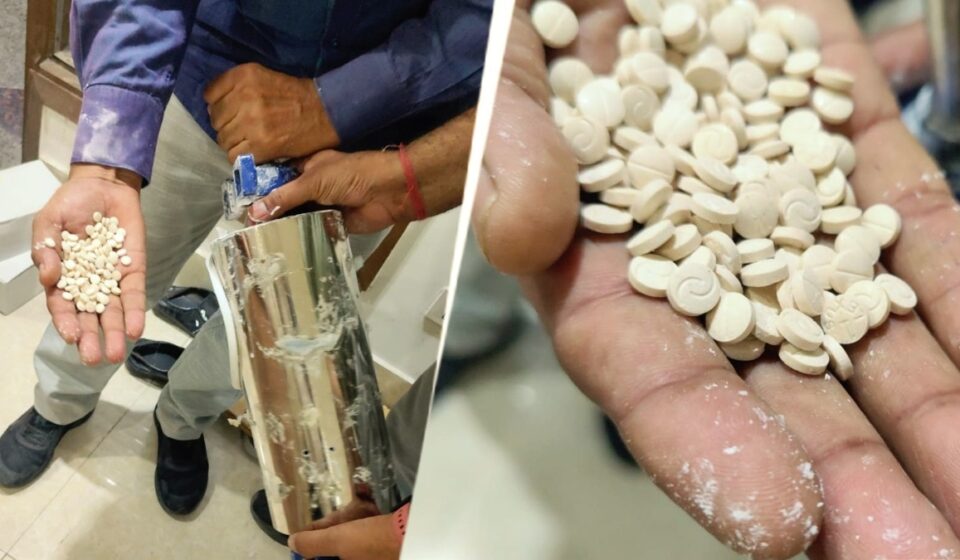

The Narcotics Control Bureau (NCB) has seized a massive consignment of Captagon tablets worth Rs 182 crore — the first such seizure reported in India — recovering the drugs from Gujarat’s Mundra Port and from a location in Delhi’s Neb Sarai as part of “Operation Ragepill,” Union Home Minister Amit Shah announced on May 16, 2026. A foreign national, believed to be Syrian, has been arrested, and authorities say the consignment was destined for Gulf countries. Mr Shah tweeted: “Modi government is resolved for a ‘drug-free India’… Our agencies have achieved the first-ever seizure of Captagon, the so‑called ‘Jihadi Drug’.”
Officials have signalled alarm at the scale and destination of the shipment, saying the drugs’ intended route to the Gulf raises concerns about regional trafficking networks and possible links to conflict zones. The NCB operation targeted both the port consignment and a follow-up location in the national capital, authorities said, as part of coordinated enforcement steps under the operation’s mandate.
Captagon — often called the “jihadi drug” or the “poor man’s cocaine” — is a highly addictive stimulant that has repeatedly appeared in Syria and other parts of the Middle East. The name traces in part to reports of its use by Islamic State fighters during the Syrian civil war to remain alert, suppress fear and sustain long periods of activity. That association has helped cement the inflammatory nickname in media and security discussions.
The substance sold today as Captagon differs from the original pharmaceutical developed in the 1960s. Fenethylline, the original compound, was once used medically for attention disorders and narcolepsy but was banned in the 1980s because of its abuse potential and later placed under the UN Convention on Psychotropic Substances’ Schedule II. Contemporary illegal Captagon is clandestinely manufactured and typically contains a mix of amphetamines, caffeine, methamphetamine and other synthetic chemicals.
Experts warn that even small doses can be dangerous: users may stay awake for long periods, experience appetite suppression and bursts of energy, and face heightened risk of aggression and other violent or reckless behaviour. Long-term use can produce serious psychological damage. Large stockpiles of Captagon were reportedly discovered in December 2024 in Syria amid shifting control of territory, and authorities say profits from smuggling can fuel organised crime and extremist networks — a key reason the Indian seizure has raised national security concerns.
Original Source: https://www.indiatoday.in/india/story/jihadi-drug-captagon-india-seizure-amit-shah-gulf-countries-2912780-2026-05-16
Category:
Tags:
Publish Date: 2026-05-16 23:44:00