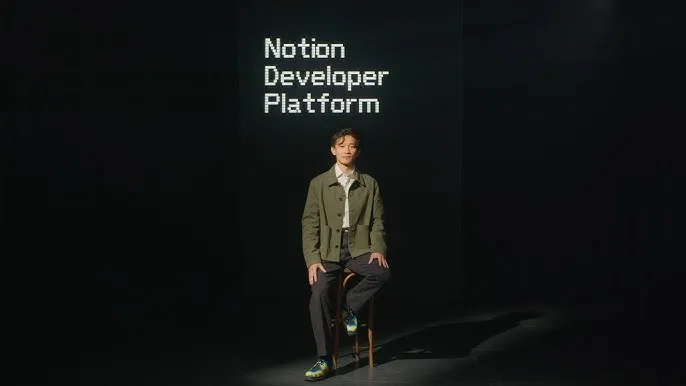

The next phase of productivity software is less about prettier UIs and more about becoming the orchestration layer for work – where people, data and autonomous agents coordinate across systems. Ten years from now we’ll look back at the moment platforms stopped being single-purpose apps and started behaving like lightweight, programmable infrastructure. Notion’s new Developer Platform is a textbook example of that shift.
The signal: Notion has moved beyond in-app AI helpers to offer a developer platform with Workers (a sandbox for custom code), database sync from any API, an External Agent API, and integrations with partner agents – all exposed through a Notion CLI. In short: agents + custom code + live data in a single, orchestrated workspace.
Why this matters to architects and CTOs
– Orchestration, not UX, becomes the product. When a tool can coordinate actions across Salesforce, Postgres, internal models and third‑party agents, it starts behaving like middleware. That’s a strategic pivot from “note-taking app” to “automation and knowledge hub.” For enterprise architects this shifts design considerations from isolated integrations to platform-level governance, observability and SLA management.
– Build vs. buy changes shape. Developers gain the convenience of running custom logic without managing separate infrastructure – lowering friction and time-to-value. But that convenience also transfers operational surface area and potential lock-in to the vendor. Treat these new platform runtimes as a managed service: you buy productivity, but you inherit constraints and a dependency model.
– Data contracts and provenance become first-class concerns. Syncing “any data” into a shared canvas is powerful – and risky. Enterprises must define clear data contracts, lineage, freshness guarantees and access controls. Without them, teams will create inconsistent “single sources of truth” that exacerbate, not reduce, operational debt.
– Security and governance must be rethought for the agentic era. Agents operating across tools can amplify privilege creep and lateral movement. Zero Trust principles, fine-grained role-based access, runtime isolation policies for Workers, code signing, and strict audit trails are non-negotiable.
– Standards like MCP (Model Context Protocol) matter. Interoperability between agent ecosystems reduces vendor lock-in and enables best-of-breed composition. Architecture teams should watch and participate in these standards so integrations remain portable.
Practical steps for leaders
– Inventory use-cases where agents offer clear ROI (repetitive human tasks, data reconciliation, contextual summaries) and start with low-risk automation to test behavior and trust models.
– Create a lightweight “agent charter” and data contract template: expected inputs/outputs, SLAs, retry semantics, and privacy classifications before allowing syncs into core databases.
– Treat Workers as a managed runtime: enforce code reviews, dependency policies, secrets management, and runtime quotas. Automate observability – logs, traces and behaviour metrics – from day one.
– Abstract vendor runtimes behind an internal API layer. If you adopt Notion’s Workers (or similar), avoid embedding business logic directly in third-party sandboxes. Keep orchestration and policy enforcement under your control to reduce long-term lock-in.
– Engage legal and compliance early on for data residency, retention and export policies – particularly for regulated industries and multi-jurisdiction deployments.
A quick Bharat note (why Indian teams should care)
For Indian startups and MSMEs, the ability to run logic without standing up servers can dramatically lower TCO and speed iteration. But in India’s compliance landscape, companies must pair these productivity wins with clear data residency and governance choices – especially when syncing customer or government data into SaaS canvases.
Takeaways
– The real product is coordination: platforms that orchestrate people, data and agents will eclipse single-purpose apps.
– Convenience accelerates adoption; governance and observability must follow just as quickly.
– Standardization and portability (MCP and similar) will decide winners in the long run – not just features.
– Start small, harden fast: pilot the agentic workflows, then codify policies, observability and abstraction layers before wide rollout.
Closing thought
We are moving from software that answers questions to platforms that take responsible, auditable action. The architects who treat this as infrastructure – not a feature – will turn short-term productivity gains into durable competitive advantage.
About the Author
Sanjeev Sarma is the Founder Director of Webx Technologies Private Limited, a leading Technology Consulting firm with over two decades of experience. A seasoned technology strategist and Chief Software Architect, he specializes in Enterprise Software Architecture, Cloud-Native Applications, AI-Driven Platforms, and Mobile-First Solutions. Recognized as a “Technology Hero” by Microsoft for his pioneering work in e-Governance, Sanjeev actively advises state and central technology committees, including the Advisory Board for Software Technology Parks of India (STPI) across multiple Northeast Indian states. He is also the Managing Editor for Mahabahu.com, an international journal. Passionate about fostering innovation, he actively mentors aspiring entrepreneurs and leads transformative digital solutions for enterprises and government sectors from his base in Northeast India.