
We spend billions chasing larger, higher-resolution primary displays-and then ask the same human operator to juggle alerts, chats, streaming controls and telemetry on that one screen. That’s a mismatch between human attention and the way we architect our workspaces.
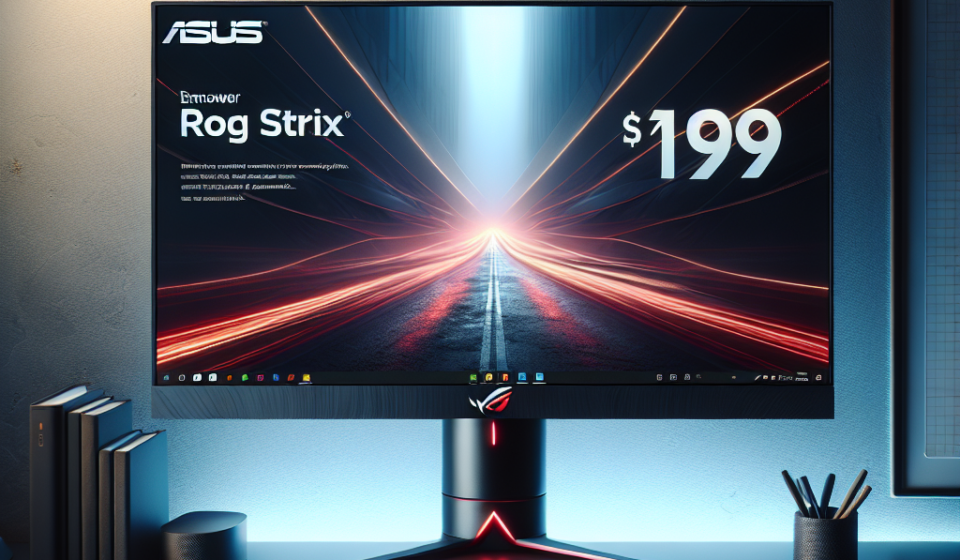
I recently came across an interesting product announcement from Asus: a compact 12.3-inch, wide-format touchscreen designed to sit beneath a primary monitor and act as a dedicated surface for secondary tasks – hardware telemetry, chat overlays, media controls and quick shortcuts. The device pairs an IPS touchscreen with USB-C connectivity and ships with a one‑year subscription to an observability tool to turn it into a live hardware dashboard.
Why this matters beyond a gadget review
At first look this is a consumer peripheral. From an enterprise architecture and operations perspective, however, it signals three broader shifts worth unpacking.
1) The rise of purpose-built secondary surfaces for attention management
We usually treat displays as homogeneous vertical space. But people don’t consume information that way: they need a primary focus area and a peripheral channel for continuous context (alerts, status, comms). Dedicated secondary screens reduce context switching costs and cognitive load. For teams running NOCs, SRE war rooms, trading desks or hybrid helpdesks, a small, always-on surface for status and controls can materially improve mean time to detect and mean time to respond.
2) Hardware + SaaS bundling changes procurement calculus
Bundling an AIDA64-style observability subscription with the hardware is telling. Vendors increasingly sell a combined HW+SW experience – which simplifies on-boarding but also introduces dependency and licensing questions. For an enterprise, the decision becomes “buy the integrated surface and software” versus “bring-your-own-display + our monitoring stack.” The trade-offs are classic build vs. buy: speed and polish versus long-term portability and vendor lock-in.
3) Edge ergonomics, manageability and security are now an enterprise problem
A touchscreen tucked under a monitor changes attack surfaces and support needs. USB‑C single-cable simplicity helps deployment, but fleet management, driver updates, kiosk mode enforcement, physical access control, and secure boot/firmware verification become relevant for corporate rollouts. Small devices can be vectors for misconfiguration if not managed alongside endpoint and identity controls.
What CTOs and founders should evaluate
– Map the use-case first: Are you optimizing for persistent telemetry, transient controls (media/streaming), or secure input? The exact role dictates acceptable trade-offs.
– Prioritize standards and APIs: Prefer devices exposing standard video (USB-C alt mode) and input APIs so your existing management and observability stacks can integrate without bespoke drivers.
– Consider lifecycle and TCO: Upfront price is only part of the story – factor in software subscriptions, update cadence, and replacement strategy.
– Secure the edge: Incorporate these displays into endpoint management, ensure firmware integrity checks, and restrict local execution where possible.
– Pilot in places that benefit most: command centers, control rooms, and customer support desks are low-risk, high-value testbeds.
A quick note for government and smaller organisations in India (including the Northeast)
In constrained environments where desk space and budgets are tight, a compact secondary display can replace the need for a second full monitor while providing the same operational benefit. For state NOCs, municipal control rooms or digital service desks, such devices can lower physical footprint and power consumption while improving visibility – but procurement should emphasize open standards and manageable software licensing to avoid long-term vendor lock-in.
Takeaways
– Little surfaces can deliver big gains in attention management and operational responsiveness.
– Treat HW+SW bundles as strategic procurement decisions – they impact architecture, licensing and vendor risk.
– Integrate these devices into endpoint management and identity-controlled workflows before wider rollout.
Closing thought
As architects we focus on scalability and resilience at the server and network layers. It’s time to give the human interface the same architectural rigor – designing not just APIs and pipelines, but the peripheral surfaces that shape human attention and response.
About the Author Sanjeev Sarma is the Founder Director of Webx Technologies Private Limited, a leading Technology Consulting firm with over two decades of experience. A seasoned technology strategist and Chief Software Architect, he specializes in Enterprise Software Architecture, Cloud-Native Applications, AI-Driven Platforms, and Mobile-First Solutions. Recognized as a “Technology Hero” by Microsoft for his pioneering work in e-Governance, Sanjeev actively advises state and central technology committees, including the Advisory Board for Software Technology Parks of India (STPI) across multiple Northeast Indian states. He is also the Managing Editor for Mahabahu.com, an international journal. Passionate about fostering innovation, he actively mentors aspiring entrepreneurs and leads transformative digital solutions for enterprises and government sectors from his base in Northeast India.
