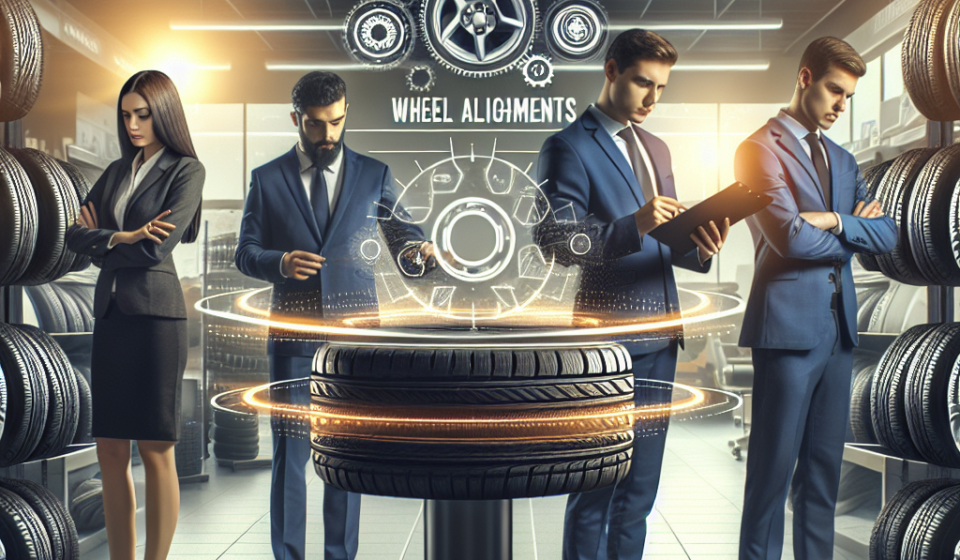

We often think of vehicle maintenance as a series of isolated transactions: a tire here, a brake pad there. A recent consumer article listing major U.S. retailers that now offer “lifetime” wheel alignment packages surfaced a different idea – one that has broader implications for product companies, platform architects, and service leaders. Rather than selling an alignment as a one-off, these retailers are packaging alignment as a lifetime service tied to vehicle ownership. This simple framing – pay once, receive ongoing preventive care – exposes a set of strategic choices every technology and operations leader should study.
Context (the signal)
The original piece surveyed several national and regional chains (Tires Plus, Firestone, Wheel Works, Auto Repair Pros, Christian Brothers) and highlighted how each converts a routine maintenance event into a customer-retention product. The article also noted practical details: digital vehicle inspection (DVI), centralized equipment standards (e.g., Hunter machines), and contractual fine print (parts or special repairs often excluded).
Analysis – what this means for architects, CTOs and founders
1) Servitization at scale is a product + operations problem, not just marketing.
Transforming a commodity service into a “lifetime” offering requires predictable operational throughput, standardized tooling, and clear SLAs. For tech leaders that means instrumenting the field experience: appointment booking, automated reminders, evidence-based DVIs (images + measurements), and a single source of truth for a vehicle’s alignment history. If one location uses different equipment or practices, the promise of “lifetime” becomes a liability.
2) Lifetime offers change the unit economics and force a long view on acquisition cost.
A one-time fee converts customer acquisition cost into a long-term service obligation. Financial models must capture expected alignment frequency, failure modes (e.g., potholes, suspension damage), and the cost of exceptions. This is identical to SaaS firms moving from perpetual licenses to subscription: you must forecast churn, servicing cost, and cross-sell potential to validate the offer.
3) Data creates defensive differentiation.
Retail chains that standardize measurement equipment and capture alignment traces turn a low-margin service into a data asset. Over time, you can predict alignments by vehicle model, road type, or region, route maintenance visits optimally, and surface targeted upsells (suspension, tires, balancing). For enterprises, the lesson is clear – instrument everything at the edge; telemetry becomes a competitive moat.
4) The trust layer and transparency matter.
Customers will expect clear terms (what’s excluded), auditability (before/after measurements), and convenience (multi-location reciprocity). Digital Vehicle Inspection and photographic evidence are not gimmicks – they’re trust infrastructure. From an architecture perspective, make provenance and time-series histories immutable and export-friendly for customers and fleet managers.
5) Operational resiliency and risk management must be baked in.
“Lifetime” implies open-ended liability. Define boundaries through contract terms, automations that detect outlier cases, and a playbook for parts/repairs. Also prepare for fraud-resistant identity of vehicle ownership (title transfers) and a smooth handover process.
Localization – why this matters for India and fleets in the Northeast
While the article is U.S.-centred, the principle maps cleanly to India. Roads with frequent potholes, mixed vehicle fleets, and rising EV adoption create an even stronger case for preventive, data-driven alignment services. For fleet operators and last-mile delivery providers in regions with challenging roads, a lifetime-style program (or subscription) reduces downtime and optimizes total cost of ownership. For startups and SMEs, this is an opening to build localized service networks that combine digital inspection, predictive maintenance, and transparent pricing.
Actionable steps for leaders
– Treat after-sales as a product: define SLAs, exceptions, and measurable KPIs before launch.
– Instrument field work: capture standardized alignment data and tie it to a single vehicle record.
– Model lifetime economics conservatively: include parts, outliers, and transfer-of-ownership scenarios.
– Use data to shift from reactive fixes to predictive maintenance for high-utilization fleets.
– Build trust through transparency: DVIs, clear terms, and cross-location guarantees.
Closing thought
“Lifetime” offers are less about gimmicks and more about a strategic shift – from transactional fixes to lifecycle relationships. For technologists and leaders, the imperative is to design the systems, data flows, and operational guardrails that make those promises scalable, transparent, and profitable.
About the Author
Sanjeev Sarma is the Founder Director of Webx Technologies Private Limited, a leading Technology Consulting firm with over two decades of experience. A seasoned technology strategist and Chief Software Architect, he specializes in Enterprise Software Architecture, Cloud-Native Applications, AI-Driven Platforms, and Mobile-First Solutions. Recognized as a “Technology Hero” by Microsoft for his pioneering work in e-Governance, Sanjeev actively advises state and central technology committees, including the Advisory Board for Software Technology Parks of India (STPI) across multiple Northeast Indian states. He is also the Managing Editor for Mahabahu.com, an international journal. Passionate about fostering innovation, he actively mentors aspiring entrepreneurs and leads transformative digital solutions for enterprises and government sectors from his base in Northeast India.