
New research from McMaster University challenges a decade‑old assumption about which planets are most common in our galaxy: unlike around Sun‑like stars, sub‑Neptune worlds — small Neptunes with thick gas envelopes — are largely absent around the most numerous stars in the Milky Way, mid‑to‑late M dwarfs. Using NASA’s TESS data, the team found these red dwarfs instead host abundant super‑Earths, suggesting a very different outcome for planet formation around the Galaxy’s dominant stars.
For years astronomers based their picture of exoplanet demographics on surveys of Sun‑like stars, which showed two dominant classes: sub‑Neptunes and super‑Earths. That led to the quiet assumption that those results represented the Galaxy as a whole. McMaster’s analysis shows that assumption was flawed because Sun‑like stars are actually a minority; mid‑to‑late M dwarfs — small, dim, cool stars about 8–40% the size of the Sun — are far more common but were poorly sampled until recently.
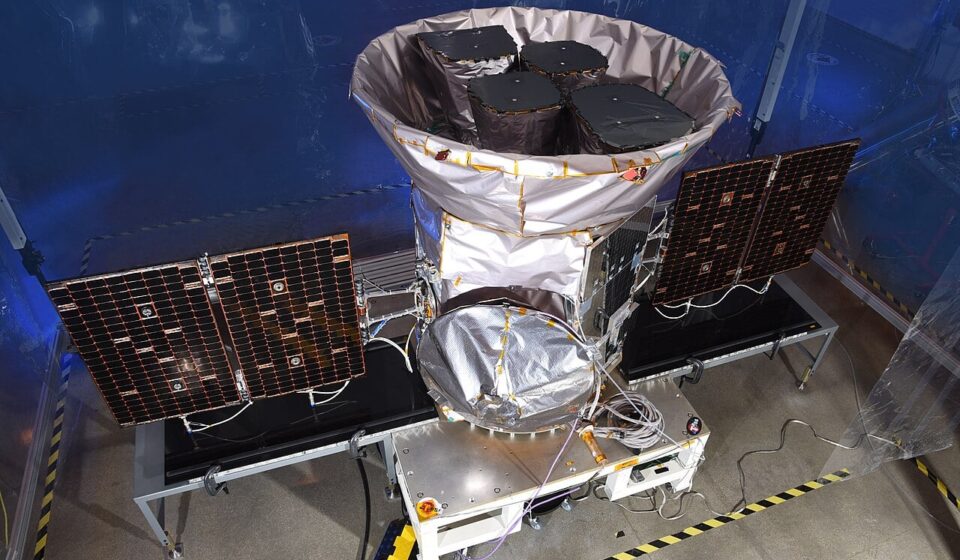
TESS changed that. By scanning a new patch of sky every 28 days and completing a nearly full‑sky survey over 26 months, the mission delivered the first large, uniform dataset of these faint stars and their planets. PhD student Erik Gillis and supervisor Ryan Cloutier used this dataset to directly assess what planets orbit mid‑to‑late M dwarfs and found a striking absence of gas‑shrouded sub‑Neptunes while rocky super‑Earths remain plentiful.
The result challenges the dominant explanation for the sub‑Neptune/super‑Earth divide — photoevaporation, in which intense early stellar radiation strips a planet’s atmosphere. M dwarfs are energetically active in youth and could, in principle, remove envelopes, but the near‑complete lack of sub‑Neptunes goes beyond what photoevaporation alone would predict. Instead, the McMaster team argues that planet formation around these stars likely favors the creation of water‑rich, rocky worlds rather than gas‑dominated ones from the start.
Published in the Astronomical Journal and reported via EurekAlert, the study has immediate implications for our understanding of planet formation and the search for habitable worlds. “If we want to understand the origins of planets and the origins of life, we need a complete picture of how planets form and what they are made of,” Gillis said, noting that the Galaxy’s most common stars have barely featured in earlier surveys.
Original Source: https://www.universetoday.com/articles/what-is-the-most-common-type-of-planet-in-the-galaxy
Category:
Tags:
Publish Date: 2026-05-01 02:11:00