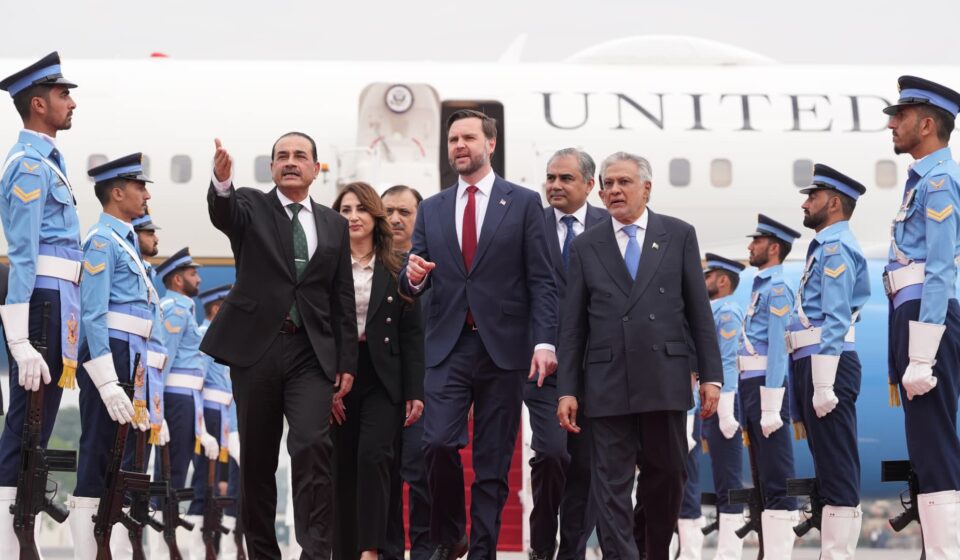

U.S. Vice President JD Vance arrived in Islamabad, Pakistan, on April 11, 2026, initiating critical peace negotiations with Iranian officials as the war between Iran and coalition forces led by Washington and Tel Aviv reached its seventh week. The discussions aim to solidify a ceasefire that began earlier in the week, though tensions remain high as Iran has been obstructing shipping through the Strait of Hormuz, a vital corridor for global oil and gas supplies.
The Iranian delegation, headed by Parliamentary Speaker Mohammad Bagher Ghalibaf and Foreign Minister Abbas Araghchi, arrived in Islamabad just prior to the talks. In a statement, Pakistan’s Deputy Prime Minister and Foreign Minister Mohammad Ishaq Dar expressed hopes for constructive engagement among the parties and reiterated Pakistan’s commitment to facilitate a lasting resolution to the ongoing conflict.
While optimism surrounds the negotiations, notable challenges persist. Iranian state media outlet Tasnim reported that Tehran has presented four “non-negotiable conditions” for the talks to proceed: total sovereignty over the Strait of Hormuz, full reparations from the aggressor, unconditional access to frozen assets, and a comprehensive ceasefire across West Asia. Ghalibaf emphasized that discussions would not commence unless Israel ceased its military actions in Lebanon and unless the U.S. released Iran’s blocked funds.
As these conditions unfold, Iranian negotiators reportedly engaged with Pakistani officials on Saturday but had yet to meet with their U.S. counterparts. They indicated that negotiations would be contingent on the establishment of a ceasefire in Lebanon.
Frustration regarding Iran’s actions has also reached the U.S. President Donald Trump expressed discontent with the ongoing blockade of the Strait of Hormuz, which remains a critical transit point for global oil trade, accounting for 20% of worldwide crude oil shipments pre-war. Trump announced a willingness to agree to a two-week suspension of hostilities contingent upon Iran’s immediate reopening of the strait. However, vessel traffic through Hormuz remains significantly hampered.
In a series of posts on Truth Social, Trump condemned reports of Iran charging fees for tanker passage, stating, “They better not be and, if they are, they better stop now!” He criticized Iran’s handling of shipping through the strait, stating that such actions diverged from previously established agreements.
As the situation evolves, all eyes remain on the outcome of these negotiations and their potential to influence the broader conflict in the region. The stakes are high, and the demands from Iran may serve as significant hurdles in achieving a durable peace. The international community watches closely, hoping for breakthroughs that can lead to stability in West Asia.
In the context of ongoing geopolitical tensions, this developing story highlights the complexities of diplomacy, the significance of trade routes, and the critical role of international negotiations in resolving conflicts.
Tags: Peace Talks, U.S.-Iran Relations, Strait of Hormuz, Middle East Conflict, Geopolitical Tensions, Ceasefire Negotiations.
Original Source: https://www.cnbc.com/2026/04/11/us-iran-talks-set-to-begin-in-islamabad-after-delegations-arrive.html
Category :
Tags:
Publish Date: 2026-04-11 19:28:00