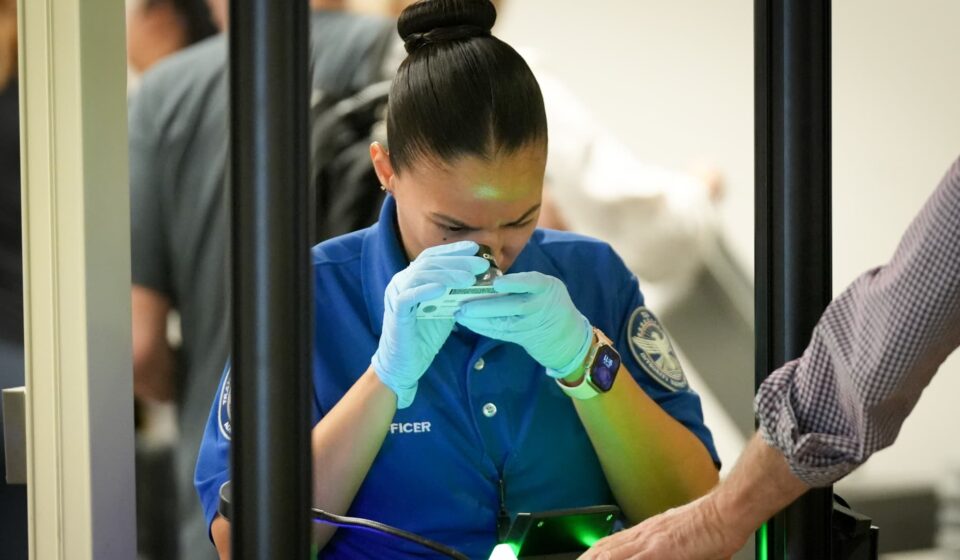

Travelers faced long security lines at John F. Kennedy International Airport on March 27, 2026, as the Transportation Security Administration (TSA) grappled with the effects of a prolonged shutdown. In a significant move, President Donald Trump issued an executive order enabling TSA agents to receive pay, circumventing Congress amid ongoing funding negotiations for the Department of Homeland Security (DHS), which has been stalled since February.
This executive decision, which raises questions about its legality and long-term viability, directs the DHS Secretary and the Office of Management and Budget to source funds for TSA employees from last year’s Republican tax and spending legislation. The administration emphasizes that this action is a necessary response to what it describes as a “Democrat-led DHS shutdown.” A senior official stated, “President Trump has determined that congressional Democrats have created an emergency situation that cannot be allowed to continue.”
While the administration has not specified the exact funding source, experts like Bobby Kogan of the Center for American Progress identify a $10 billion allocation within the legislation intended for DHS-related costs. “They do have a pot of money. It is a giant slush fund,” Kogan noted, although he cautioned against using it indiscriminately.
The controversy surrounding Trump’s move has ignited a political firestorm. While Democrats express a desire for TSA agents to be compensated, they are alarmed by the unilateral nature of the funding. House Appropriations Committee member Rosa DeLauro, D-Conn., stated, “I am glad that this administration has finally chosen to pay these workers, after choosing not to for 41 days. The administration must provide an explanation regarding the funding.”
Kogan estimates that continuing payments to TSA could cost around $140 million per week, theoretically allowing funding through next year if the DHS funds remain accessible. However, Devin O’Connor, a senior fellow at the Center on Budget and Policy Priorities, highlights the murky legality of the funding mechanism. “The administration’s provided no real clarity about what they’re doing publicly,” O’Connor said, emphasizing that Congress did not intend for these funds to be used for TSA salaries.
Critics argue that this move may violate the Antideficiency Act, which prevents federal agencies from spending funds not appropriated by Congress. The Office of Management and Budget defended its actions, asserting that agencies possess “considerable discretion” regarding expenditures.
Despite the controversy, acting DHS officials reported that the executive order has led to improved wait times at airport security. Most TSA employees received retroactive paychecks this week, relieving some of the pressure as over 500 officers had left their positions due to the shutdown.
As Congress remains on recess with no clear resolution in sight, a proposal to fund varied aspects of the DHS-excluding Immigration and Customs Enforcement-has been met with resistance from House Republicans, who favor their own stopgap measure. This impasse may extend the government shutdown, notably impacting travel during peak seasons like Easter and Passover.
In a noteworthy call to action, Trump urged congressional Republicans to leverage budget reconciliation to expedite funding for DHS, giving them a clear deadline. The ongoing stalemate has heightened tensions, leaving TSA agents and travelers crossing their fingers for a swift solution.
With Congress grappling with funding challenges, the focus remains on whether a viable bipartisan solution can emerge to prevent further complications in airport security and staffing issues.
Original Source: https://www.cnbc.com/2026/04/01/tsa-trump-dhs-shutdown-airports.html
Category :
Tags:
Publish Date: 2026-04-02 00:43:00