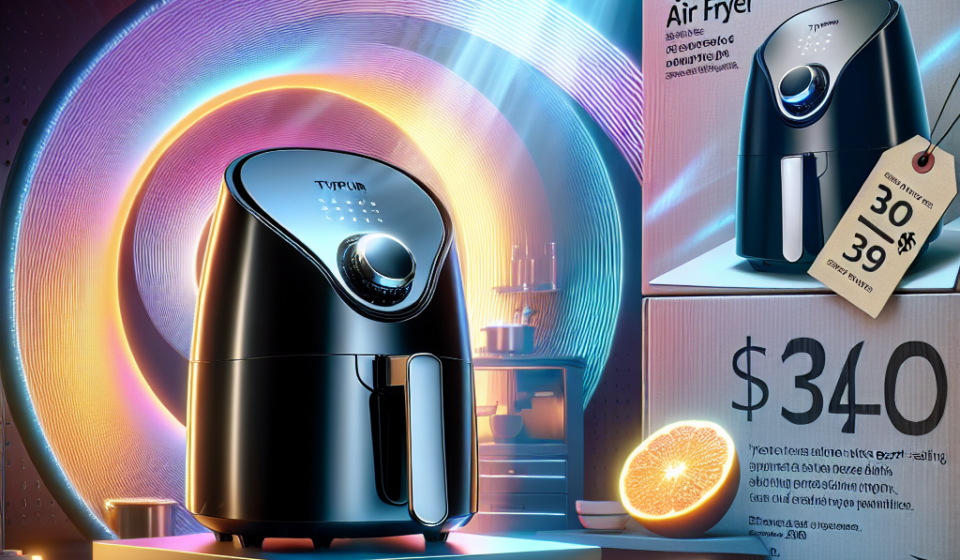

The kitchen is quietly becoming a laboratory for systems thinking. We applaud products that make life easier, but too often we treat “smart” features as afterthoughts-widgets that sit on top of traditional engineering problems rather than being designed into the product architecture from day one.
Context
I recently read a review of the Typhur Dome 2-a re‑imagined air fryer whose shallower, wider basket and dual heating elements aim to bridge the gap between basket fryers and countertop convection ovens. The product pairs high‑performance hardware (accurate temps, variable fan speeds, probe support) with a recipe‑driven app; some cooking modes even require the app. It’s a striking example of hardware + software trade‑offs-and of how product strategy, pricing and service design converge for connected appliances.
Analysis – what this means for product and platform teams
1. Hardware + Software co‑design is now table stakes. The Dome 2 illustrates an important principle: physical form factor drives system behavior. Changing basket geometry and adding bottom heat alters airflow, thermal gradients and throughput. If you are building a connected appliance, your firmware, sensors, and mobile UX cannot be bolted on later. They must be co‑designed, validated together, and stressed through scenario testing that includes real kitchens, not just lab benches.
2. App‑dependence raises operational and trust questions. Tying core functions to an app (or cloud) creates fragility-connectivity failures, app deprecation, or account issues can render hardware partially unusable. From a platform architecture point of view, design for graceful degradation: essential modes should work offline; cloud features should add value, not gatekeep basic functionality.
3. Telemetry, privacy and lifecycle support are strategic assets. Probe‑assisted cooking and recipe syncing produce valuable telemetry-temperatures, cook cycles, user preferences. That data powers personalization and product improvement, but it also imposes responsibilities: secure data pipelines, transparent telemetry policies, and predictable OTA update strategies. For enterprises, treat connected appliances as long‑lived platforms: plan firmware signing, rollback paths, and customer support workflows before shipping.
4. Build vs. Buy decisions become subtle. A startup can buy an off‑the‑shelf connectivity stack to accelerate time‑to‑market, but doing so often creates lock‑in and limited control over security or feature roadmap. If your differentiator is the system behavior (e.g., dual‑element control, probe integration), owning more of the stack gives you product leverage. Conversely, incumbents with manufacturing scale must invest in software competency to avoid commoditization.
5. Pricing, promotions and aftermarket service matter more than ever. High‑performance hardware inevitably costs more; discounting (seasonal sales) moves units but can complicate long‑term warranty economics and service networks. For durable goods, arrange parts distribution, in‑region service partners, and clear repair policies up front-these are not margins to improvise later.
Localization: a practical Bharat perspective
India’s market dynamics change the equation. Connectivity can be intermittent in many urban peripheries and rural pockets-so an “app‑required” cooking mode can become a poor user experience at scale. Price sensitivity and repairability are critical: a premium appliance must be easily serviceable locally, with spare parts and UI in regional languages. For innovators in Northeast India, designing for offline resilience and simple maintainability isn’t a niche preference-it’s a competitive requirement.
Takeaways (for CTOs, founders, and product leaders)
– Design hardware and software together; validate in real environments, not just labs.
– Avoid app‑mandatory primary functions; aim for graceful offline behavior.
– Treat telemetry as both product value and regulatory responsibility-secure it and be transparent.
– Decide early whether to own the connectivity stack; consider long‑term support costs.
– Build a service and spare‑parts plan before scaling sales, especially for markets with variable connectivity.
Closing thought
The most successful connected appliances will be those that master the quiet engineering work: robust edge behavior, clean data contracts, and a serviceable physical design. Technology should remove friction from human lives-never create new points of failure in the name of “smart.”
About the Author Sanjeev Sarma is the Founder Director of Webx Technologies Private Limited, a leading Technology Consulting firm with over two decades of experience. A seasoned technology strategist and Chief Software Architect, he specializes in Enterprise Software Architecture, Cloud-Native Applications, AI-Driven Platforms, and Mobile-First Solutions. Recognized as a “Technology Hero” by Microsoft for his pioneering work in e-Governance, Sanjeev actively advises state and central technology committees, including the Advisory Board for Software Technology Parks of India (STPI) across multiple Northeast Indian states. He is also the Managing Editor for Mahabahu.com, an international journal. Passionate about fostering innovation, he actively mentors aspiring entrepreneurs and leads transformative digital solutions for enterprises and government sectors from his base in Northeast India.