Transforming Lives: How Augmented Reality and Artificial Intelligence Revolutionize Ultrasound Scans

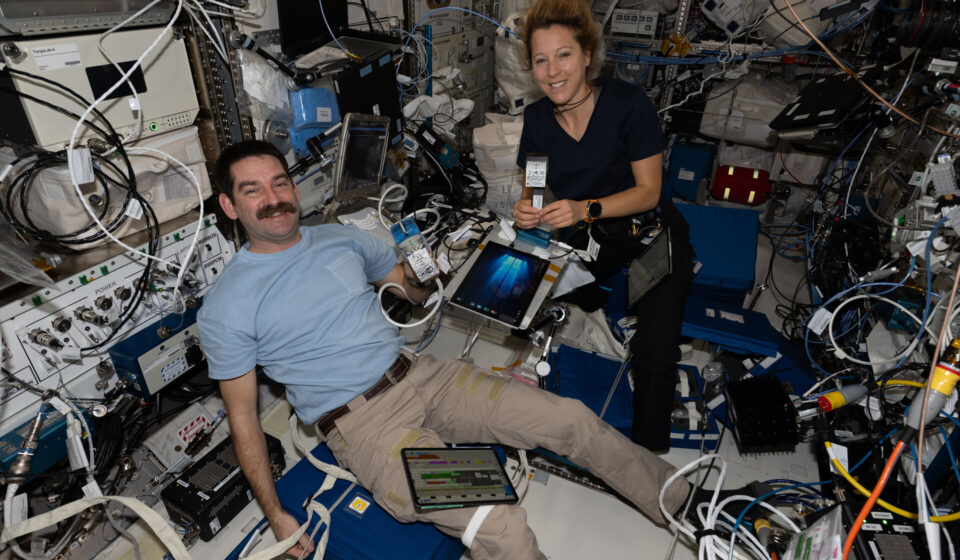
ESA astronaut Sophie Adenot and NASA astronaut Jack Hathaway have commenced their mission aboard the International Space Station (ISS) since February 14, 2026, successfully conducting two sessions of the EchoFinder experiment. Developed by the French space agency CNES for the εpsilon mission, EchoFinder addresses a vital challenge in human space exploration: enabling astronauts to perform reliable ultrasound scans without the need for medical training or real-time support from a doctor.
EchoFinder leverages cutting-edge technology by combining augmented reality (AR) with artificial intelligence (AI). The AR interface serves as a guide, showing astronauts precisely where to place the ultrasound probe on the patient’s body. Once the probe is correctly positioned, the AI takes over, identifying organs and capturing critical images. These images can then be transmitted back to medical experts on Earth for diagnosis, a crucial capability given the communication delays typically experienced during deep-space missions. This innovative approach not only bolsters astronaut healthcare in space but also has promising applications on Earth, particularly in isolated environments such as ships at sea, submarines, or rural areas lacking immediate medical access.
EchoFinder is one of 36 European experiments currently underway on the ISS, with seven of these initiatives, including EchoFinder, developed by CADMOS, the center for microgravity applications and space operations at CNES. On a European scale, CADMOS ranks among the four User Support and Operations Centres (USOCs) of ESA, facilitating optimal use of the ISS facilities for European scientists and supporting over 25 scientific experiments each year in collaboration with ESA and its international partners.
As the quest for sustainable human presence in space advances, experiments like EchoFinder represent a significant leap towards ensuring the health and safety of astronauts during long-duration missions. By empowering non-medically trained personnel to manage medical emergencies, this technology not only enhances astronaut welfare but also underscores the ongoing innovation in aerospace medicine.
This strategic approach to healthcare could revolutionize emergency response in environments that lack immediate access to trained medical professionals, making it a vital tool for future explorations both in space and on Earth. As the ESA and NASA continue to push the boundaries of exploration, the importance of such technological advancements cannot be overstated, showcasing an impressive blend of scientific ingenuity and practical application that could shape the future of human spaceflight and beyond.
Original Source: https://www.esa.int/Science_Exploration/Human_and_Robotic_Exploration/epsilon/Augmented_reality_and_artificial_intelligence_for_ultrasound_scans
Category :
Tags:
Publish Date: 2026-03-18 19:27:00