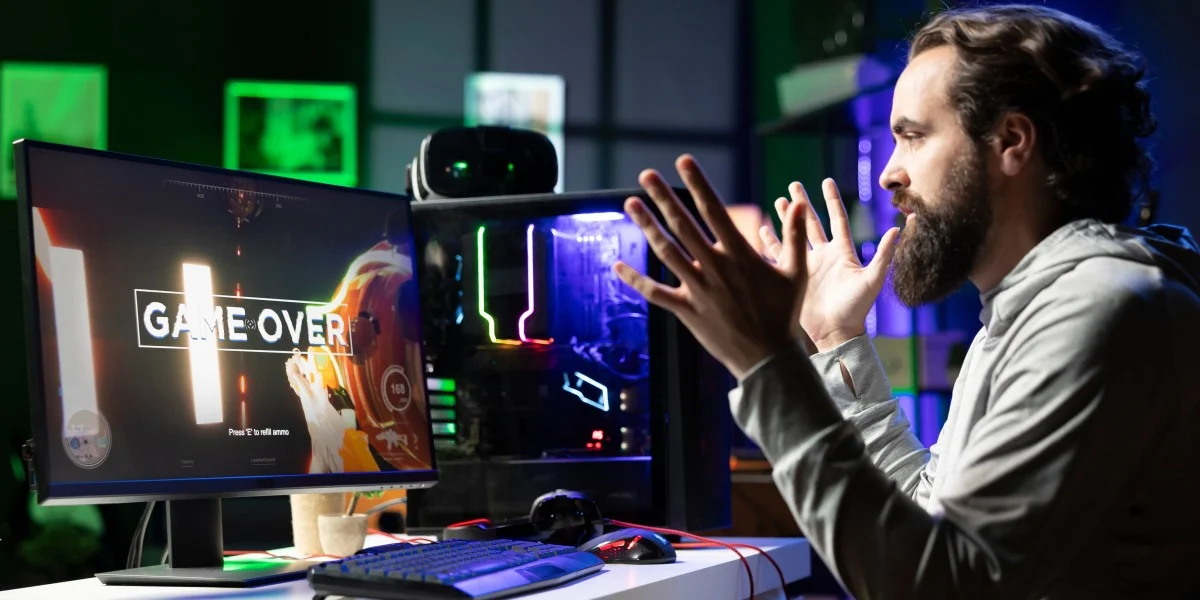

The gamer’s world is bleeding into the corporate desktop – and that should make every CTO sit up. Microsoft’s recent move to bring an “Xbox mode” to Windows 11 and its broader Project Helix signals a purposeful platform convergence: console-grade experiences, game runtimes and potentially specialized silicon are moving onto general-purpose PCs. For enterprises that treat endpoints as a managed perimeter, this is not merely an ergonomic change – it shifts risk, procurement and endpoint-management calculus.
Context
On March 11, 2026 Microsoft outlined plans to introduce an Xbox-optimized mode to Windows 11 devices and described Project Helix, a future gaming platform with a custom AMD SoC and developer hardware slated for 2027. The goal is clear: reduce friction for developers and provide a consistent cross-device gaming experience.
Why this matters for enterprise architecture
Platform convergence creates a dual reality. On one hand, a unified platform simplifies development and can lower costs when applications span device classes. On the other, every consumer-grade feature that reaches managed endpoints becomes an attack surface, a compliance headache, or an availability risk. Consider a few pragmatic consequences:
– BYOD and procurement trade-offs: Rising component costs drive organizations toward cheaper consumer hardware. Those devices often ship with consumer features enabled by default. This increases the likelihood that “gaming experiences” – or inadvertent mode switches on digital signage and kiosks – will surface inside corporate networks (the amusingly ominous “Xbork” scenario).
– Endpoint sprawl and manageability: New OS modes and integrated runtimes complicate inventories and imaging processes. A desktop image optimized for productivity may behave differently when Xbox mode or console-like subsystems are present.
– Security and compliance: Feature-rich multimedia runtimes mean more privileged drivers, alternate graphics stacks and new telemetry flows. This raises questions for zero-trust architectures, data-loss prevention, and regulatory controls around audited environments.
– Operational risk to specialized endpoints: Digital signage, kiosks and control-room machines are meant to be predictable. A sudden switch into a controller-optimized UI or an unexpected runtime could break availability SLAs and damage brand experience.
What CTOs and tech leaders should do now
I advise an “architecture-first” response: treat this as an evolution of endpoint heterogeneity and act preemptively.
1. Inventory and classify endpoints immediately. Map devices by SKU, OS edition (Home vs Pro), and owner (corporate vs BYOD). Knowing what you have is the baseline for policy.
2. Enforce procurement standards. Require Windows Professional/Enterprise SKUs for corporate buys and insist on verified OEM images for kiosks and signage. Consumer devices can be explicitly labeled BYOD with reduced access scopes.
3. Harden with UEM and app-control policies. Use Unified Endpoint Management to enforce application whitelists, block mode-switching features where possible, and restrict installation of optional gaming components.
4. Apply Zero Trust and Conditional Access. Limit what endpoints can access sensitive resources; require device compliance signals before granting access to corporate data.
5. Isolate legacy or single-purpose machines. Kiosks and digital signage should run minimal images in kiosk mode, network-segmented with strict firewall and multicast rules to prevent accidental mode activation or lateral movement.
6. Update incident playbooks. Include scenarios where a user-mode change or a new graphics/runtime component causes service disruption or data exfiltration.
7. Train procurement and facilities teams. The risk often enters through non-technical purchasing decisions-procurement guidelines and acceptance criteria must be updated.
A practical Bharat note
In India, and particularly in smaller organizations across the Northeast, cost-driven purchases are common. I’ve worked with STPI advisory groups and repeatedly seen how procurement constraints translate into heterogeneous fleets. For Indian enterprises and government deployments, the emphasis should be on strong procurement specs, local OEM image verification and lightweight UEM strategies that scale without heavy headcount increases.
Closing thought
Platform convergence is inevitable and brings genuine benefits for developers and consumers. But architecture is about controlled change: if you lead the change in your estate – rather than reacting to it – you preserve security, reliability and the ability to extract value from the new capabilities instead of paying for their surprises.
About the Author Sanjeev Sarma is the Founder Director of Webx Technologies Private Limited, a leading Technology Consulting firm with over two decades of experience. A seasoned technology strategist and Chief Software Architect, he specializes in Enterprise Software Architecture, Cloud-Native Applications, AI-Driven Platforms, and Mobile-First Solutions. Recognized as a “Technology Hero” by Microsoft for his pioneering work in e-Governance, Sanjeev actively advises state and central technology committees, including the Advisory Board for Software Technology Parks of India (STPI) across multiple Northeast Indian states. He is also the Managing Editor for Mahabahu.com, an international journal. Passionate about fostering innovation, he actively mentors aspiring entrepreneurs and leads transformative digital solutions for enterprises and government sectors from his base in Northeast India.