Revolutionizing Transportation: Zoox Partners with Uber to Empower a Future of Robotic Taxi Rides!

Amazon’s Zoox has announced a significant expansion into the robotaxi market, teaming up with Uber to offer its unique self-driving vehicles in Las Vegas this summer. This partnership marks a pivotal step for Zoox, which has traditionally operated through its own app. The companies plan to extend their collaboration to Los Angeles next year, solidifying Zoox’s presence in major urban areas while continuing to provide rides independently.
Since Amazon’s acquisition of Zoox in 2020, the company has aimed to catch up with industry leader Waymo, a subsidiary of Alphabet. In February, Waymo reported exceeding 400,000 weekly rides across six U.S. metropolitan areas and is now commercially active in 10 cities, with plans to expand into London and Tokyo by 2026. Meanwhile, various robotaxi services in Asia are gaining traction, with Baidu’s Apollo Go, WeRide, and Pony.AI all reporting substantial ride volumes, with Baidu alone surpassing 300,000 peak weekly rides in late 2022.
This partnership with Uber signals growing confidence in Zoox’s capabilities following years of development. Zoox CEO Aicha Evans emphasized the partnership’s potential for advancing autonomous mobility, stating, “This partnership is an opportunity to continue advancing the use of autonomous mobility in daily life. Through our collaboration, Zoox will provide a differentiated rider experience to those who already know and love the convenience of riding with Uber.”
Uber’s CEO Dara Khosrowshahi recognizes this alliance as a strategic move for both companies, asserting that rides dispatched through Uber’s platform achieve “significantly higher utilization” compared to standalone robotaxi services, bolstering the appeal of their collaboration. Khosrowshahi noted that trips per autonomous vehicle per day on Uber’s platform are approximately 30% higher, according to publicly available data.
By the end of 2026, Uber aims to offer driverless rides in 15 cities, building on existing services in locations like Atlanta, Austin, Dallas, and Phoenix. The company also operates partnerships in various Middle Eastern cities, enhancing its global footprint.
The emergence of first-party robotaxi services could disrupt the ride-sharing market, potentially siphoning users from established platforms like Uber, Lyft, and China’s DiDi. Tesla is also entering this space with a Robotaxi-branded app, recently testing a limited fleet of driverless vehicles in Austin.
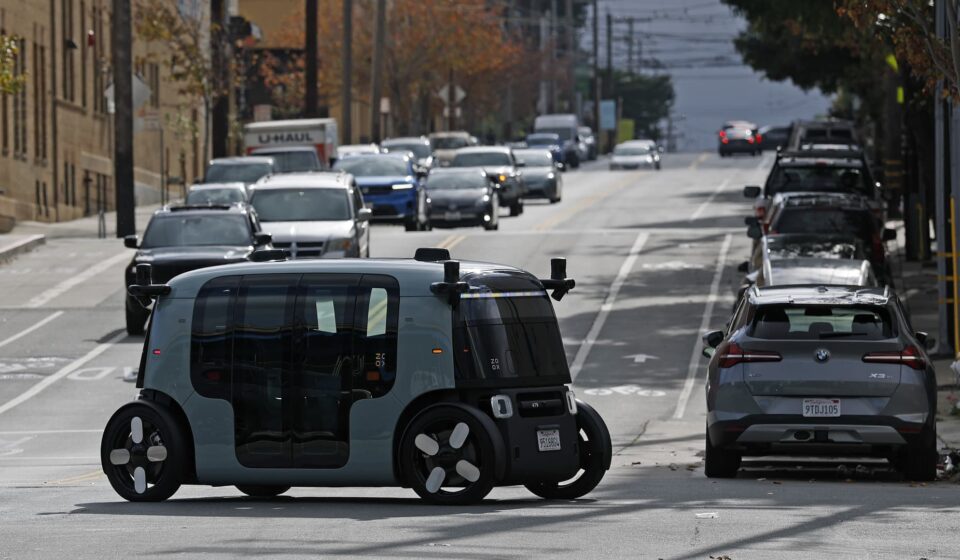
Zoox has begun to carve out its niche, offering complimentary driverless rides around the Las Vegas Strip and in select neighborhoods of San Francisco. Although it has catered to over 300,000 riders, paid rides remain absent. Recently, Zoox has expanded its testing efforts in several southern cities, focusing on perfecting its distinctive vehicles, affectionately dubbed “toasters” due to their unique design. With low steps, automatic doors, and inward-facing seats, these robotaxis operate at speeds of 75 mph, generally maintaining under 45 mph for optimal safety.
As part of its future goals, Zoox is seeking an exemption from U.S. regulators to deploy up to 2,500 of its vehicles commercially. The National Highway Traffic Safety Administration has opened public comments on Zoox’s petition-supporting a transition from research and demonstration to commercial operation.
With advancements unfolding in the robotaxi industry, Zoox’s partnership with Uber showcases a growing momentum in autonomous mobility, setting the stage for a transformative shift in urban transportation.
Original Source: https://www.cnbc.com/2026/03/11/uber-amazon-zoox-partnership-robotaxi-demand.html
Category :
Tags:
Publish Date: 2026-03-11 17:30:00