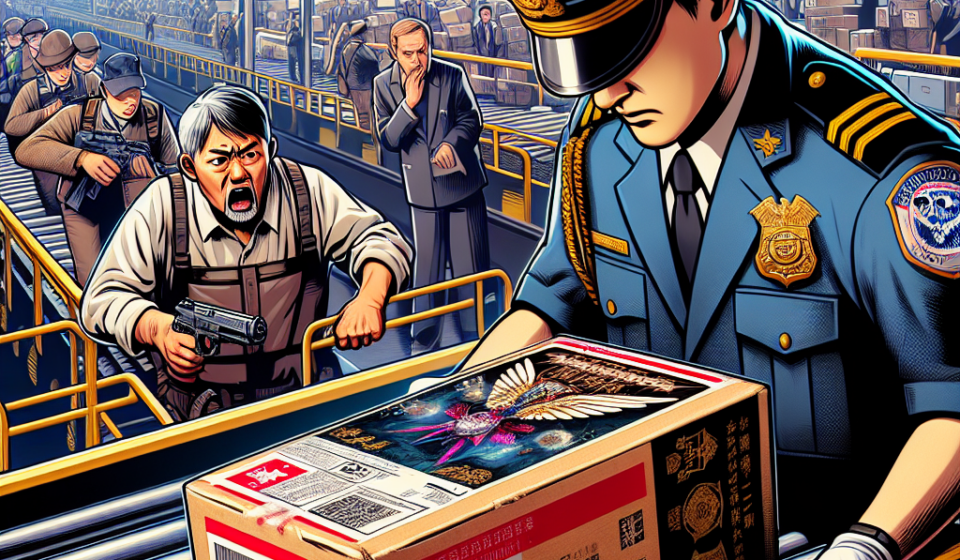

We often celebrate digital preservation – cloud backups, immutable ledgers, redundancy – as if that alone protects history. Yet a single mishandled parcel can erase a unique primary source faster than any ransomware gang. The recent story of an ultra-rare demo floppy – reportedly arriving torn and resealed with a customs label – is a blunt reminder: physical provenance and the systems that protect it matter just as much as digital copies.
Context
A collector ordered one of the fifty known copies of the “Tsukihime Trial Edition” demo from abroad. On arrival the package was damaged, the floppy disk destroyed, and tape on the parcel indicated it had been “Opened and resealed by customs.” If the claim is accurate, one tangible piece of gaming history may now be gone forever.
Analysis – what this incident means for technology leaders and custodians
1. Provenance is a systems problem, not just an archival concern.
– In software architecture we talk about observability – logs, traces, and metrics that let us understand system behaviour. Physical artifacts need equivalent observability: auditable chain-of-custody, tamper-evident seals, time-stamped photographic evidence at transit handoffs, and metadata that records custody events. Without this, responsibility becomes a matter of he-said-she-said and the artifact loses both value and trust.
2. Trust must be engineered, not assumed.
– Organizations often trust intermediaries (postal services, customs agencies, brokers) implicitly. That is a scaling shortcut that works until it doesn’t. For high-value or irreplaceable items, construct a “zero-trust” approach to custody: assume transit may fail or be compromised and design controls (insurance, parallel copies, notarised provenance records) accordingly.
3. Digital-first preservation is pragmatic risk mitigation.
– For cultural heritage and rare artifacts, create authoritative digital surrogates as early as possible. That means high-resolution imaging, bit-level disk imaging for media like floppy disks, and depositing copies with multiple trusted repositories. Digital surrogates do not replace the artifact but they preserve research value when the physical item is lost.
4. Short-term expedients create long-term debt.
– Skimping on packaging, skipping certified carriers, or treating provenance as a checklist item saves money today and multiplies risk – and cost – tomorrow. Enterprise architects know that technical debt compounds. Physical-custody debt behaves the same way.
Actionable guidance for CTOs, museum curators and founders
– Treat high-value physical items as mission-critical assets. Establish SLAs for custody, mandatory documentation at every transfer, and a single canonical provenance record.
– Insist on tamper-evident packaging and chain-of-custody photos or videos produced at each handoff. Store these artifacts in an immutable audit log (digital signature, timestamped).
– Adopt a “digital-first, physical-second” policy: create verified digital surrogates (images, disk images, checksums) immediately on receipt and distribute copies to at least two geographically-separated repositories.
– Use reputation and contract to manage intermediaries: preferred carriers, customs brokers familiar with cultural property handling, and explicit insurance policies that cover loss/damage – including customs-related incidents.
– For institutions, build partnerships with national archives and digital preservation initiatives so that loss of a single item does not equate to permanent loss of knowledge.
A brief note for Indian collectors and institutions
Cross-border trade and customs inspections are universal risks. In India, as elsewhere, institutions and serious collectors should formalize acquisition workflows, ensure proper documentation at import, and engage accredited brokers for high-value shipments. The same digital-preservation principles apply: make and share verified digital surrogates with trusted repositories so that our cultural memory isn’t dependent on a single parcel.
Takeaways
– Physical artifacts require the same engineering discipline we apply to software: observability, immutable logs, redundancy, and explicit trust boundaries.
– Preserve digitally as early as possible and treat provenance as a live system, not a static certificate.
– Short-term savings on custody and transport are false economies when dealing with unique cultural assets.
Closing thought
We can build resilient systems to protect code, data and services – and we must bring that same rigour to the physical carriers of culture. History deserves architecture that treats its fragility as a design constraint, not an inconvenient surprise.
About the Author
Sanjeev Sarma is the Founder Director of Webx Technologies Private Limited, a leading Technology Consulting firm with over two decades of experience. A seasoned technology strategist and Chief Software Architect, he specializes in Enterprise Software Architecture, Cloud-Native Applications, AI-Driven Platforms, and Mobile-First Solutions. Recognized as a “Technology Hero” by Microsoft for his pioneering work in e-Governance, Sanjeev actively advises state and central technology committees, including the Advisory Board for Software Technology Parks of India (STPI) across multiple Northeast Indian states. He is also the Managing Editor for Mahabahu.com, an international journal. Passionate about fostering innovation, he actively mentors aspiring entrepreneurs and leads transformative digital solutions for enterprises and government sectors from his base in Northeast India.