
We fetishize founders and CEOs – the product launches, the keynotes, the soundbites. That’s natural. But the quiet engine that keeps those visions running day after day is operations – and when an operations leader with deep institutional knowledge steps into the spotlight, the story is not about personality, it’s about continuity, architecture and resilience.
Context
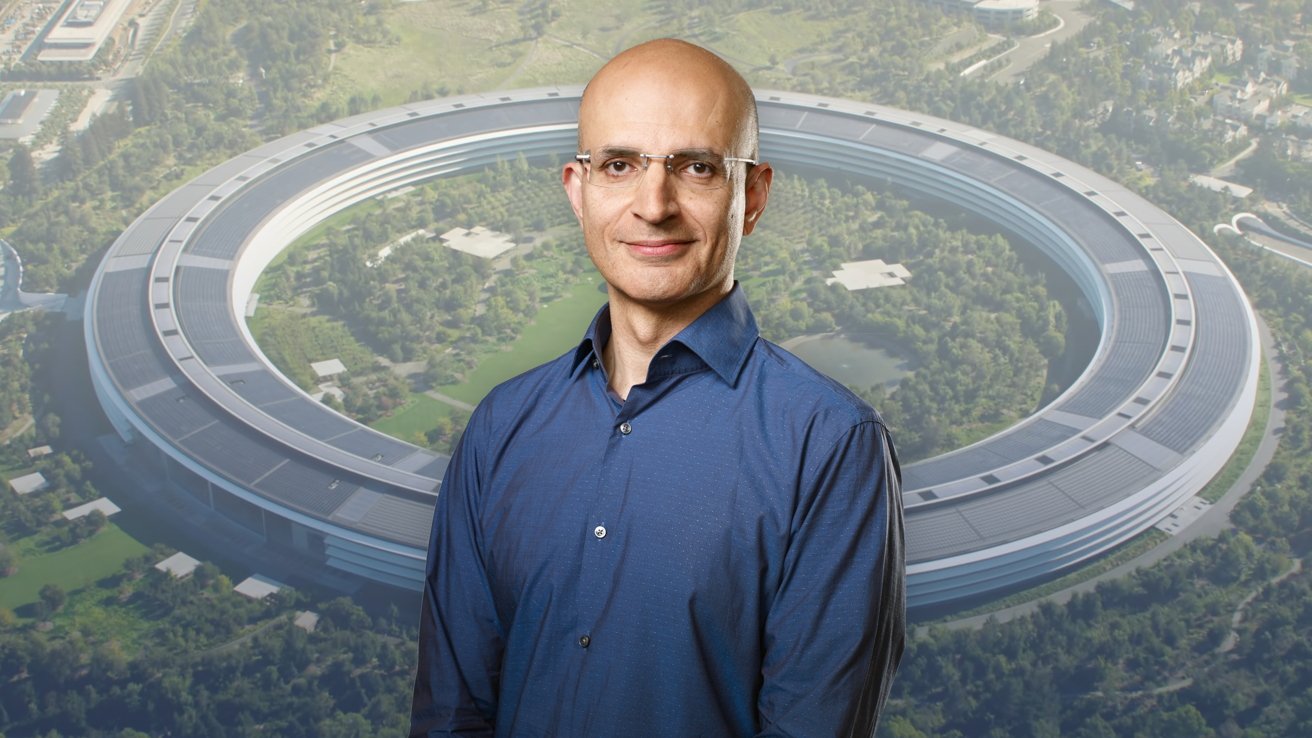
A recent profile noted that Sabih Khan is Apple’s chief operating officer, a role he has held for less than a year while his career at Apple spans decades. He’s relatively unknown outside executive circles today, but his appointment highlights an important organisational principle: leadership transitions at the operational core matter more than they appear.
Analysis – what this means for architecture and strategy
Operational leadership is the scaffolding of any durable technology company. When a longtime insider assumes an executive operations role, three forces converge: institutional memory, cross-functional leverage, and the need to make invisible systems visible.
1) Institutional memory vs. modernisation debt. Long-tenured operators hold critical, often tacit knowledge – how suppliers behave under stress, why a legacy interface exists, which edge cases repeatedly break in production. That memory is gold for navigating complexity, but it can also ossify old trade-offs. The architecture challenge for any CTO is to capture that tacit knowledge into artefacts (runbooks, decision records, automated tests) and then use it to drive incremental modernisation rather than reflexive rebuilds.
2) From silos to orchestra. Operational excellence at scale is less about heroic managers and more about orchestrated systems: deployment pipelines, observability, incident command, vendor contracts and contractual SLAs. An effective COO transforms one-off tribal knowledge into repeatable processes. That’s the difference between firefighting and running a resilient platform.
3) Visibility and governance. Operations roles need to make the invisible visible: create telemetry that maps business outcomes to system health, and design governance that balances speed and stability. The trade-off is constant: do you prioritise rapid feature throughput (speed) or predictable uptime and security (stability)? The right answer is context-dependent, but the mechanism – data-driven trade-off analysis – is universal.
Practical implications for CTOs and Founders
– Institutionalise knowledge: implement Decision/Architecture Records, incident retros with assigned follow-ups, and searchable runbooks. Tacit knowledge must be retrievable by the next person – not trapped in a single executive’s head.
– Automate safety nets: invest in deployment automation, feature flags and chaos testing so that human expertise is amplified, not exhausted.
– Map business-to-telemetry: instrument services so every degraded KPI traces back to responsible teams and contracts. This converts opinions into measurable trade-offs.
– Treat succession as infrastructure: regular role rotations, shadowing and tabletop drills reduce single-person risk. Leadership transitions should be rehearsed like disaster recovery.
– Build vendor maturity: when you rely on global supply chains, demand transparent SLAs and a supplier‑facing observability model. Make partners part of your incident playbooks.
– Balance build vs buy pragmatically: where you lack domain expertise, buy mature solutions; where the capability is core to differentiation, invest to own it – but do so with a long-term maintainability budget.
A short Bharat note (why this matters at home)
In India – and in the Northeast where I work with STPI and governments – many institutions still depend on a handful of senior technocrats. The same idea applies: document, automate and rehearse transitions. For e‑Governance and DPI projects, the cost of losing institutional memory is real – services falter, citizens are affected. Building operational muscle is not luxury; it’s civic infrastructure.
Takeaways
– Operational leadership is strategic leadership.
– Capture tacit knowledge and convert it into repeatable systems.
– Practice succession and incident response proactively.
– Measure decisions with telemetry, not anecdotes.
Closing thought
Leadership changes make headlines; how an organisation preserves and operationalises its collective knowledge determines whether those moments become crises – or catalysts for durable, scalable systems.
About the Author Sanjeev Sarma is the Founder Director of Webx Technologies Private Limited, a leading Technology Consulting firm with over two decades of experience. A seasoned technology strategist and Chief Software Architect, he specializes in Enterprise Software Architecture, Cloud-Native Applications, AI-Driven Platforms, and Mobile-First Solutions. Recognized as a “Technology Hero” by Microsoft for his pioneering work in e-Governance, Sanjeev actively advises state and central technology committees, including the Advisory Board for Software Technology Parks of India (STPI) across multiple Northeast Indian states. He is also the Managing Editor for Mahabahu.com, an international journal. Passionate about fostering innovation, he actively mentors aspiring entrepreneurs and leads transformative digital solutions for enterprises and government sectors from his base in Northeast India.