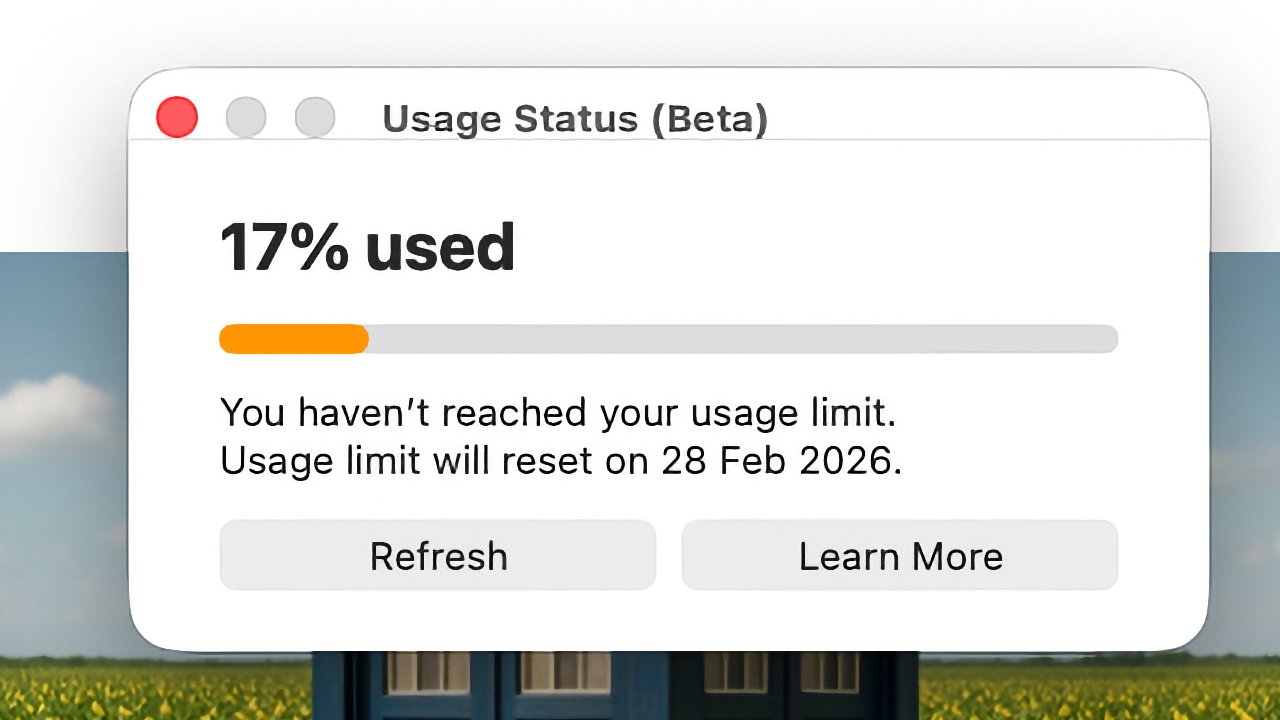

We love the language of “endless creativity” – it’s a powerful marketing hook. But product momentum and operational reality often live in different worlds. The arrival of Apple Creator Studio (ACS) is a fresh reminder that “AI-enabled” does not automatically mean “unlimited,” and that the gap between promise and practical limits matters to architects, product leaders and enterprise buyers alike.
The signal: Apple bundles Final Cut Pro, Logic Pro and enhanced iWork apps into Apple Creator Studio and advertises the suite as “Endless creativity. Unlimited possibilities.” Yet the intelligence features in Pages, Keynote and Numbers are powered by third‑party models, have explicit monthly quotas (e.g., a minimum of 50 generated images, 50 generated presentations and presenter notes for 700 slides), and those quotas-and how they’re exposed to users-are not obvious unless you look at Apple’s support documentation or trigger the usage UI. (apple.com)
Why this matters (from a Chief Architect’s lens)
- Transparency is trust. When a subscription’s headline promise implies boundless creation but the underlying implementation enforces hard quotas, you get unhappy creators and surprising operational constraints. That mismatch is a reputational risk for consumer brands – and a usability risk for enterprises building workflows that assume continuous AI assistance. Apple’s support page documents the quotas and a monthly reset, but the visibility of those limits is still primarily in the product settings and support text rather than in the marketing funnel. (support.apple.com)
- Third‑party dependency shifts control. Apple’s iWork intelligence features rely on OpenAI models. That’s efficient engineering-reuse of best‑in‑class capabilities-but it hands availability, capacity and policy constraints to another provider. Apple’s support material explicitly links feature availability to where OpenAI services operate, adding a geographic and regulatory dependency enterprises must model. (support.apple.com)
- Quotas can be highly non‑linear. Emerging reports show individual heavy operations (e.g., generating a single, richly formatted Keynote) can consume an outsized portion of a monthly quota, shrinking the practical utility of the bundle for power users. That experience suggests the published “minimums” may not align with realistic complex usage. (9to5mac.com)
What CTOs, product heads and founders should do now
- Don’t assume “included” equals infinite. Test the worst‑case workflows you expect users to run and measure actual consumption. Billing/disruption surprises are avoidable with early testing.
- Monitor & surface consumption in your UI. If your product uses similar third‑party AI, expose quotas, consumption rates and reset windows in clear, proactive UX – and provide rate‑limit warnings or lightweight previews before heavy operations.
- Design graceful degradation. Build local or cached alternatives (templated slides, client‑side image transforms, simpler presenter‑note generators) to maintain core worker flows when cloud AI becomes unavailable or quota‑constrained.
- Negotiate SLAs and data guarantees. For enterprise workflows, insist on contractual clarity around availability, throughput and data handling. Apple’s documentation states user content won’t be used to train intelligence models – but enterprises must still validate compliance requirements before integrating such features. (support.apple.com)
- Account for geography and connectivity. Because ACS’s AI features depend on OpenAI availability, teams operating in regions with tighter regulations or intermittent connectivity (including parts of India and Northeast India) must design fallbacks; network‑dependent, cloud‑only features can be fragile at the last mile. (support.apple.com)
A product lesson, not just Apple’s lesson
Marketing that promises “unlimited possibilities” is exciting, but the long game in platform and product design is built on predictability and honest constraints. Architects and leaders should treat generative AI features like any other third‑party system dependency: quantify usage, model failure modes, and build user experiences that fail gracefully. When your users believe something is “unlimited,” you’ve set an expectation. Meeting that expectation is an architectural problem – and one worth solving before it becomes a support crisis.
About the Author
Sanjeev Sarma is the Founder Director of Webx Technologies Private Limited, a leading Technology Consulting firm with over two decades of experience. A seasoned technology strategist and Chief Software Architect, he specializes in Enterprise Software Architecture, Cloud-Native Applications, AI-Driven Platforms, and Mobile-First Solutions. Recognized as a “Technology Hero” by Microsoft for his pioneering work in e-Governance, Sanjeev actively advises state and central technology committees, including the Advisory Board for Software Technology Parks of India (STPI) across multiple Northeast Indian states. He is also the Managing Editor for Mahabahu.com, an international journal. Passionate about fostering innovation, he actively mentors aspiring entrepreneurs and leads transformative digital solutions for enterprises and government sectors from his base in Northeast India.