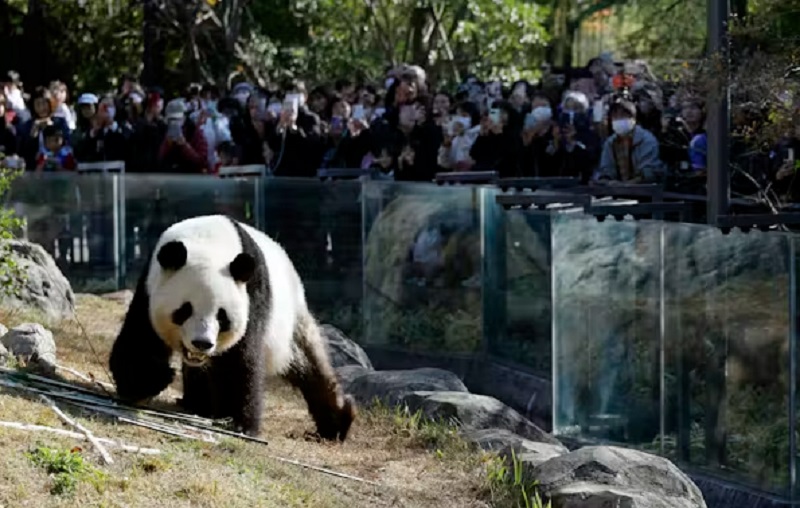

On January 27, 2026, Japan’s last two giant pandas, twins Xiao Xiao and Lei Lei, were returned to China, leaving the country without any pandas for the first time since Tokyo and Beijing normalised diplomatic ties in 1972. The early departure from Ueno Zoo followed a decision by Beijing to recall the animals amid rising political tensions between the two countries.
The recall came after comments in November by Japan’s prime minister, Sanae Takaichi, that Japan could respond militarily to a Chinese attack on Taiwan, remarks that prompted anger in Beijing. China announced the pandas would be sent home a month ahead of schedule; the Tokyo metropolitan government had been negotiating an extension or a new loan but those talks were put on hold and the bears were returned.
China’s use of “panda diplomacy” stretches from a 7th-century gift by Empress Wu Zetian to modern statecraft. In the 1970s, as China opened to the world, pandas were gifted to major powers — including the US and Japan in 1972, France in 1973 and the UK in 1974 — to build ties. By 1984 China stopped gifting pandas as wild populations declined and shifted to long-term loans, typically lasting up to 15 years, with host institutions paying sizeable conservation fees often reported at around US$1 million per year.
Panda diplomacy peaked in 2019 when 21 countries or territories outside China, Macau and Hong Kong hosted pandas; that number has since fallen to 16. A major reason is domestic sensitivity: many Chinese regard the giant panda as a national treasure, and perceived mistreatment abroad can provoke intense public backlash. When Le Le died of natural causes at Memphis Zoo in 2023 and photos of his companion Ya Ya sparked concern, speculation on Chinese social media accused the zoo of mishandling the animals. One Weibo comment read, “Treating our national treasure with such an attitude is an outright provocation of China.”
That nationalist sensitivity helps explain Beijing’s reluctance to extend panda stays when diplomatic relations sour. Yet pandas still deliver powerful soft power. After the return of Xiao Xiao and Lei Lei was announced, some 178,000 visitors queued at Ueno Zoo in the following month, forcing the zoo to limit viewing to 4,800 people per day and restrict each visit to about one minute.
Critics argue that pandas are often deployed as pawns in geopolitical games and question whether international loans materially advance conservation. While host zoos send millions to China in conservation fees, the species remains listed as “vulnerable” by the International Union for Conservation of Nature. Panda diplomacy, therefore, remains a delicate balancing act: an effective tool for building goodwill that can quickly turn into a flashpoint when politics or welfare concerns intrude.
Original Source: https://nenow.in/neighbour/china/chinas-panda-diplomacy-is-becoming-a-liability-for-beijing.html
Category: China,Environment,Neighbour,Top News
Tags:
Publish Date: 2026-02-11 23:55:00