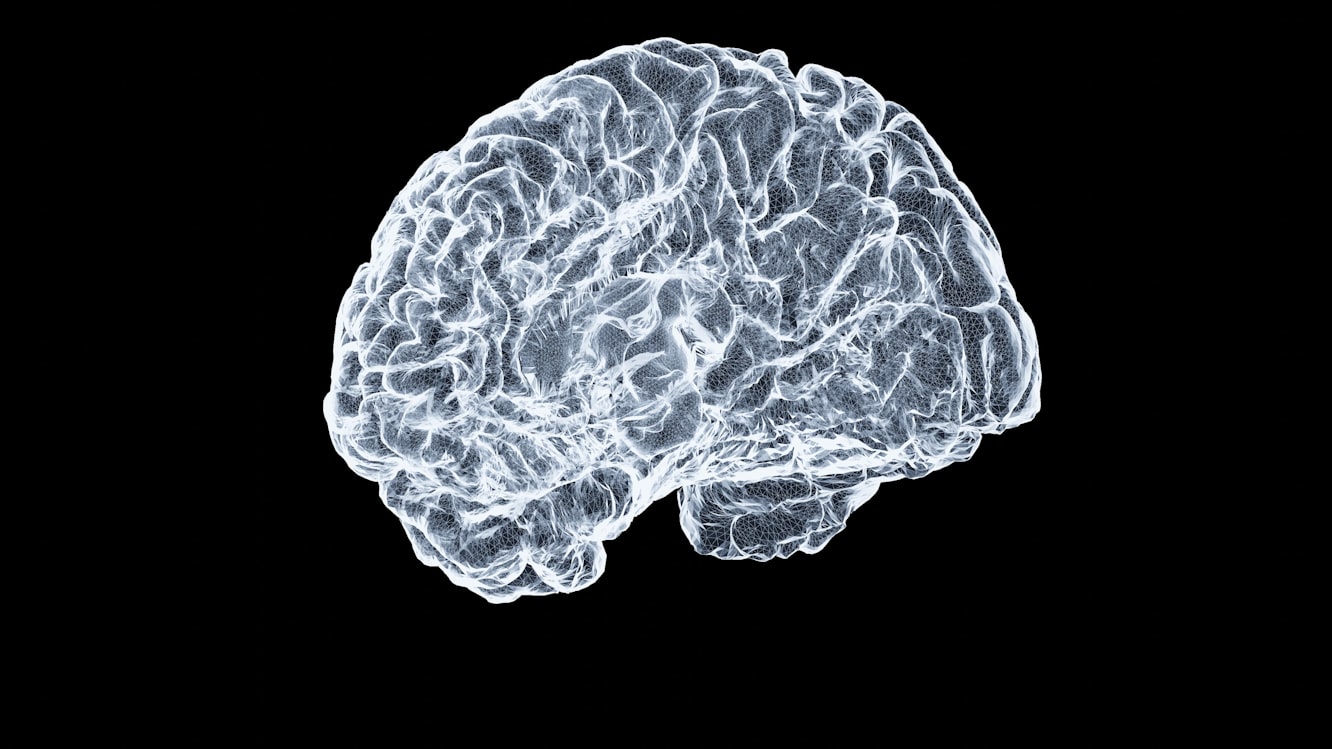

Every delayed MRI report is a human life waiting for a decision. In acute neurology – stroke, intracranial hemorrhage – minutes matter. So when a research team at the University of Michigan describes a vision–language model, Prima, that reads brain MRIs and flags urgent pathology within seconds, the conversation must shift from “cool tech” to “how will this change clinical workflows, risk, and infrastructure at scale?”
The signal: Researchers trained Prima on an enormous institutional corpus (hundreds of thousands of studies and millions of sequences) and report very high diagnostic performance across dozens of neuroradiology findings, with the model able to prioritize urgent cases and surface clinician-facing feedback immediately after imaging.
What this means for enterprise architecture and healthcare delivery
– From prototype to production is not just a performance problem – it’s an ecosystem problem. Models like Prima are trained in a single health system with specific scanner vendors, protocols, patient demographics, and clinical documentation styles. High accuracy in that environment is encouraging, but operationalizing it across different hospitals, geographies, and patient populations usually reveals distribution shift, hidden bias, and performance degradation.
– Data and integration are the bottlenecks. Real value requires tight integration with PACS/DICOM, RIS, and EMR (HL7/FHIR), secure near-real-time inference pipelines, and robust alerting that reaches stroke teams without creating noise. Architecturally, that means low-latency edge inference or hybrid cloud designs, containerized models with MLOps, and transactional guarantees so no critical alert is lost.
– Trust, explainability and clinical governance must lead adoption. Radiologists and neurosurgeons will rightly demand explainable outputs (heatmaps, salient findings tied to report language), audit trails, and human-in-the-loop workflows. Clinical validation studies across multiple centers, prospective trials, and clear liability frameworks are prerequisites for wide deployment.
– Security and privacy cannot be afterthoughts. MRI studies are Protected Health Information. Any system connecting imaging archives to AI inference must embrace Zero Trust: encrypted transport, least-privilege access, immutable logs, and formal risk assessments – especially when considering federated or cross-institutional learning.
Practical trade-offs every CTO or hospital leader must evaluate
– Speed vs. Robustness: A model optimized for immediate alerts may increase sensitivity and false positives; tune thresholds based on local workflow and tolerance for alert fatigue.
– On‑premises vs. Cloud: On‑prem inference reduces PHI movement and latency but increases operational burden. Hybrid approaches (local inference with periodic cloud retraining) often strike the right balance.
– Build vs. Buy: Building in-house requires data maturity, regulatory experience, and long-term support for retraining and monitoring. Buying can accelerate deployment but demands vendor transparency on training data, updates, and failure modes.
Actionable checklist for leaders
1. Run a local validation: evaluate any external model on your own scans and demographics before clinical use.
2. Build MLOps and observability: automated performance monitoring, drift detection, and an incident response plan.
3. Define human-in-the-loop SOPs: escalation thresholds, responsibility matrix, and audit logging.
4. Secure integration: DICOM-HL7/FHIR adapters with end-to-end encryption and role-based access controls.
5. Engage regulators and ethics boards early: prospective studies, patient consent, and medicolegal frameworks.
A word about India and regional realities
In India – including Northeast states – workforce shortages and uneven access to subspecialty neuroradiology are real. A validated, well-integrated system could triage urgent cases from district hospitals to tertiary centers, reducing transfer times and improving outcomes. However, solutions must be adapted for local scanner variability, intermittent connectivity, and constrained budgets – favoring lightweight edge deployments, federated learning partnerships, and strong public–private governance.
Closing thought
Prima-style systems signal a turning point: imaging will no longer be a batch-generated PDF that a clinician waits for – it will become a live, context-aware assistant. But technology is the enabler, not the decision-maker. Responsible architecture, rigorous validation, and clinician partnership will determine whether these systems become safe scalars of care – or elegant curiosities that never leave the lab.
Takeaway bullets
– Validate locally; don’t assume transferability.
– Prioritize secure, low-latency integrations and MLOps.
– Design for human oversight and measurable clinical impact.
– Consider hybrid deployment patterns to balance latency, privacy, and cost.
– In resource-constrained regions, focus on frugal, resilient architectures and partnerships.
About the Author Sanjeev Sarma is the Founder Director of Webx Technologies Private Limited, a leading Technology Consulting firm with over two decades of experience. A seasoned technology strategist and Chief Software Architect, he specializes in Enterprise Software Architecture, Cloud-Native Applications, AI-Driven Platforms, and Mobile-First Solutions. Recognized as a “Technology Hero” by Microsoft for his pioneering work in e-Governance, Sanjeev actively advises state and central technology committees, including the Advisory Board for Software Technology Parks of India (STPI) across multiple Northeast Indian states. He is also the Managing Editor for Mahabahu.com, an international journal. Passionate about fostering innovation, he actively mentors aspiring entrepreneurs and leads transformative digital solutions for enterprises and government sectors from his base in Northeast India.