
Bangladesh-India Water Disputes Intensify Amid Flooding Crisis
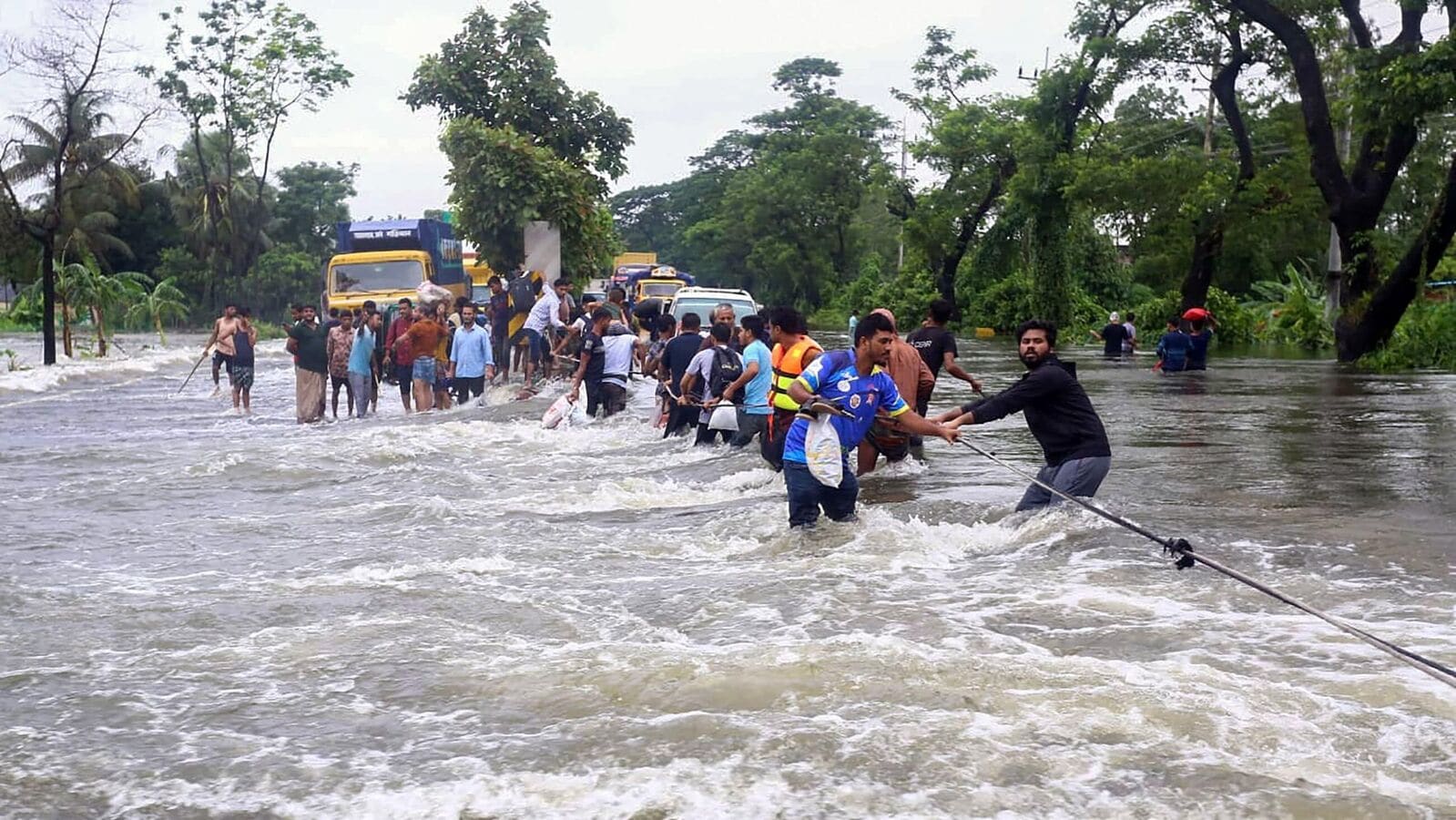
In the aftermath of severe flooding in Bangladesh’s border regions, Mohammad Nahid Islam, an advisor to Bangladesh’s interim government, has accused India of "non-cooperation" and alleged that India opened the sluice gates of the Tripura dam without prior warning. This incident has further strained relations between the two countries, who are already locked in a contentious dispute over the planned construction of the Tipaimukh dam on the shared Barak River.
Bangladesh has consistently opposed the Tipaimukh dam for various reasons, prompting protest marches aimed at halting its construction. Historical water disputes between Bangladesh and India date back to 1975 when India built the Farakka Barrage over the River Ganga in West Bengal’s Malda and Murshidabad districts. Tensions escalated as Bangladesh called for the Ganga River to be recognized as an international river, requiring regulated flow under a mutual agreement. This issue was eventually resolved in 1996 with the finalization of the Ganga Water Treaty after Sheikh Hasina’s Awami League came to power.
Presently, the Tipaimukh dam in Manipur is a significant flashpoint between the nations. The dry seasons, particularly concerning for Bangladesh, see Boro paddy cultivation as the main economic activity in the Haor basin, a Ramsar site in the Sylhet division. During the Boro paddy cultivation season, the dam needs to be shut for extended periods to avoid impacting the river’s ecosystem and harming crop growth in Bangladesh, according to a report by the Delhi-based think tank ORF.
As these water disputes continue, the environmental and economic consequences for Bangladesh remain a pressing concern, further complicating diplomatic relations between the two South Asian neighbors.
Original Story https://www.livemint.com/news/bangladesh-accuses-india-of-non-cooperation-tipaimukh-dam-row-to-farakka-barrage-water-disputes-explained-in-5-pts-11724659573737.html
Category :
Tags: