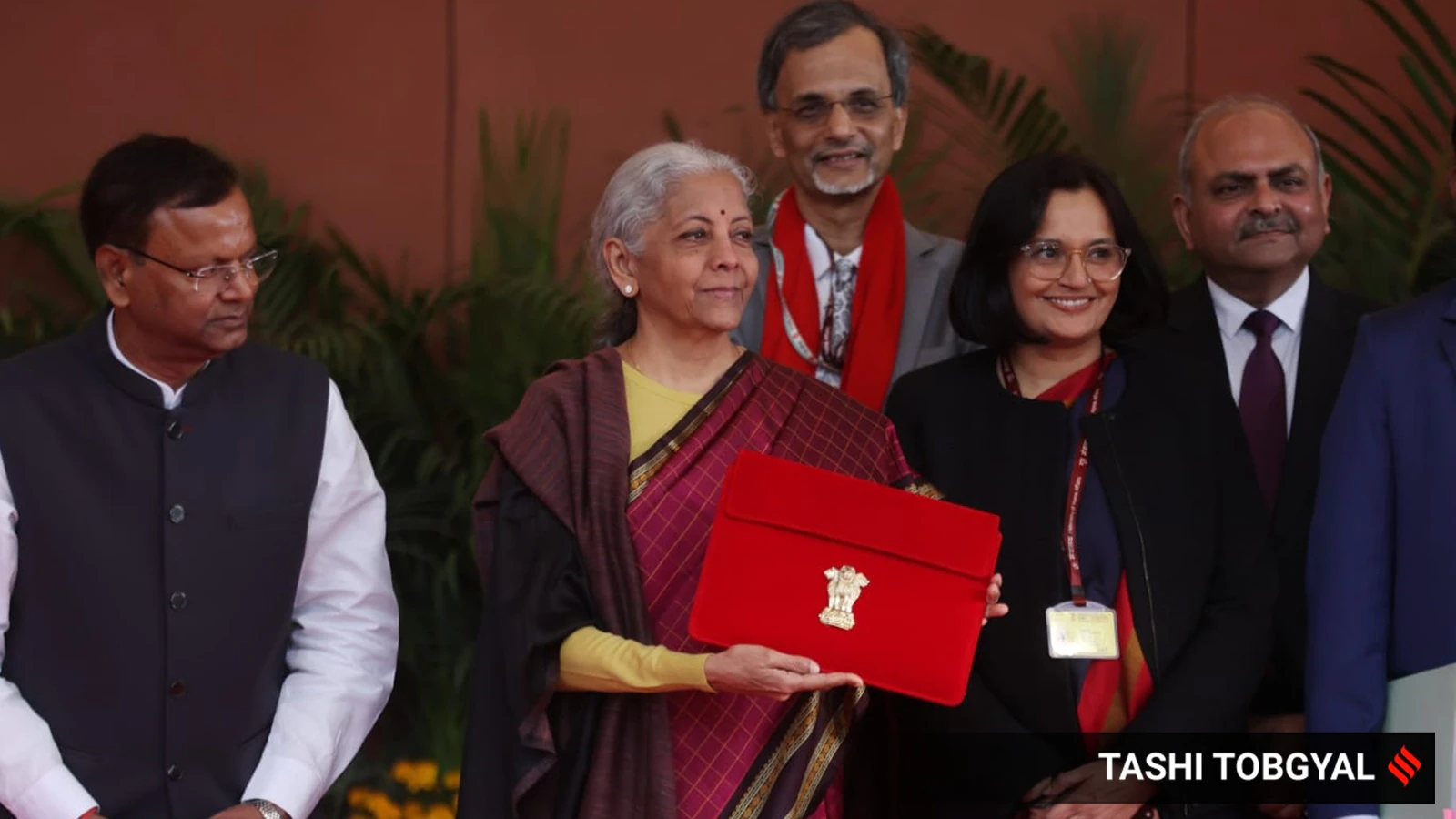

In the face of global economic challenges, Finance Minister Nirmala Sitharaman remains resolute, rolling out a series of measures aimed at bolstering manufacturing and maintaining a strong focus on core infrastructure spending. This strategy reflects the ongoing insufficient support from the private sector. While the Budget for the second year of Prime Minister Narendra Modi’s third term may lack bold initiatives, Sitharaman compensates with moderate fund allocations to certain industries, reductions in customs duties for some affected by U.S. tariffs, and various skill development programs to address unemployment.
These efforts, however, require time for their impacts to materialize, heavily relying on effective implementation of numerous schemes and initiatives. The Budget estimates a nominal GDP growth of only 10 percent for 2026-27, which, assuming an inflation rate of 3-4 percent, translates to a real growth forecast of merely 6-7 percent. Alarmingly, despite these modest projections, estimated tax growth is just over 7 percent, marking the fourth consecutive year where this figure lags behind the nominal growth rate.
Market reactions indicate substantial concern. Despite Sitharaman’s commitment to keeping the fiscal deficit below 4.5 percent of GDP for 2025-26, a notable increase in the securities transaction tax for futures and options has caused the BSE Sensex to plummet by nearly 2 percent-representing the second-largest percentage drop for a Budget day since 2014. Just days prior, the Economic Survey 2025-26 had highlighted significant foreign capital outflows and a weakening rupee, raising expectations for measures to attract global investment into India. Unfortunately, those hopes were dashed, along with anticipations for cuts in long-term capital gains tax and revisions to the withholding tax structure.
In response to foreign institutional investors pulling away from Indian equities, the Budget aims to appeal to individual non-resident Indians and Overseas Citizens of India, allowing them to invest in equities through the Portfolio Investment Scheme. The individual investment limit for these residents has increased from 5 percent to 10 percent, while the overall limit has risen from 10 percent to 24 percent.
Despite these challenges, the Budget increases capital expenditure allocation by over 10 percent to ₹12.22 lakh crore-4.4 percent of GDP, marking the highest in a decade and reflecting a 4 percent increase from the previous year. Analysts suggest that for the first time, this capex is greater than net borrowings excluding small savings, indicating a trend towards creating more assets than liabilities for future generations.
The Budget also emphasizes shifting focus towards the debt-to-GDP ratio as a fiscal benchmark moving forward. With a projected fiscal deficit of 4.3 percent for the coming financial year, down from 4.4 percent, the debt-to-GDP ratio is expected to decline from 56.1 to 55.6. The government aims to reduce this figure to 50 percent or less by 2030-31.
Although the deficit is set to decrease, subsidy levels have consistently risen. While food and fertilizer subsidies for 2026-27 are anticipated to be slightly lower than revised estimates from the prior year, the absence of targeted reforms means these subsidies will still hover around ₹4 lakh crore, or about 1 percent of GDP.
To diminish reliance on China, the Budget outlines plans for dedicated rare earth corridors to enhance mining and manufacturing processes in mineral-rich states such as Odisha, Kerala, Tamil Nadu, and Andhra Pradesh. As part of the capital expenditure strategy, Sitharaman also announced the establishment of seven high-speed rail corridors, designated as “growth connectors,” spanning key regions including Mumbai-Pune, Pune-Hyderabad, Hyderabad-Bengaluru, and beyond.
A strong undercurrent in Sitharaman’s speech is the urgent need for job creation. She pointed to the establishment of a high-powered committee focused on “education to employment and enterprise,” indicating the necessity for skill upgrades in various sectors, including healthcare and tourism, to provide job opportunities for millions of youth entering the workforce annually.
Original Source: https://indianexpress.com/article/business/in-headwinds-union-budget-2026-27-stays-the-course-batters-markets-with-tax-10508114/
Category: Business
Tags:
Publish Date: 2026-02-02 05:30:00