Government Assures Fairness: New UGC Regulations Won’t Discriminate or Be Misused Amidst Protests and Resignations!

The Union government has firmly defended the newly implemented UGC regulations, dismissing concerns that they could lead to discrimination or chaos on campuses. This statement comes in light of significant student protests against the regulations. Union Education Minister Dharmendra Pradhan emphasized that the rules would not be “misused,” assuring students that there would be no harassment or discrimination under the new framework. “I want to humbly assure everyone, no one is going to face any harassment, there will be no discrimination and no one will have the right to misuse the regulation in the name of discrimination,” he stated.
This controversy has also seen the resignation of BJP Mahila Morcha office bearer Shashi Tomar, who expressed her discontent with the Promotion of Equity in Higher Education Institutions Regulations, 2026. In a letter addressed to the chief of the Firozabad district unit, she noted her hurt over the decision to implement these regulations.
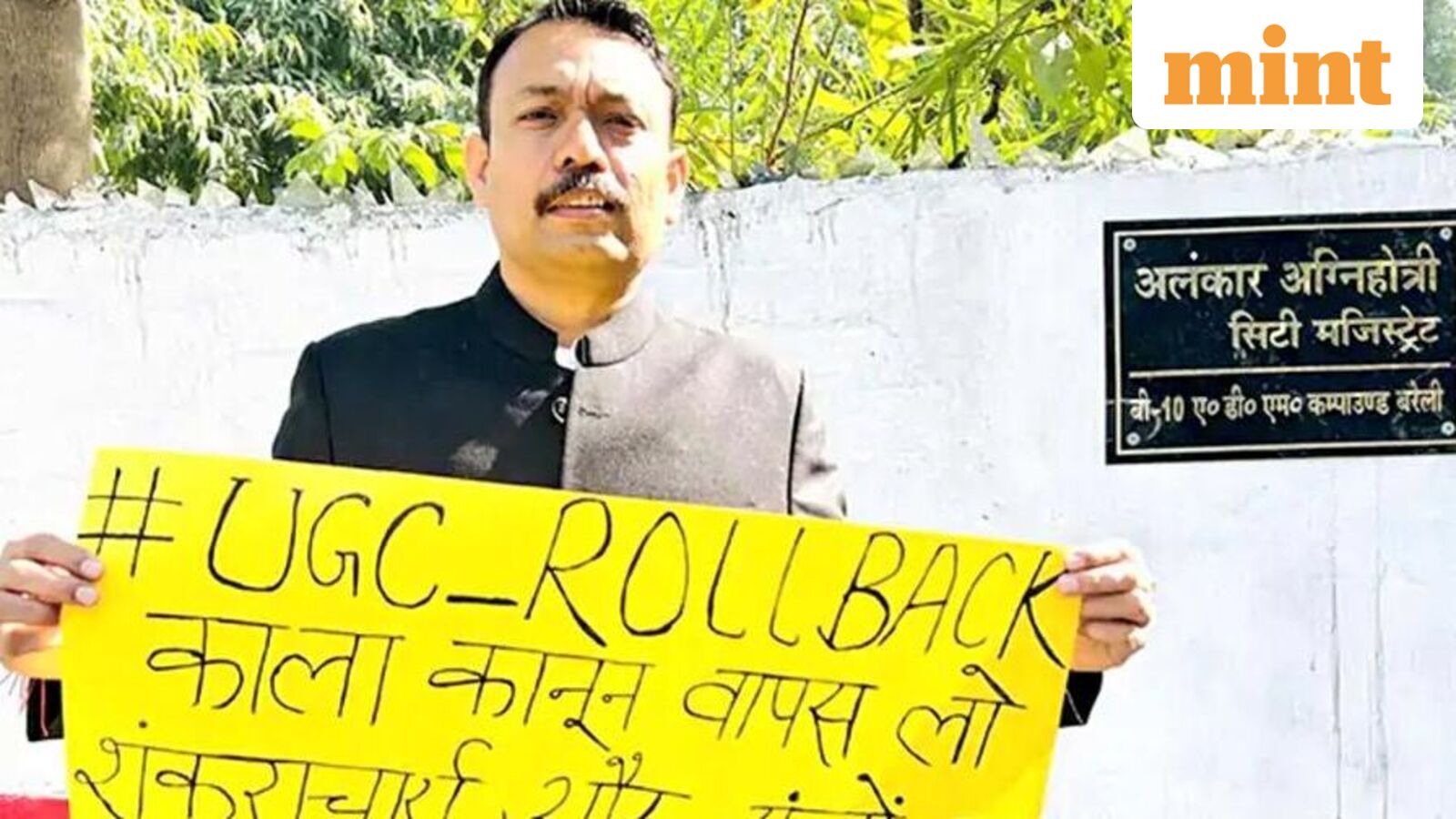
Amid the uproar, a separate incident unfolded involving Alankar Agnihotri, a suspended Bareilly City Magistrate. Following his resignation in protest against the new UGC rules, Agnihotri was suspended for alleged indiscipline, sparking further controversy and allegations of a conspiracy against him.
The recently announced UGC regulations broaden the earlier anti-discrimination framework and replace the 2012 guidelines, which were primarily advisory. The 2026 regulations explicitly include Other Backward Classes (OBCs) alongside Scheduled Castes (SCs) and Scheduled Tribes (STs) in the protection against discrimination. This addition has ignited strong reactions across various political and educational circles, prompting protests in multiple states.
Institutions are now mandated to establish “equity committees” to address discrimination complaints and promote equity, a measure aimed at fostering a more inclusive educational environment. However, these committees are required to have representation from OBCs, SCs, STs, and other marginalized groups, raising questions about their composition and effectiveness. Critics argue that the representation of these groups remains insufficient and inadequately defined.
The All India Students’ Association, a student group aligned with leftist ideologies, supported the UGC Equity Regulations, recognizing the inclusion of OBCs as a positive step. However, they highlighted concerns about the vague definitions of discrimination provided in the regulations, which fail to outline specific discriminatory acts.
In a related development, a plea has been filed in the Supreme Court challenging the new UGC regulations. It alleges that the UGC has adopted a non-inclusionary definition of caste-based discrimination, effectively excluding various categories from support. The petition seeks to restrain the authorities from enforcing these regulations as they currently stand and urges for a redefinition of caste-based discrimination that aligns with constitutional principles.
This response follows a Supreme Court directive for the UGC to provide the guidelines amid ongoing discussions surrounding the implementation of the previous regulations. The spotlight remains on how these changes will affect both students and educational institutions moving forward, particularly after tragic incidents involving caste-based discrimination that have drawn national attention.
With strong reactions from various stakeholders, the future of the equity regulations and their impact on higher education remains uncertain as students continue to voice their concerns and seek clarity on the impending changes.
Original Source: https://www.livemint.com/news/india/new-ugc-regulations-wont-be-discriminatory-misused-govt-after-protests-resignations-11769569985676.html
Category :
Tags:
Publish Date: 2026-01-28 09:41:00