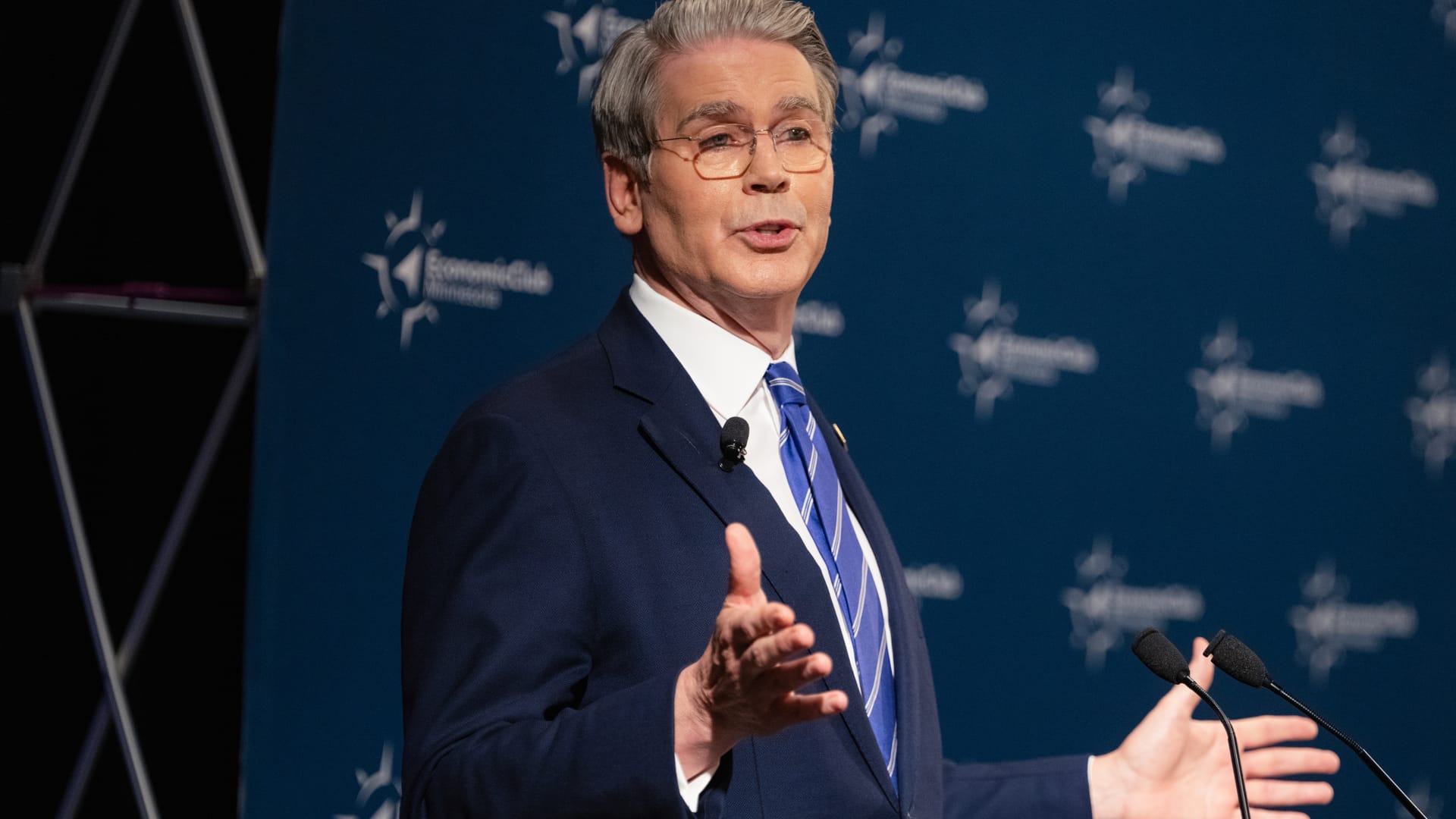

Treasury Secretary Scott Bessent expressed doubts about the Supreme Court reversing President Donald Trump’s use of emergency powers to impose tariffs, stating it is “very unlikely” that the Court would negate a major economic policy of the president. In an appearance on NBC’s “Meet the Press,” Bessent noted, “I believe that it is very unlikely that the Supreme Court will overrule a president’s signature economic policy. They did not overrule Obamacare, and I believe that the Supreme Court does not want to create chaos.”
Bessent’s remarks come as Trump announced plans for a fresh round of tariffs on European goods until a deal is reached regarding the “complete and total purchase of Greenland.” The specific legal basis Trump is invoking for these tariffs remains unclear, but it resembles previous “liberation day” duties he has enacted under the International Emergency Economic Powers Act (IEEPA). Effective February 1, tariffs on products from countries including Denmark, Norway, Sweden, France, Germany, the United Kingdom, the Netherlands, and Finland are expected to start at 10%, escalating to 25% by June 1.
The Supreme Court is anticipated to make a decision on Trump’s use of the IEEPA before the end of its term, with a ruling potentially arriving as early as this week. The IEEPA grants the president broad powers to use economic measures in response to “unusual and extraordinary threats.”
Bessent characterized Trump’s new tariffs as a strategic response to an emergency, stating, “The national emergency is avoiding a national emergency. It is a strategic decision by the president; he is able to use the economic might of the U.S. to avoid a hot war.” Trump’s pursuit of Greenland, a territory of Denmark, has intensified recently, despite widespread rejection from leaders in Greenland, Denmark, and across Europe.
In response to the tariff threats, European leaders from the affected nations issued a joint statement underscoring their commitment to transatlantic unity. They noted, “Tariff threats undermine transatlantic relations and risk a dangerous downward spiral. We will continue to stand united and coordinated in our response.” The statement emphasized their solidarity with Denmark and the people of Greenland, highlighting the need for dialogue based on principles of sovereignty and territorial integrity.
Last week, Vice President JD Vance and Secretary of State Marco Rubio held discussions with Danish Foreign Minister Lars Lokke Rasmussen and Greenland’s Minister of Foreign Affairs Vivian Motzfeldt at the White House. Rasmussen described the meeting as “frank but constructive.” Following the talks, it was decided that the U.S. and Denmark would create a high-level working group to focus on Greenland’s future.
The Trump administration argues that acquiring Greenland is crucial for national security, particularly as a countermeasure against Russian and Chinese expansion in the Arctic region. As developments unfold, CNBC has reached out to the White House and the Treasury Department to clarify the legal framework behind the newly announced tariffs.
This article highlights the evolving dynamics surrounding U.S.-European relations, economic policy, and national security, as the situation regarding Greenland progresses.
Original Source: https://www.cnbc.com/2026/01/18/trump-tariffs-supreme-court-bessent-trade-greenland.html
Category :
Tags:
Publish Date: 2026-01-19 00:34:00