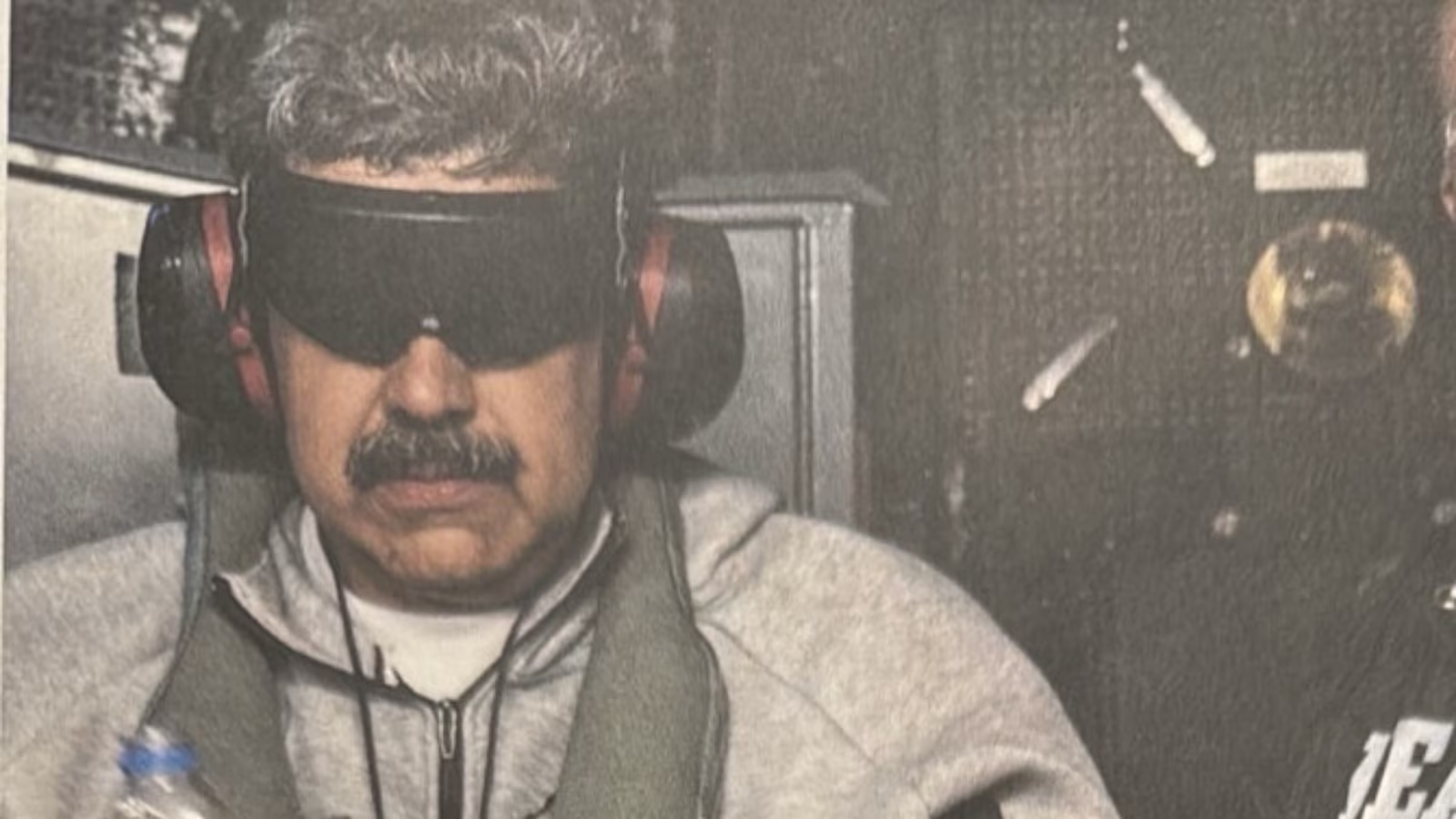

Hours after Nicolás Maduro was detained in Caracas, Cuban President Miguel Díaz-Canel urged his nation to prepare to defend both Venezuela and the Cuban revolution at any cost. This sentiment comes as Cuba faces a dire economic crisis, exacerbated by the loss of its primary ally. With Maduro now awaiting trial in New York, Cuba is feeling the sting of losing its main source of fuel and financial support.
For decades, Venezuela has provided Cuba with vital resources, supplying the island with approximately 100,000 barrels of oil daily-crucial for its economy. In return, Cuba sent doctors, teachers, and security personnel to assist Venezuela. However, as shipments have plummeted, Cuba’s energy crisis worsens. According to Jorge Piñon, a researcher at the University of Texas Energy Institute, Venezuela’s crude oil deliveries to Cuba have dwindled significantly, dropping from enough to fulfill Cuba’s needs to just 35,000 barrels a day recently.
This stark decline has led to severe blackouts across the island, crippling both agricultural output and the tourism sector. Over two million Cubans-roughly one-fifth of the population-lack access to reliable drinking water. The fallout from this crisis has resulted in a population collapse of 15% in the last decade, with projections estimating a further 20% decline by 2050.
During a recent legislative meeting, Cuban officials attributed their current woes to long-standing U.S. sanctions, while ignoring the pivotal role of reduced Venezuelan oil shipments. Emilio Morales, president of the Miami-based Havana Consulting Group, remarked, “They’ve been left without a godfather, a benefactor that has been paying their bills, and they’re totally bankrupt.”
With U.S. pressure mounting, especially from Secretary of State Marco Rubio, who emphasized the Cuban government’s vulnerabilities in light of Maduro’s removal, the situation appears increasingly precarious for Havana. Rubio pointed out the fragility of the Cuban regime, hinting that a change may transpire without military intervention.
Key to the U.S. strategy is preventing other nations from filling the void left by Venezuela. While countries like Mexico, Russia, and Iran have historically supported Cuba, their assistance has been inadequate. Fuel shipments from Mexico, for instance, have dropped sharply, from 22,000 barrels a day to just 7,000 in recent years.
Ricardo Herrero, executive director of the Cuba Study Group, noted that Díaz-Canel currently lacks allies in the hemisphere willing to risk their relations with Washington to support Cuba. The prospects of acquiring new oil suppliers seem bleak, as any alternative would face both credit risks and political fallout.
Despite Cuba’s historical resilience in the face of adversity, analysts caution against underestimating the potential collapse of its ally relationships, particularly considering the uncertain direction of a post-Maduro government. Morales indicated that the ramifications of this loss go beyond just fuel-financial support, influence, and control are all at stake.
As Cuba grapples with this unprecedented crisis, the road ahead appears ever more daunting. Experts indicate that the island is enduring its most challenging period in 65 years, raising questions about its future stability and prosperity. The uncertainty looms large as the situation continues to evolve, leaving many to wonder how Havana will navigate this tumultuous landscape.
Original Source: https://www.livemint.com/news/world/maduro-ouster-leaves-cuba-s-wobbling-regime-without-a-benefactor-11767563678947.html
Category :
Tags:
Publish Date: 2026-01-05 03:24:00