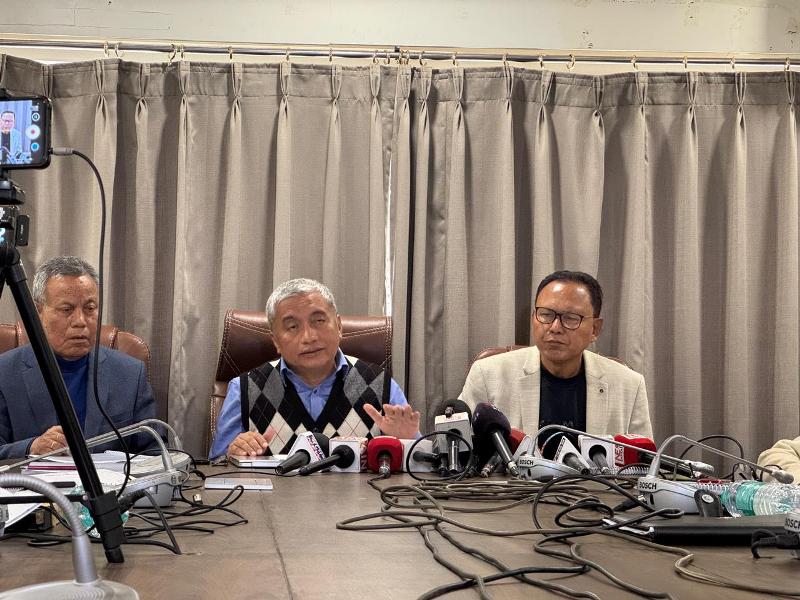

The Coordination Committee of Tribal Organisations of Assam (CCTOA) has firmly rejected recommendations from the Group of Ministers (GoM) that aimed to grant Scheduled Tribe (ST) status to six communities: Tai Ahom, Chutia, Moran, Motok, Koch-Rajbongshi, and Tea Tribes. The committee cited constitutional, legal, and historical justifications for their decision.
This move follows a report by a Consultative Group led by Suhas Chakma. In a statement released on Thursday, the CCTOA emphasized that including these communities in the ST list would violate constitutional provisions, jeopardize existing protections for recognized Scheduled Tribes, and disrupt the state’s reservation system.
The CCTOA explained that, under Indian law, Scheduled Castes (SCs) and Scheduled Tribes are defined by different criteria. SCs generally relate to their position within the Hindu caste system, while STs are identified based on tribal characteristics such as primitive traits, unique culture, geographical isolation, and economic disadvantages. These criteria were established in the 1965 Lokur Committee report.
Additionally, the CCTOA pointed out that in 1993, research by the Assam Institute of Research for Tribals and Scheduled Castes led the state government to recommend these six communities for classification as Other Backward Classes (OBCs). Since they have already been categorized as OBCs, the committee argued that they should not be reclassified as STs for perceived political reasons.
Regarding the Tea and Ex-Tea Garden Tribes, the committee stated that every expert body formed since India’s independence has opposed granting them ST status. They referenced a 1947 joint report, which indicated that tea garden workers brought from other areas should not be recognized as Assamese tribes. The Lokur Committee also explicitly declined to endorse tea plantation laborers for ST classification.
On the matter of Koch and Rajbongshi communities, the CCTOA asserted that they are distinct groups. They noted that in the erstwhile Goalpara district, “Koch” referred to Bengali Hindu migrants from East Pakistan, while Rajbongshis are indigenous Assamese who eventually merged into a broader Koch identity. The committee highlighted that Koch are recognized as SCs in West Bengal under the Constitutional order from 1950, thereby disqualifying them from being categorized as STs in Assam.
Furthermore, the CCTOA argued that the Tai Ahoms, Chutiyas, Morans, and Mataks are part of the Assamese mainstream and were not included in the original ST list established under the 1950 Constitutional order. The Lokur Committee also did not identify these communities as STs.
Questioning the reliability of the expert committees associated with the state government, the CCTOA noted that many members were selected by groups representing the communities, thus lacking independence. They pointed out a contradiction where an ethnographic committee suggested SC status for only 38 of the 74 Tea and Ex-Tea Garden communities, while the Assam government proposed ST status for all.
The CCTOA warned that granting ST status to these six communities would significantly impact the political representation and reservation rights of existing Scheduled Tribes in various political bodies, including panchayats and state assemblies. They noted that Assam’s current reservation level stands at 59 percent, exceeding the 50 percent cap set by the Supreme Court’s Indra Sawhney judgment, and could rise to over 70 percent with more communities added to the ST list.
Labeling the government’s recommendations as illegal and unconstitutional, the CCTOA stated that they contradict promises made by an all-party delegation from the Assam Legislative Assembly to protect the rights of currently recognized Scheduled Tribes. The committee committed to opposing any efforts that would undermine constitutional protections for established tribal communities.
Original Source: https://nenews.in/assam/assam-cctoa-opposes-st-status-for-six-communities-on-constitutional-grounds/38711/
Category: Assam,Coordination Committee of Tribal Organisations of Assam,Scheduled Tribe (ST) status
Tags:
Publish Date: 2026-01-02 15:48:00