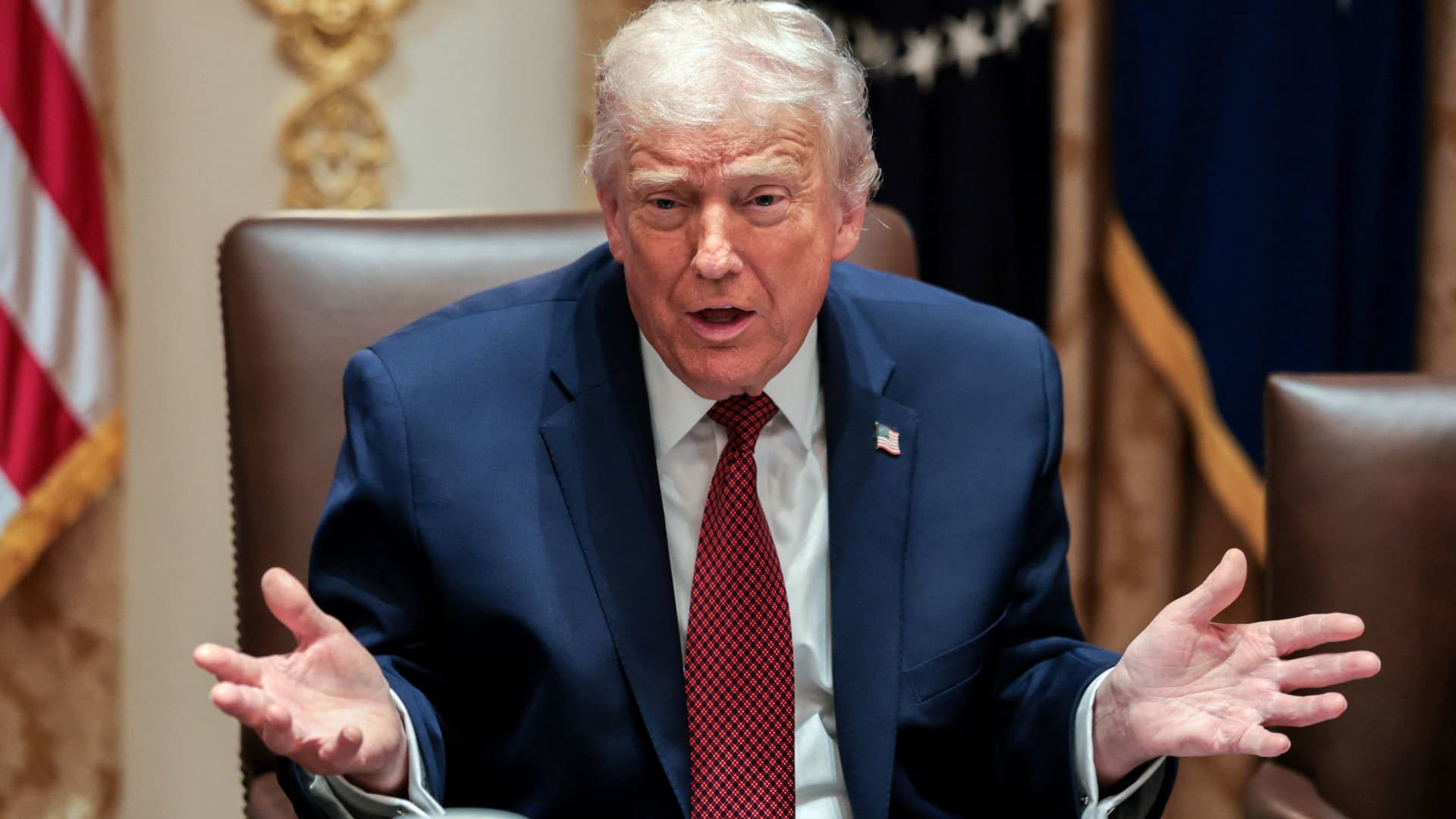

President Donald Trump announced on Monday that Nvidia will be permitted to ship its H200 artificial intelligence chips to “approved customers” in China and beyond, contingent upon a 25% revenue share for the U.S. government. In a post on Truth Social, Trump noted that Chinese President Xi Jinping “responded positively” to the proposal, emphasizing that the policy would “support American Jobs, strengthen U.S. Manufacturing, and benefit American Taxpayers.” The Trump administration is working with the Department of Commerce to finalize the specifics of the agreement, which will also extend to other major American companies like AMD and Intel.
In August, both Nvidia and chip competitor Advanced Micro Devices (AMD) agreed to share 15% of their revenue from China sales with the U.S. government. However, around the same time, reports surfaced that China had cautioned firms against utilizing Nvidia’s H20 AI chip, which was specifically designed for the Chinese market. The H200, while a higher-grade product than H20, is not Nvidia’s flagship chip.
Nvidia’s shares experienced an initial rise on Monday following news of pending approval for sales to China, before settling down to a 2% increase in after-hours trading. A spokesperson for Nvidia commended Trump’s decision, stating, “We applaud President Trump’s decision to allow America’s chip industry to compete to support high-paying jobs and manufacturing in America.” They described the H200’s availability to vetted commercial customers as a “thoughtful balance that is great for America.”
Semiconductors, essential components in virtually every segment of electronics, are central to the intensifying AI competition between the U.S. and China. This technology has also been a focal point in the fragile trade ties between the two nations. In response to Beijing’s export restrictions on rare-earth minerals, vital for the production of high-end chips, the Trump administration threatened significant increases in tariffs on U.S. imports from China.
Following a meeting in South Korea in late October, Trump and Xi reached a tentative trade truce, where China pledged to cease “retaliation” against U.S. chipmakers. Trump remarked that he had discussed the export of Nvidia chips with Xi during their discussions.
As the global landscape for semiconductors continues to shift, the interplay between American and Chinese markets remains complex and highly scrutinized. The H200 chip sale marks a crucial development in U.S.-China relations, as both nations navigate the delicate balance of advancing technology while managing trade tensions.
The ongoing developments in the semiconductor industry underscore its pivotal role in not only technological advancement but also in shaping economic strategies and international relations. As the situation evolves, stakeholders will closely monitor how these agreements play out and what implications they hold for the future of global trade in technology.
This article highlights a significant pivot in U.S. technology policy under the Trump administration, signifying a renewed focus on protecting American interests in the competitive landscape against China, where the stakes for both job creation and innovation are higher than ever.
Original Source: https://www.cnbc.com/2025/12/08/trump-nvidia-h200-sales-china.html
Category :
Tags:
Publish Date: 2025-12-09 04:24:00