Unyielding Fight: The Emotional Battle to Remove a Controversial British Military Officer’s Statue from Chennai’s Mount Road

Several statues around the world have sparked significant controversy, particularly following the Soviet Union’s dissolution in 1991, when monuments symbolizing the old regime were toppled across former Soviet states. Similar fate befell statues of Saddam Hussein in Iraq after the 2003 U.S.-led invasion, as well as those of Bangladesh’s first President Sheikh Mujibur Rahman and Syria’s former President Hafez al-Assad in 2024. In India, this trend of dismantling statues took root during the independence movement, fueled by a desire to eliminate remnants of British colonial rule. Yet, little attention is paid to an earlier agitation in Chennai, where calls for the removal of a British military officer’s statue date back nearly a century.
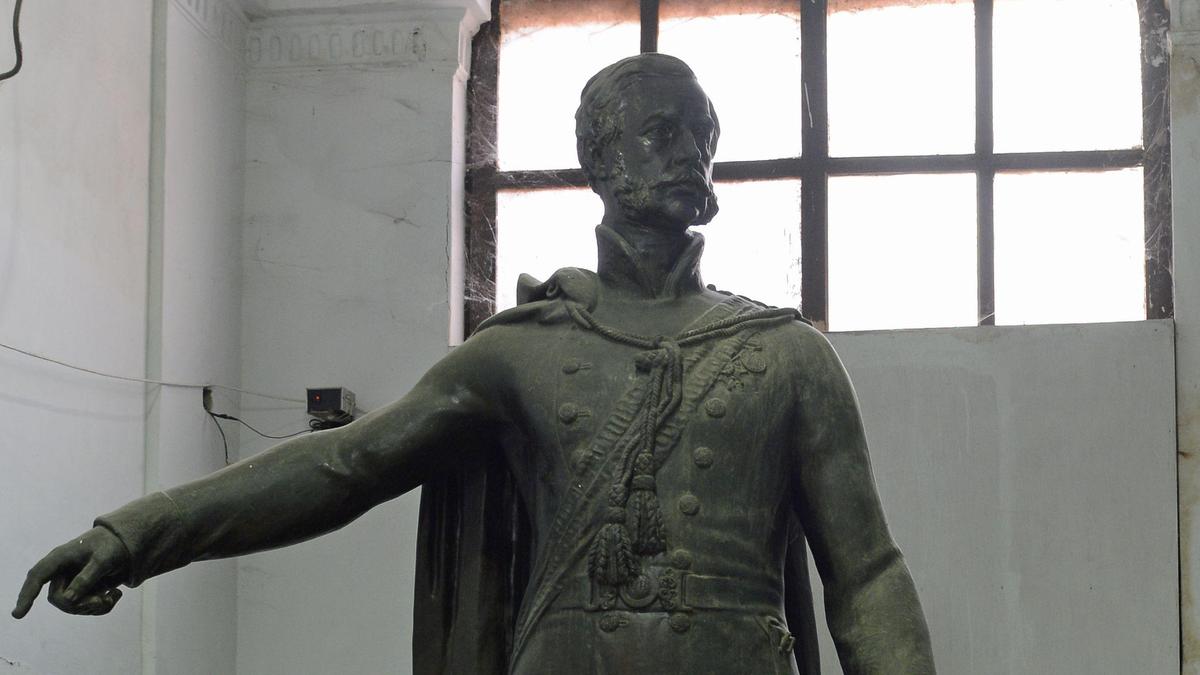
The statue in question is of James George Smith Neil, positioned at what is now Spencer’s Junction, where Mount Road intersects with Binny Road. Erected in 1861, the bronze monument, funded mostly by British citizens, commemorated Neil’s role in the brutal suppression of the 1857 Great Revolt. For many Indians, he is derogatorily remembered as the “Butcher of Allahabad.”
For over 55 years, the statue went unchallenged, but by the late 1920s, as nationalist sentiments surged, a campaign to remove Neil’s statue gained traction. The political landscape in India at the time was divided, with the Congress Party, led by Mahatma Gandhi, and Swarajists adopting differing approaches to gaining independence. Amid growing calls for complete freedom from British rule, Gandhi expressed skepticism towards the Simon Commission’s proposals for constitutional reform at the 1927 Chennai session, which further galvanized anti-colonial sentiment.
The movement to dismantle the statue officially began on August 10, 1927. Two young activists from Madurai, Mohammed Saliah and Subbarayulu Naidu, donned khadi and Gandhi caps as they confronted the statue at Spencer Junction. Armed with an axe and chisel, they aimed to deface the statue. Their actions spurred broader discussions about the statue, culminating in a Satyagraha movement aimed at removing Neil’s monument.
As the movement gained momentum, representatives of the Satyagraha panel sought Gandhi’s endorsement. In September 1927, The Hindu reported that, during a meeting with Gandhi, the activists were advised not to expect support from larger bodies such as the Congress Party. He characterized the agitation as “sectional” and cautioned that it might complicate the Congress’s standing.
In subsequent weeks, local representatives like M. Singaravelu Chettiar facilitated discussions around the statue at public forums, despite facing resistance. The ongoing protests warranted police protection for Neil’s statue, underscoring its contentious presence.
By May 1937, the Madras Corporation acknowledged popular sentiment against the statue. On November 14, 1937, the Congress government, led by C. Rajagopalachari, officially ordered the statue’s removal. The operation involved workmen transporting it to the Government Museum in Egmore, where it has remained ever since.
The removal of Neil’s statue reached the British Parliament, prompting discussions about its fate. Rajagopalachari emphasized the importance of retaining the statue, asserting that it should not be a “permanent focus of misrepresentation” and reaffirming that it belonged to the people of Madras.
Today, the once-controversial statue quietly resides in the archaeological section of the Government Museum, a stark reminder of the historical tensions surrounding colonial legacies in India.
Original Source: https://www.thehindu.com/news/cities/chennai/the-long-struggle-to-remove-british-military-officer-james-george-smith-neil-statue-from-mount-road-in-chennai/article70346139.ece
Category : Chennai
Tags:
Publish Date: 2025-12-03 06:00:00