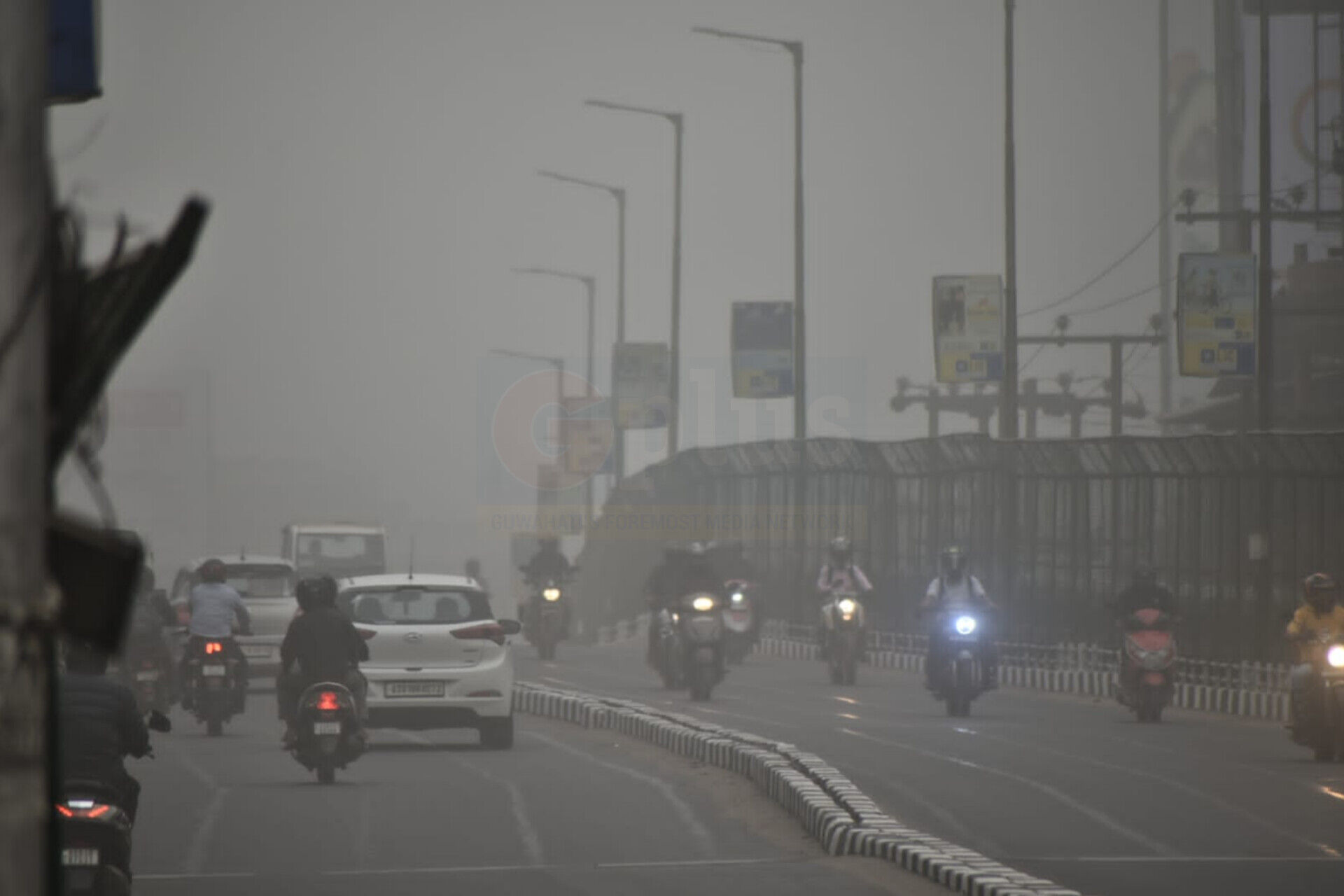

Assam Chief Secretary Dr. Ravi Kota led a crucial review meeting on December 2, focusing on enhancing air pollution control measures in Guwahati as winter approaches, a season notorious for rising particulate matter levels. The meeting included key departments such as the Guwahati Municipal Corporation (GMC), Assam Pollution Control Board (APCB), Transport, and Public Works Department (PWD).
Studies from the National Clean Air Programme (NCAP) have pinpointed road dust and construction activities as the main contributors to particulate pollution, along with emissions from vehicles and industries, and open waste burning. The unique geographical formation of Guwahati, coupled with dust from the Brahmaputra River, exacerbates pollution levels during the dry season by trapping pollutants.
In response to these challenges, GMC has intensified measures to mitigate dust. This includes multi-shift water sprinkling and mechanical sweeping, using four machines with plans to procure four more. The department is also expediting the removal of desilted and construction debris and has repaired over 375 minor roads and drains. PWD has introduced additional dust control initiatives at major flyover sites, including installations of air-quality sensors and ongoing water sprinkling.
The state government is advancing clean mobility initiatives, introducing 100 CNG buses along with a significant fleet of electric buses under the Smart City and PM e-Bus Sewa projects. GMC has deployed 180 electric vehicles for waste collection, which contributes to reducing both open burning and emissions. As part of efforts to transition towards greener transportation, older government vehicles are being phased out, and incentives are being offered to encourage private electric vehicle adoption and to retire diesel buses.
APCB plays a vital role in air quality monitoring, managing ten manual stations and four real-time stations, with daily air quality index updates provided by the Central Pollution Control Board (CPCB). A new memorandum of understanding with iFOREST aims to support advanced pollution studies for more effective solutions.
These targeted interventions have led to notable improvements in Guwahati’s PM10 levels, which fell from 119 µg/m³ in 2023-24 to 103 µg/m³ in 2024-25. As a result, Guwahati has climbed from 38th to 21st place in the Swachh Vayu Survekshan rankings. Officials have reiterated their commitment to promoting cleaner urban development, highlighting the importance of ongoing efforts to tackle air pollution in the city.
Original Source: https://assamtribune.com/guwahati/guwahati-rises-to-21st-in-air-quality-rankings-after-pm10-levels-drop-1599780
Category: Guwahati,More
Tags:
Publish Date: 2025-12-02 11:20:00