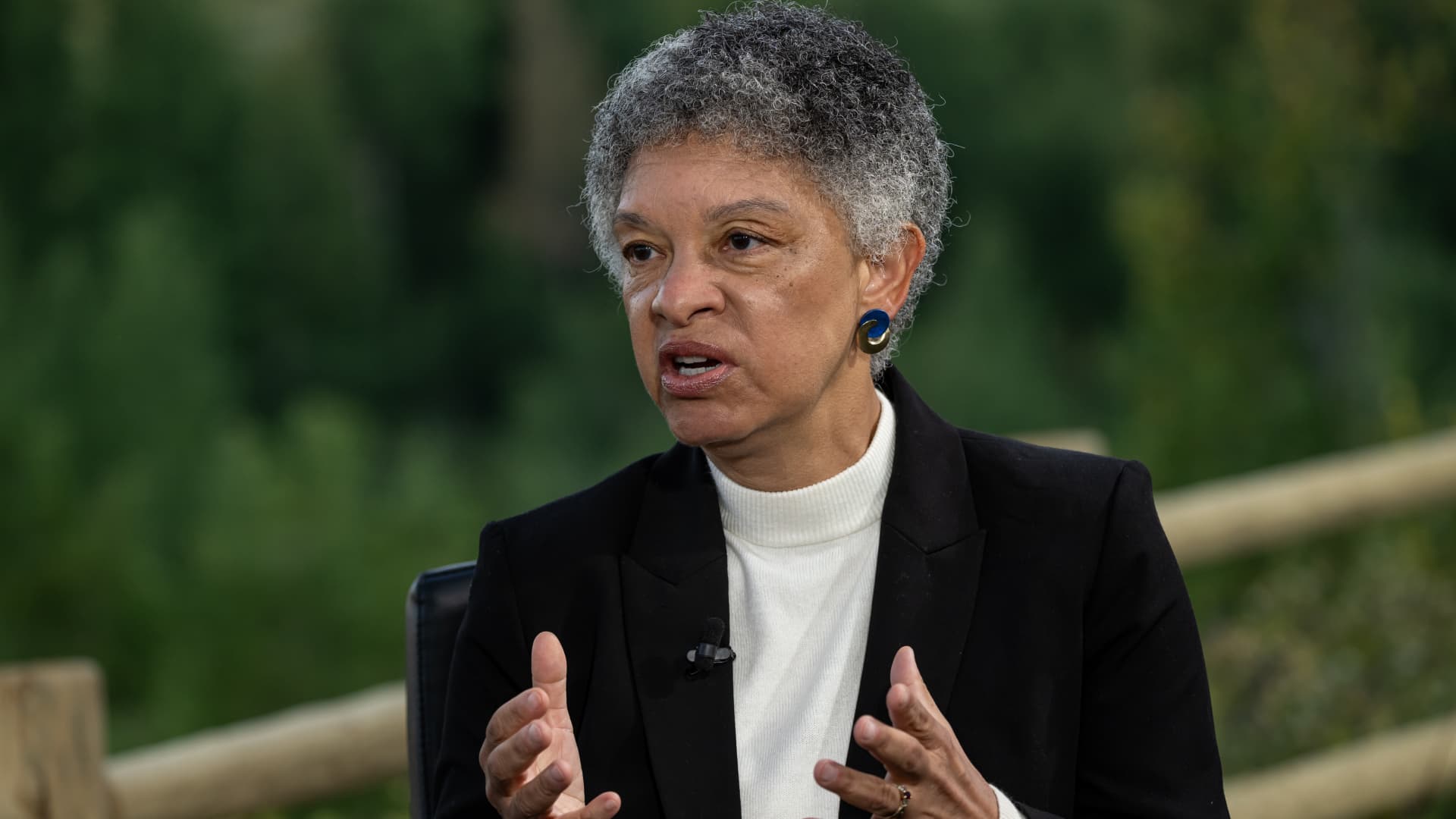

Boston Federal Reserve President Susan Collins shared her cautious stance regarding potential interest rate cuts during a recent interview at the Jackson Hole Economic Policy Symposium in Wyoming. In comments made on Saturday, Collins expressed that she is currently leaning against lowering the U.S. central bank’s interest rate target next month. Citing ongoing risks to inflation and employment, she stated, “I do see reasons to be hesitant” about making any cuts during the Federal Open Market Committee (FOMC) meeting scheduled for December 9-10.
Collins emphasized that current monetary policy is in a “mildly restrictive range” following the 50-basis-point cuts implemented in September and October. This approach, she believes, is appropriate in light of the current economic climate, which is marked by above-target inflation, even as the job market shows signs of softness. “I see risks on both sides, and it’s really about balancing those risks,” she noted, highlighting the complexities the Fed faces in setting policy.
When prompted about the possibility of dissenting against a proposed rate cut at the upcoming meeting, Collins stated that she has not yet made a definitive judgment and would prefer to analyze more data before reaching a conclusion. Over recent days, various Fed officials have articulated differing positions on whether the current federal funds rate target range of 3.75% to 4% should be reduced by a quarter percentage point. Previous rate cuts were largely motivated by a desire to bolster the weakening job market while simultaneously keeping inflationary pressures in check.
Compounding the uncertainty surrounding policy decisions, recent government shutdowns have left many policymakers without the usual data they rely on to shape monetary strategy. Despite this, a notable faction within the Fed remains cautious about cutting rates due to persistent inflation concerns.
The internal debate appeared to shift slightly following remarks from John Williams, president of the New York Fed, who indicated there is still “room for a further adjustment in the near term” to align the policy stance more closely with neutral. His comments prompted futures markets to adjust, raising the likelihood of easing.
With speculation rife about the FOMC, Fed Governor Christopher Waller warned that the upcoming meeting may see higher levels of disagreement than typical, stating, “You might see the least groupthink you’ve seen from the FOMC in a long time.” Collins echoed this sentiment, asserting that the current period is complex for policy setting and underscoring the importance of diverse views within the committee. “If we all thought exactly the same thing, that would be problematic,” she remarked.
Looking ahead, Collins maintained a relatively optimistic outlook for the economy, anticipating a slight rise in unemployment but a moderation in inflation pressures. She concluded by acknowledging that significant evidence of further economic softening could influence her stance on interest rate policy, highlighting her commitment to monitoring both sides of the Fed’s dual mandate.
As discussions continue to unfold, all eyes will remain on the Fed’s upcoming meeting, where policymakers will seek to navigate the intricate balance between fostering economic growth and controlling inflation.
Tags: Federal Reserve, interest rates, Susan Collins, monetary policy, inflation, job market, economic outlook.
Original Source: https://www.cnbc.com/2025/11/22/federal-reserve-collins-interest-rates.html
Category :
Tags:
Publish Date: 2025-11-23 04:26:00