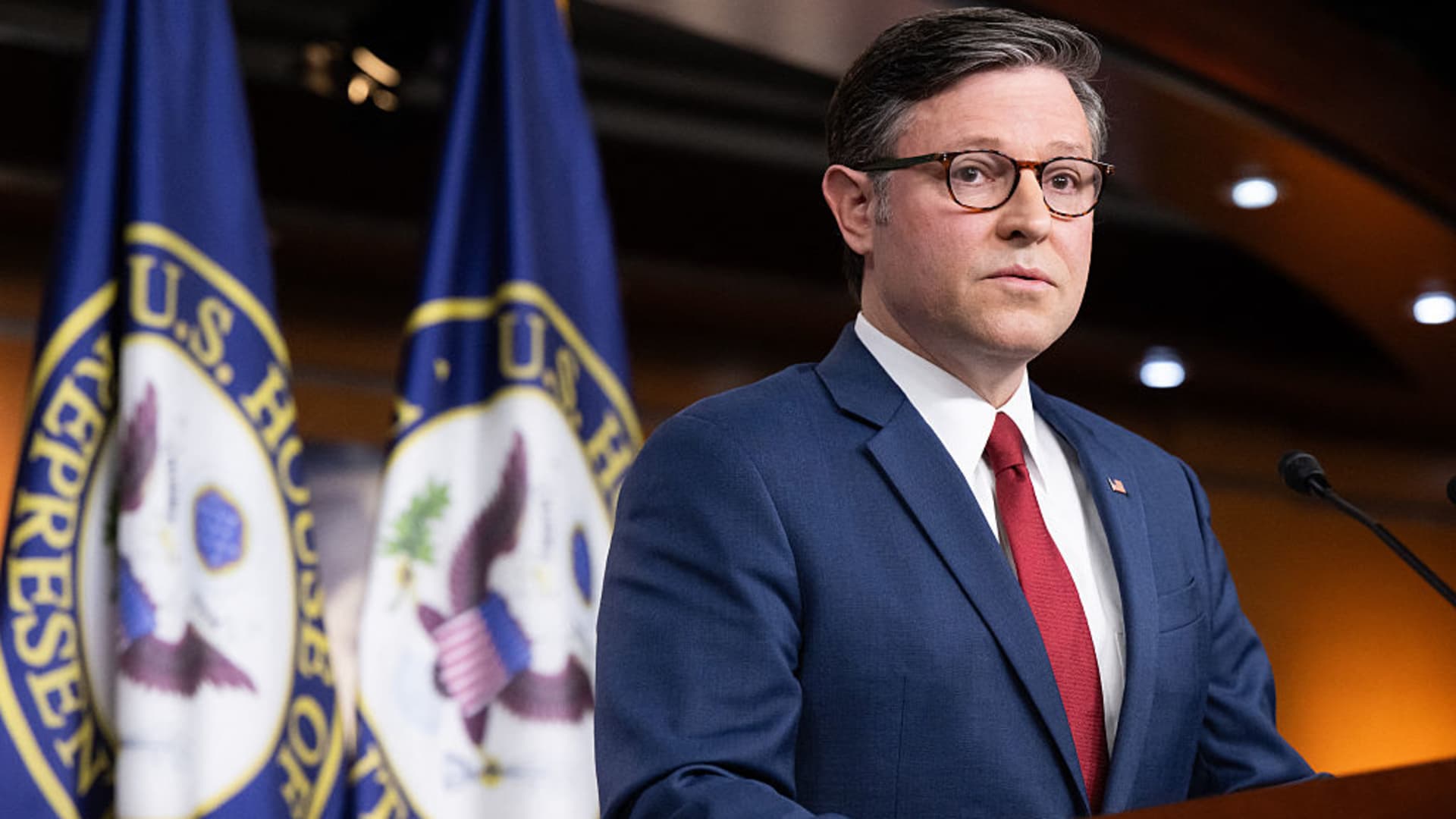

US Speaker of the House Mike Johnson, a Republican from Louisiana, addressed the press on Monday during the 41st day of the federal government shutdown. In a significant turn of events, the Senate passed a bipartisan bill aimed at funding the government through January, thereby potentially ending the longest shutdown in U.S. history. The legislation passed with a 60-40 vote, garnering support from several Democratic senators alongside nearly the entire Republican caucus. The next step awaits the House of Representatives, where the bill’s fate hinges.
Should the House approve the measure, it will land on President Donald Trump’s desk for a signature. Trump expressed his endorsement of the funding agreement earlier in the day, affirming his backing for the deal that emerged from negotiations between Republicans and a coalition of moderate Senate Democrats. The ongoing shutdown began on October 1, and this bipartisan effort materialized nearly six weeks later.
Ahead of the Senate vote, Speaker Johnson convened a meeting with his Republican colleagues, urging them to prepare for a trip to Washington, D.C., for the upcoming vote. Reports indicated that votes could commence as early as 4 p.m. ET on Wednesday. However, Johnson remained noncommittal on a key element of the Senate agreement: a separate vote in December regarding the potential extension of enhanced Affordable Care Act (ACA) subsidies. These crucial subsidies, set to expire at year’s end, assist over 20 million Americans in affording individual health insurance. “I’m not committing to it or not committing to it,” Johnson stated in an interview on CNN.
Leading up to the Senate’s passage of this intermediate deal, Democratic senators largely opposed reopening the government due to the exclusion of ACA tax credits in the initial House Republican proposal. Senate Minority Leader Chuck Schumer voiced strong criticism of the deal, expressing concerns that it fails to secure the subsidies beyond 2026, a scenario that would risk significant increases in insurance costs for many Americans.
The Senate bill not only funds the government through the end of January but also facilitates the reinstatement of all federal employees who were laid off due to the shutdown, ensuring that they receive their regular salaries during this period. Additionally, it lays the groundwork for a bipartisan budget process, curtailing the White House’s reliance on continuing resolutions for government funding, a strategy criticized for sidestepping vital long-term budget decisions.
Crucially, the agreement also extends funding for the Supplemental Nutrition Assistance Program (SNAP), which provides essential food assistance to approximately 42 million Americans through food stamps, until September. Under a federal law established in 2019, furloughed government employees are guaranteed back pay for the duration of the shutdown “at the earliest date possible, regardless of scheduled pay dates.”
As the situation develops, both the House and Senate will continue to navigate the complexities of budgetary policy, with potential impacts on millions of Americans reliant on federal support. This article is designed to keep the public informed and engaged in an evolving political landscape.
Tags: government shutdown, ACA subsidies, federal funding, Mike Johnson, Donald Trump, bipartisan agreement.
Original Source: https://www.cnbc.com/2025/11/10/government-shutdown-republicans-senate-house-snap.html
Category :
Tags:
Publish Date: 2025-11-11 10:39:00