Discover the Wonder: 3I/ATLAS Interstellar Comet Shines Bright for Amateur Astronomers This November!

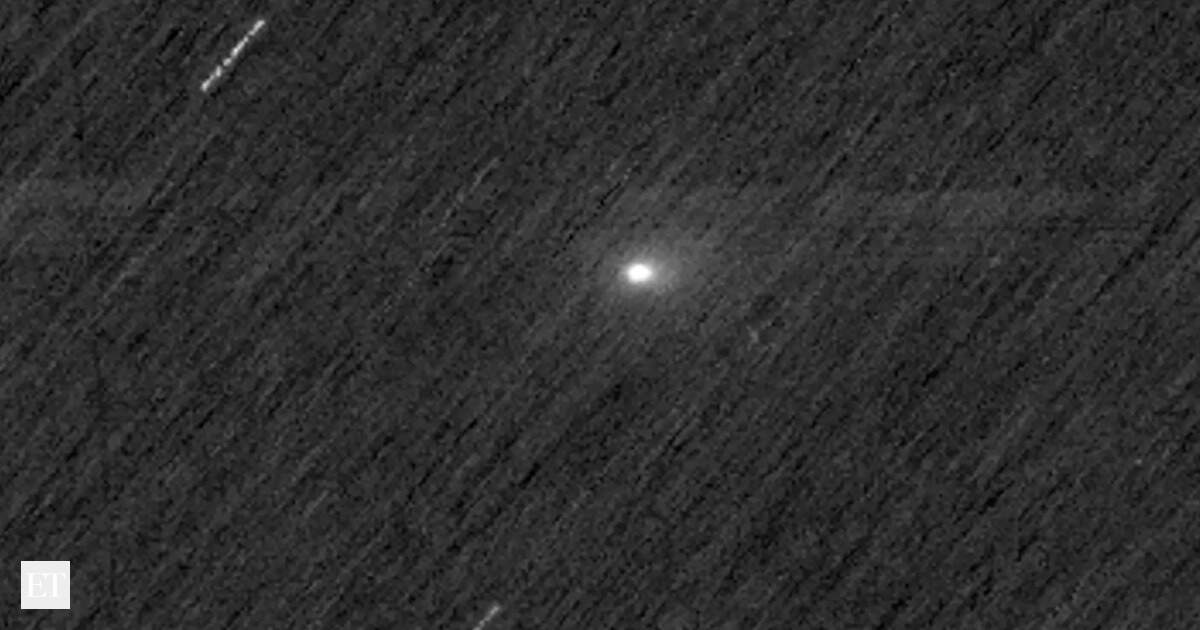
Interstellar comet 3I/ATLAS has made headlines as it embarks on a remarkable journey, becoming visible from Earth in the coming weeks. Just two weeks ago, the comet was in conjunction, located on the far side of the Sun relative to our planet. Last week marked a significant milestone as 3I/ATLAS reached perihelion, its closest approach to the Sun, and has since emerged from behind the celestial body, making it observable to skywatchers on Earth. As our planet moves toward this interstellar traveler, conditions are becoming increasingly favorable for viewing.
For those eager to spot 3I/ATLAS, it will be visible during pre-dawn hours to anyone equipped with a telescope or high-quality binoculars. Amateur astronomers need only standard equipment to catch a glimpse of this ancient comet, which formed an astounding 10 billion years ago beyond the solar system. While it may not dazzle like the famous Hale-Bopp comet of 1997, observers can expect its brightness to reach around magnitude 10, making it faint yet visible for keen observers.
November is shaping up to be the ideal month for observing 3I/ATLAS, especially as it will shine near Venus and the bright star Spica in the constellation Virgo. According to Dr. Franck Marchis, a senior astronomer at the SETI Institute, the comet is set to rise about two hours before sunrise around November 3. He emphasizes that utilizing Venus or Spica as guides will simplify the search for this elusive object. For those uncertain about locating the comet, sky-gazing apps such as SkySafari, Stellarium, or Sky Tonight can provide valuable assistance.
Interestingly, the activity of Comet 3I/ATLAS tends to increase after it passes perihelion, enhancing its visibility. Dr. Marchis notes that recent observations have corroborated predictions regarding the comet’s brightness. While it came no closer than 203 million kilometers (126 million miles) from the Sun, a notable uptick in activity has made it a more appealing target for both amateur and professional astronomers alike. Many hobbyists have already managed to capture images of the comet, and with improved viewing conditions on the horizon, more sightings are expected.
Although 3I/ATLAS remains low on the horizon, limiting observations from many professional observatories, this situation opens avenues for amateur astronomers to photograph the comet and contribute to vital scientific research. Working collaboratively with scientists from the SETI Institute, Unistellar’s global network of 25,000 citizen astronomers will gather real-time data to further study this interstellar visitor’s composition and trajectory. Participants can share their findings through the Unistellar app, contributing meaningful insights to ongoing research.
For viewers who struggle with poor weather conditions, the Virtual Telescope Project has announced plans to stream live observations of Comet 3I/ATLAS in the coming weeks, providing a captivating opportunity for those eager to see this cosmic phenomenon. This rare visitor not only captivates the public’s imagination but also invites amateurs and seasoned astronomers alike to delve deeper into the mysteries of our universe.
As interest in Comet 3I/ATLAS swells, enthusiasts are reminded that its unpredictable nature means its brightness may fluctuate, making these weeks perhaps the best chance to observe it. With its arrival drawing attention to the wonders of the cosmos, this magnificent comet reinforces our ongoing fascination with the universe and the astronomical phenomena it has to offer.
Original Source: https://m.economictimes.com/news/international/us/interstellar-comet-3i/atlas-visible-from-earth-with-amateur-telescopes-through-november/articleshow/125076878.cms
Category :
Tags:
Publish Date: 2025-11-04 11:48:00