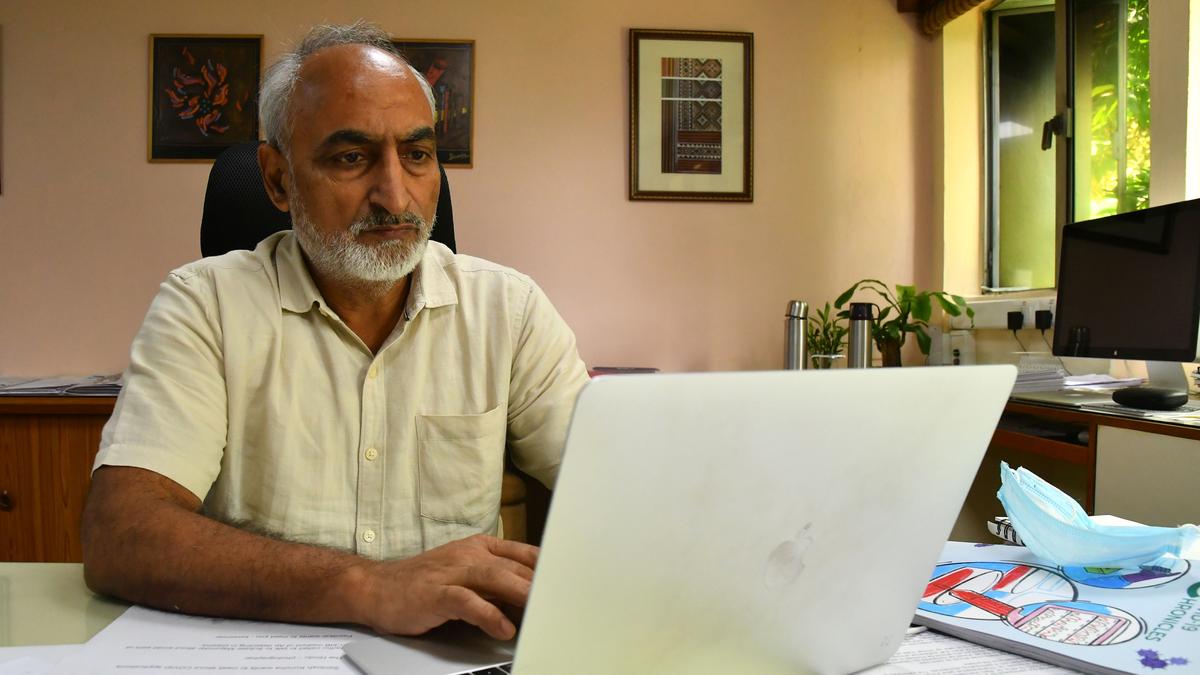
Urgent Call to Action: Ex-CCMB Director Rakesh Mishra Implores Global Aid to Combat Mpox in Africa

Former CCMB Director Says There’s No Need for Alarm Over Mpox Spread in India
Former director of the Centre for Cellular and Molecular Biology (CCMB), Rakesh K. Mishra, has assured that there is no cause for alarm regarding the spread of the Monkeypox (Mpox) virus in India. Although the World Health Organization (WHO) has declared it a public health emergency, Dr. Mishra emphasizes that the focus should be on aiding African countries with sufficient vaccine supplies to prevent the emergence of a more virulent strain.
Dr. Mishra clarifies that Monkeypox spreads through physical touch and sexual contact rather than air transmission, unlike COVID-19, making it less likely to spread unless close-range interactions like loud talking, sneezing, or coughing occur. Testing kits and two Mpox vaccines are available; however, African nations are struggling with shortages. Dr. Mishra suggests that India could collaborate with other donors to facilitate vaccine availability in these regions.
Indians need not worry excessively, as the smallpox vaccine provides approximately 85% immunity against Monkeypox. However, Mpox symptoms can remain hidden for up to a week. Precautionary measures include wearing masks in crowded places, avoiding close contact with symptomatic individuals, and isolating infected persons for three weeks, Dr. Mishra advises.
Presently serving as Director of the Tata Institute for Genetics and Society (TIGS) in Bengaluru, Dr. Mishra underlines the importance of preparedness with diagnostic tools. He warns that continuous circulation of the virus in African populations could lead to more contagious and dangerous strains, necessitating global action. He compares this to the early COVID-19 outbreak, suggesting that timely and transparent actions could mitigate widespread impact.
Dr. Mishra also highlights the potential reasons behind the current Monkeypox spike, including possible virulent strains and emphasizes monitoring travelers returning from affected areas for symptoms like skin rashes and flu-like signs. Vulnerable groups include children, the immune-compromised, and the elderly with co-morbidities.
The scientist also calls attention to the consequences of destroying wildlife habitats, as rodents can harbour viruses, increasing the risk of transmission to humans.
Original Story https://www.thehindu.com/news/national/telangana/we-should-help-contain-mpox-within-africa-ex-ccmb-director-rakesh-mishra/article68539280.ece
Category : Telangana
Tags: