
“Friends are strange, volatile, contradictory, yet sticky entities,” writes Vera Nazarian in her book The Perpetual Calendar of Inspiration: Old Wisdom for a New World. This sentiment encapsulates India’s complex relationship with U.S. President Donald Trump, a leader known for mixing demands for loyalty with disruptive, often punitive actions. Recent developments concerning South Korea, another close U.S. ally, illustrate why India’s caution toward Trump has proven more insightful than Seoul’s approach.
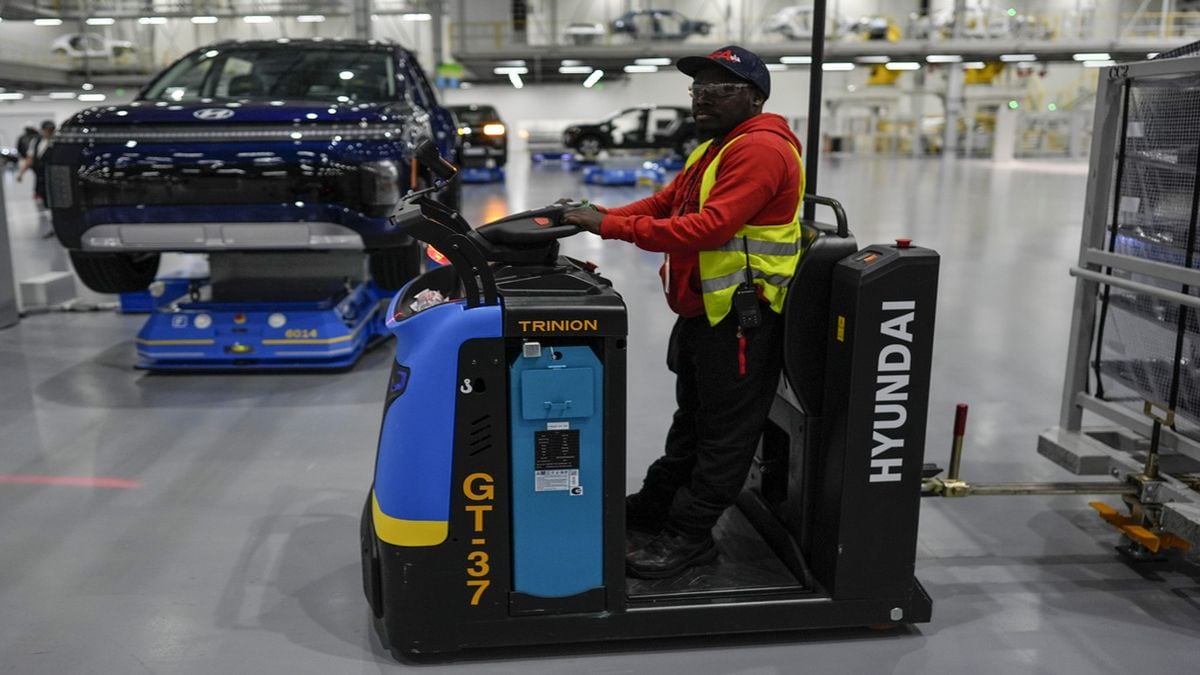
Following South Korea’s conciliatory stance, which included a commitment in July to purchase $100 billion in U.S. energy and invest $350 billion in American projects to avoid tariffs, the U.S. responded with the largest workplace immigration raid of Trump’s second term. This raid targeted a Hyundai-LG battery plant in Georgia, leading to the detention of over 300 South Korean nationals, many seen in distressing conditions with shackles. This stark image unsettled the South Korean public and highlighted a harsh reality: trade concessions and investment promises do not guarantee protection from politically motivated actions under Trump.
The backlash in Seoul was swift and severe, with opposition lawmakers, past diplomats, and media outlets expressing outrage over what they deemed an act of bad faith. Former vice foreign minister Choi Jong Kun described the incident as a “slap in the face,” emphasizing the betrayal felt after years of South Korea investing in the U.S. The scale of the raid shocked citizens and prompted widespread condemnation across the political spectrum. South Korea’s foreign minister had to negotiate the repatriation of the detained workers, but the diplomatic fallout was already significant.
The incident raised crucial questions about the South Korea-U.S. alliance. As a key U.S. ally in Northeast Asia, South Korea had assumed that its role as a counterbalance to China and North Korea would assure goodwill from Washington. Yet now many in Seoul began to question the very meaning of “alliance.” The country’s largest newspaper bluntly questioned whether investment benefits are guaranteed through different U.S. administrations. Analysts speculated that the crackdown was driven not just by immigration enforcement but also by Trump’s political strategy, using foreign workers as a messaging tool to reinforce his “America First” agenda.
In contrast, India has taken a firmer stance against Trump’s pressure tactics. New Delhi has consistently refused to yield, especially when pressured by Washington for quick trade negotiations. India’s government has maintained a strong position, particularly in agriculture, an area Trump has sought to open up for U.S. exporters. Commerce Minister Piyush Goyal recently asserted, “We will not bow down to anybody,” even in the wake of a 50 percent tariff that Trump imposed following India’s continued purchase of Russian oil. Instead of conceding, Goyal stated that India would seek new trade opportunities and protect its farmers.
India’s approach has also involved rejecting Trump’s claims of mediating peace between India and Pakistan, alongside a refusal to support his bid for a Nobel Peace Prize. This stance indicates that India has early on recognized that Trump’s coercive style could not be effectively addressed through concessions. The experience of South Korea, marked by its significant investment pledges followed by punitive actions, has seemingly validated India’s tougher approach.
The recent raid emphasizes that even formal trade agreements or security partnerships do not shield nations from Trump’s unpredictability. South Korea had celebrated a successful summit with the U.S. just days before its citizens faced handcuffs. Lawmakers in South Korea have warned that this incident delivered a blow that will be hard to recover from, as future investment decisions will now be clouded with fears of further raids.
In contrast, India has learned to withstand tariffs while diversifying its trade markets. By standing firm on issues like agriculture, India has prevented Trump from using deadlines to extract one-sided agreements. The South Korean situation further exposes contradictions within Trump’s economic strategies, which demand investment yet complicate the immigration of skilled workers necessary for setting up operations.
While South Korea struggles to repatriate its citizens, India’s leadership radiates confidence, reminding the world that it is “the fastest growing large economy” and an invaluable market with 1.4 billion people. This self-assuredness has enabled India to withstand tariffs without showing anxiety for Trump’s approval. India’s commitment to maintaining its strategic autonomy has been evident in how it responded to Trump’s claims of having brokered peace in South Asia, thus contrasting sharply with South Korea’s conciliatory stance.
The experiences of South Korea and India convey vital lessons for U.S. allies. Trump’s transactional approach indicates that today’s concessions do not guarantee tomorrow’s stability. His focus on appealing to his domestic base complicates commitments made to international friends. South Korean analysts, like former lawmaker Kim Jong-dae, have voiced concerns that the nature of U.S. politics has undergone a drastic change, leaving South Korea to navigate a new and worrying landscape.
For India, which values non-alignment and autonomy, Trump’s style reinforces pre-existing instincts. New Delhi recognizes that concessions would likely only lead to further demands. The circumstances faced by South Korea appear to support this perspective. The aftermath of the Hyundai raid serves as a cautionary tale: South Korea’s promised investment has not shielded it from Trump’s punitive measures.
India has consistently opted for a stance of defiance rather than deference, refusing to sign trade agreements under duress, safeguarding its farmers, and shrugging off Trump’s attempts to claim credit for peace. In a climate where even allies are treated with suspicion, India’s decision to resist Trump’s overtures may be seen as prudence, illustrating that appeasement is not a protective strategy.
Original Source: https://www.firstpost.com/india/india-south-korea-united-states-tariff-donald-trump-piyush-goyal-hyundai-13932012.html
Category: India
Tags:
Publish Date: 2025-09-09 11:33:00